How to Pack a Semi-Arid Substrate (Soil/Sand/Clay)
A semi-arid mix should dry firm on top, hold tunnels, and stay hygienic. The goal is a compact, diggable base—not loose dust or swampy mud.
The base recipe (by volume)
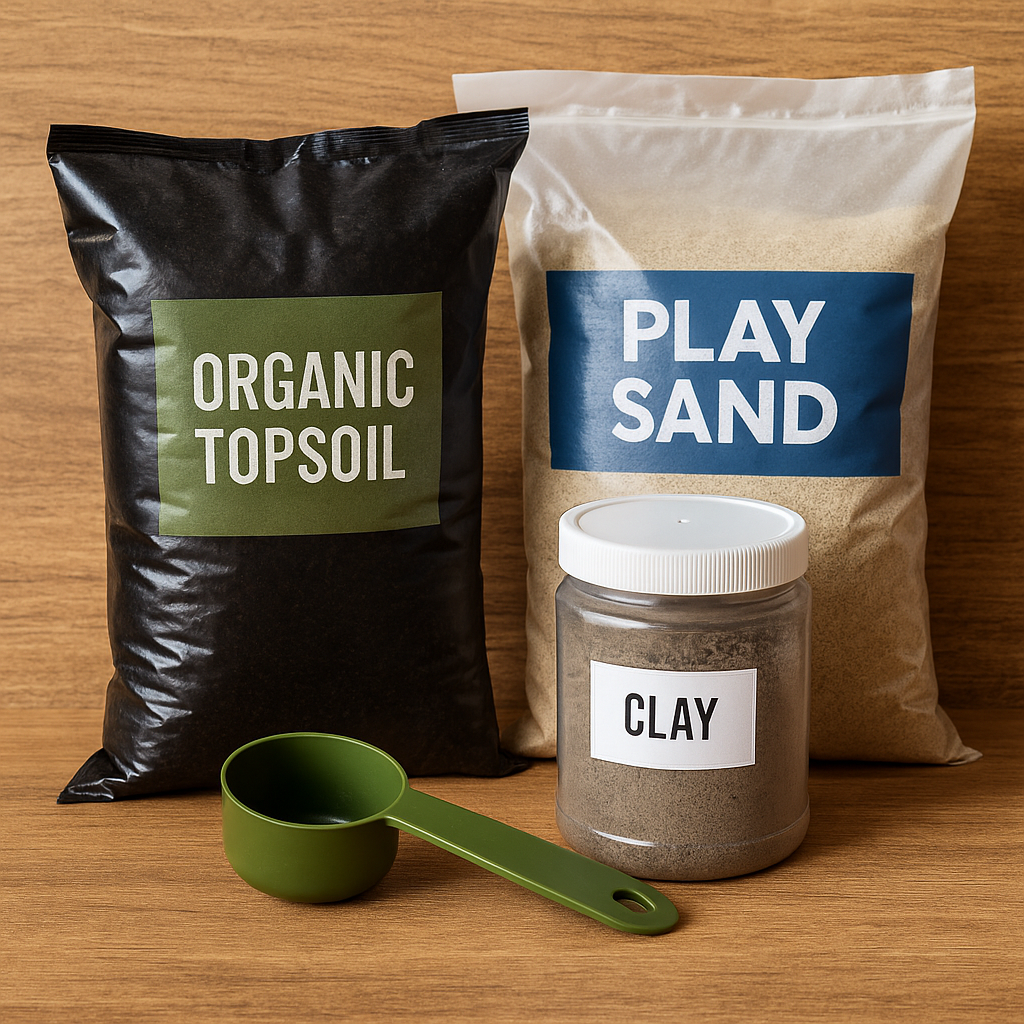
- 60% organic topsoil (no fertilizers/pesticides)
- 30% play sand (or reptile sand; not sharp builder’s sand)
- 10% clay (Excavator Clay or plain bentonite)
Mix dry, then moisten and pack firmly; let it dry 100% before adding the animal.
Variant: simple 50/50 soil : sand
A workable alternative for some semi-arid species. Still pack it firmly and allow full surface dry-down before use.
Recommended depth
- Leopard gecko & similar: ≥ 4 in (10+ cm) so tunnels don’t collapse.
- Uromastyx & other diggers: ≥ 4 in (deeper is better if your enclosure allows).
Step-by-step (15–30 min active)
- Sift & stage. Remove sticks/clumps. Measure the 60/30/10 into a tote.
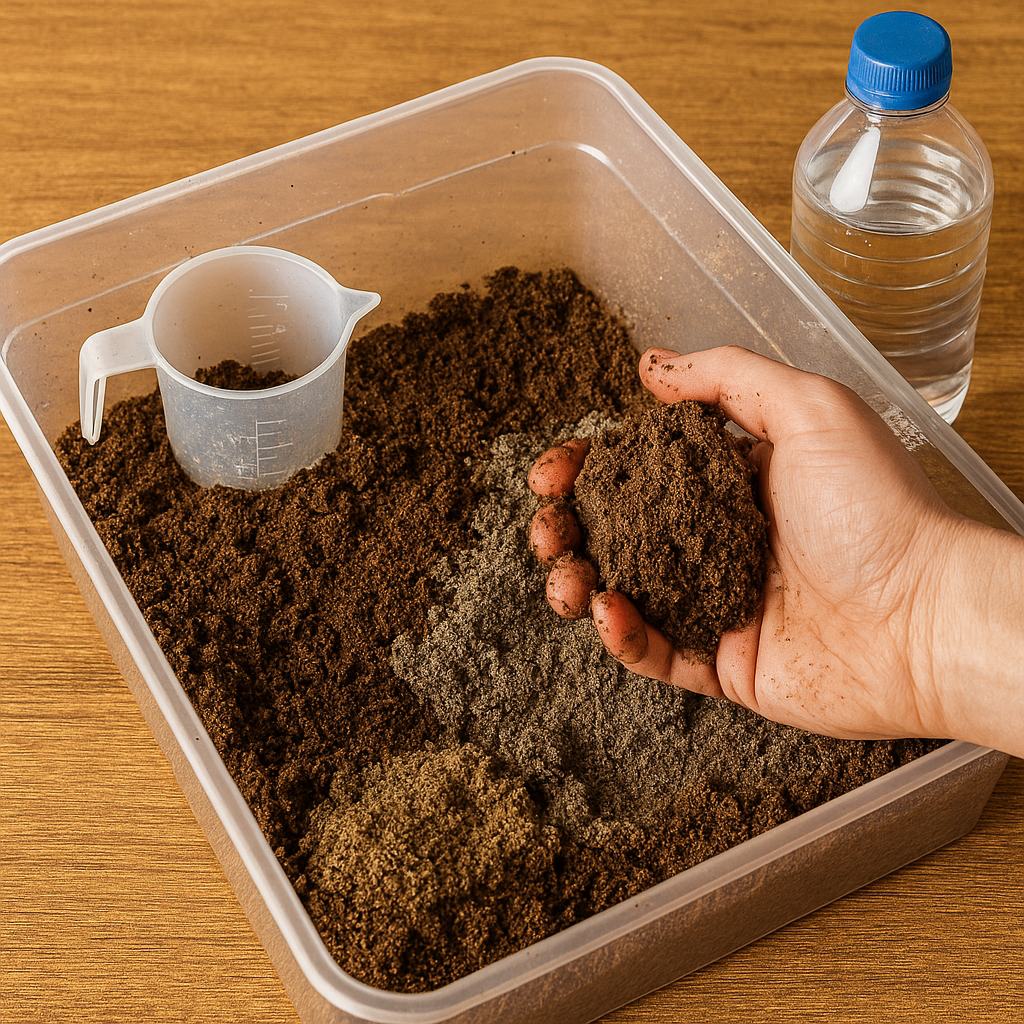
- Moisten to “sandcastle.” Add water gradually until a squeezed handful holds its shape without dripping.
- Pack in layers. Add 1" (2–3 cm) at a time and tamp firmly (fist, trowel, or flat board). Pack extra under hides/rocks.
- Shape the terrain. Gentle slope warm → cool; pre-start a couple of burrow mouths.
- Dry the surface fully. Doors open; run a small fan across the screen top until the surface is dry and firm.
- Add furnishings. Heavy décor goes on glass/liner first, then pack substrate around it.
Pro tips
- Target a firm crust on top with slightly denser layers beneath—this holds tunnels best.
- Use a spray bottle to spot-tune moisture while packing; avoid soggy pockets.
- For bio-security, start dry and clean. Avoid composted soils with additives.
Safety & maintenance
- No calcium sand. Avoid “calci-sand” and sharp builder’s sands.
- Dust check: If you see airborne dust during setup, your mix is too dry—re-mist and re-pack.
- Spot clean waste promptly; stir/repack traffic lanes as needed between full overhauls.