How to Provide Safe Night Heat
At night, most reptiles benefit from a cooler, dark period. Add heat only if your room drops below the species’ night minimum, and do it with non-light-emitting, thermostat-controlled sources. This guide shows exactly how to plan, set up, and verify safe night heat.
1) Decide if you need night heat
- Check your room’s coldest reading (pre-dawn). If it stays above your species’ night minimum, do not add night heat—let the natural drop happen.
- If your room dips below the night minimum, provide just enough heat to hold the minimum on the hot-side zone, keeping a gradient across the enclosure.
- Night heat must be dark: no red/blue/“moonlight” bulbs. Use non-light emitters only.
2) Choose night targets (fill these in)
Write the species-specific numbers here; keep the cool side several degrees lower than the warm side so a gradient remains.
- Warm-side night ambient (air where the animal sleeps): ____ °F (____ °C)
- Cool-side night ambient: ____ °F (____ °C)
- Absolute night minimum you will maintain: ____ °F (____ °C)
Typical patterns (examples to guide planning — replace with your species numbers):
• Arid/temperate species: often tolerate/benefit from a night drop; many are comfortable with mid-60s–low-70s °F (18–22 °C).
• Tropical species: usually kept warmer at night, commonly low-to-mid-70s °F (21–24 °C).
Juveniles/ill animals may need narrower drops—use the upper end of the range.
3) Pick the right night heater (non-light only)
- Ceramic Heat Emitter (CHE) — overhead radiant heat; good for open-top/screen tanks. Needs a ceramic socket and guard.
- Deep Heat Projector (DHP) — overhead IR-A/IR-B radiant without light; efficient, focused hotspot.
- Radiant Heat Panel (RHP) — ceiling-mounted panel; even, gentle warmth for larger enclosures.
- Heat mat/heat tape — external, underside only; creates a warm floor zone for species that benefit from belly heat.
- Thermostat rated above the heater wattage (pulse-proportional or on/off; dimming type not required at night).
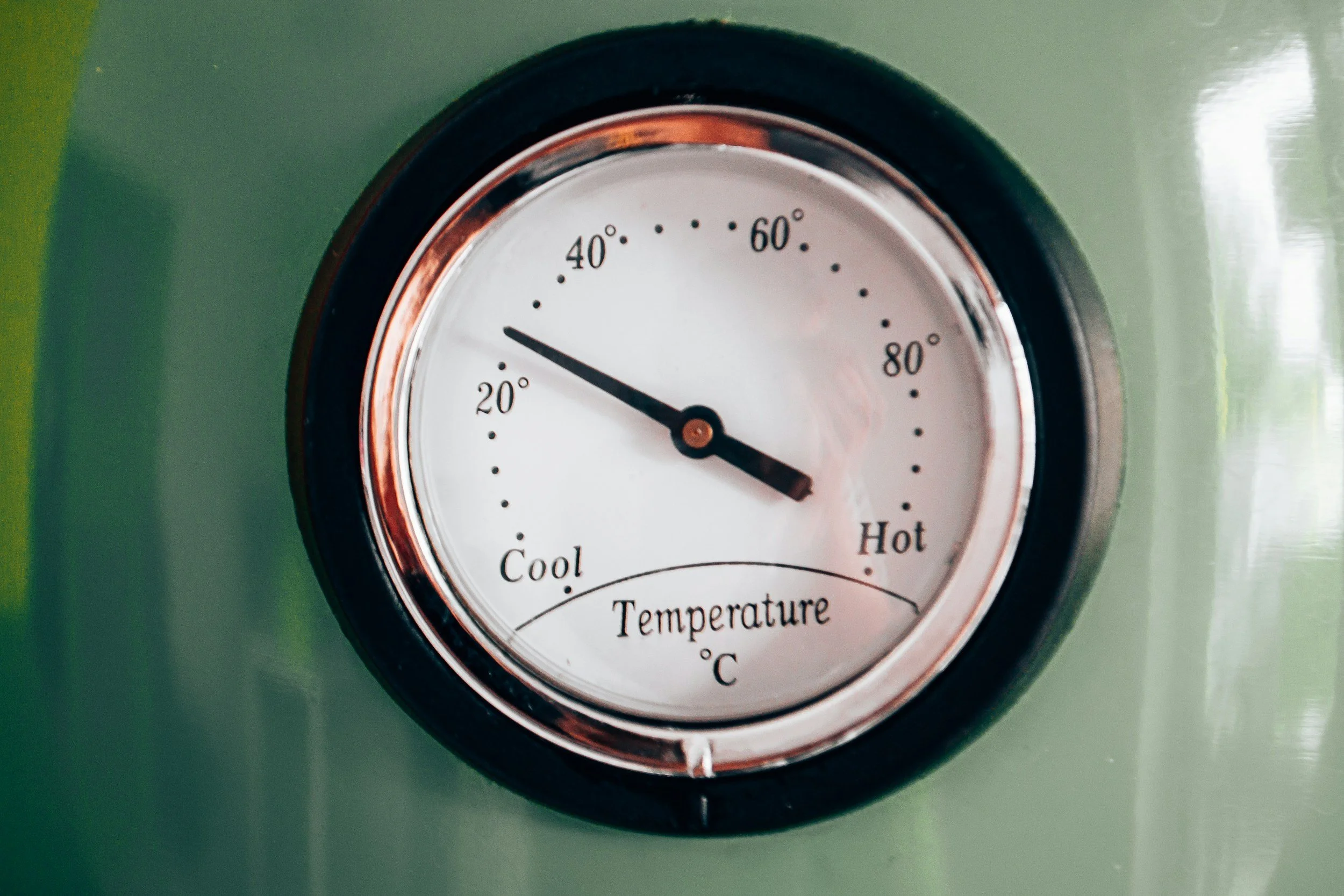
- Two+ digital thermometers (air probes) and an IR temp gun (for surfaces).
4) Mount the heater & place probes correctly
- Keep heat on the hot side. All night heat comes from the same end as your day hotspot, so the gradient persists.
- Mount safely:
- CHE/DHP/RHP: mount to the ceiling or a lamp stand outside the enclosure with a metal guard; ensure clearances to decor and animal.
- Heat mat: stick to the outside bottom under a hot-side hide; never inside the enclosure.
- Place the thermostat probe:
- Overhead heaters (CHE/DHP/RHP): fix the probe at the animal’s sleeping height on the warm side, shielded from direct radiant strike (use a small card/guard) so airflow, not beam, drives the reading.
- Heat mat: fix the probe to the interior floor surface directly above the mat (under the warm-side hide). Secure with tape and cover with a tile/hide so it can’t be moved.
- Add a second thermometer probe on the cool side to confirm the gradient overnight.
5) Program the thermostat (simple, safe profile)
- Set a night setpoint equal to your warm-side night target (e.g., 74 °F / 23 °C).
- Set a safe high limit a few degrees above that (e.g., +2–3 °F / +1–2 °C) and enable alarms.
- Use the controller’s schedule (or a timer) so the night heater runs only between lights-off and lights-on.
- For rooms with big swings, enable a small hysteresis (1–2 °F / 0.5–1 °C) to avoid rapid cycling.
6) Verify overnight (don’t skip this)
- Log temps at lights-off, midnight, 3 a.m., and pre-dawn on both sides. Adjust setpoint or lamp height if the warm side overshoots or the cool side dips too low.
- Check humidity vs. condensation. If glass fogs heavily, increase ventilation slightly on the hot side or reduce setpoint by 1–2 °F.
- Re-check after seasonal changes or bulb swaps; rooms run colder in winter.
7) Safety & troubleshooting
- Thermostat control is mandatory for CHE, DHP, RHP, and heat mats—never run them “bare.”
- No light at night. Visible-light bulbs (white/red/blue) disrupt circadian biology and should not be used for night heat.
- Use GFCI outlets and route cords so they can’t be climbed or chewed; employ lamp guards on all overhead heaters.
- If the animal presses against heaters or seeks them constantly, raise the setpoint slightly or improve access to the warm sleeping area; if it avoids the warm side entirely, lower the setpoint or diffuse the heat.
- For power outages, keep a backup plan (insulating cover, battery thermometer alarm, hot-water bottles) to bridge short gaps.