How to Build a Bioactive Enclosure (Basics)
A bioactive setup mimics natural soil ecology so plants and clean-up crews recycle waste. Done right, it stabilizes humidity, reduces odors, and adds enrichment.
1) Plan the environment
- Tropical / Humid: drainage layer recommended; moisture-loving plants.
- Semi-arid / Arid: no standing-water drainage; mineral-rich substrate and drought-tolerant plants.
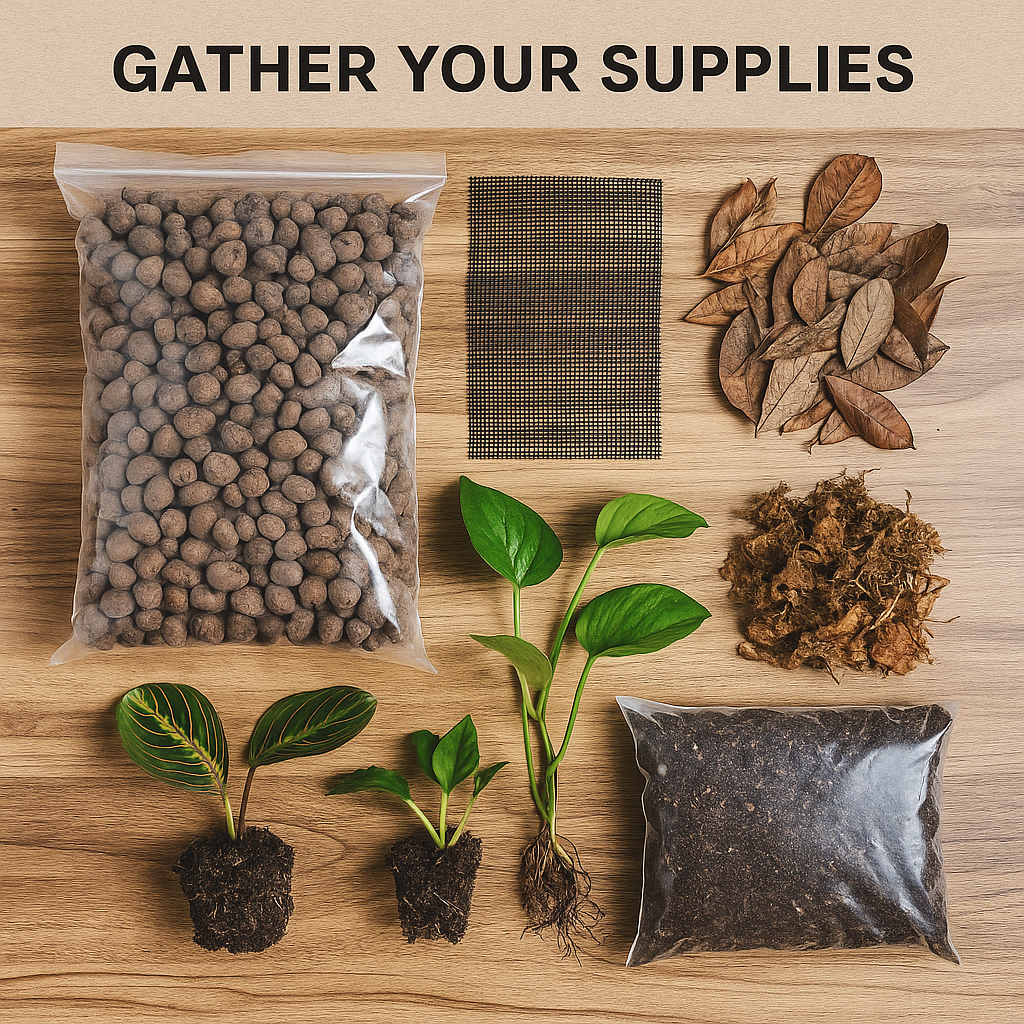
2) What you’ll need
- Bioactive-ready substrate (commercial or DIY mineral/organic blend)
- Tropical only: drainage layer (LECA or false bottom) + mesh separator
- Leaf litter & botanicals (top cover and CUC food)
- Clean-up crew: springtails + isopods suited to your climate
- Live plants (quarantined & rinsed)
- Plant light (and UVB if the animal requires it)
- Hardscape: cork, branches, rocks (place heavy items on the glass first)
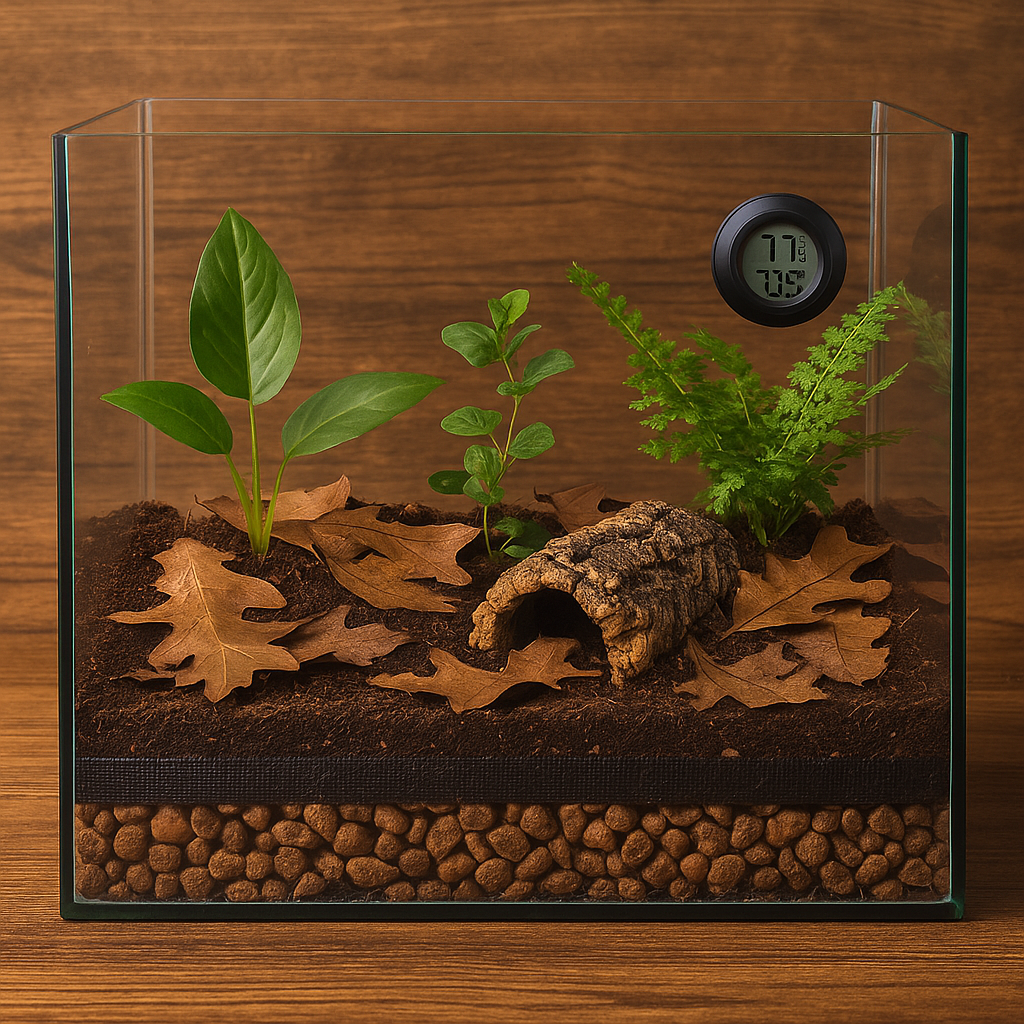
3) Build the layers
A) Tropical / Humid Bioactive
- Drainage 1–2″ (2.5–5 cm): Use LECA or a false bottom to catch excess water; include an access point or bulkhead for draining. Cover with mesh.
- Substrate 3–6″+: Pour, lightly moisten, and pack so it’s cohesive but still airy for roots and microfauna.
- Hardscape & plants: Set heavy décor on glass/liner first, then plant and backfill firmly.
- Leaf litter: Full, even coverage to protect soil and feed the clean-up crew.
B) Semi-Arid / Arid Bioactive
- No wet drainage layer: Use an arid-formulated bioactive substrate (higher mineral content; avoid standing water).
- Planting: Choose drought-tolerant species; water locally at the roots and allow soil to dry between waterings.
- Leaf litter: Light, patchy coverage for microfauna; avoid chronic damp zones.
4) Seed the biology
- Add springtails first; wait 1–2 weeks, then add isopods once leaf litter and microbe activity are established.
- Feed extremely lightly (e.g., a pinch of fish food) only if colonies stall.
5) Cycle before adding the animal (2–4+ weeks)
- Run the enclosure on its intended light/humidity schedule.
- Confirm there’s no standing water in the base and that parameters are stable.
- Look for visible microfauna activity and new plant growth.
6) Ongoing care
- Spot clean visible waste; top up leaf litter monthly; prune plants.
- Moisture management: tropical—monitor and drain the base as needed; arid—avoid chronic damp zones.
- Soil refresh: stir/patch tired areas and re-seed CUC as needed (typically annually or if numbers dip).
7) Common pitfalls & quick fixes
- Waterlogged substrate: increase airflow, drain base, reduce watering.
- CUC crash: ensure leaf litter is present; correct moisture; re-seed.
- Plant decline: adjust light intensity/duration and root moisture.
- Heavy décor sinking: always place rocks/wood on the glass/liner first, then backfill.