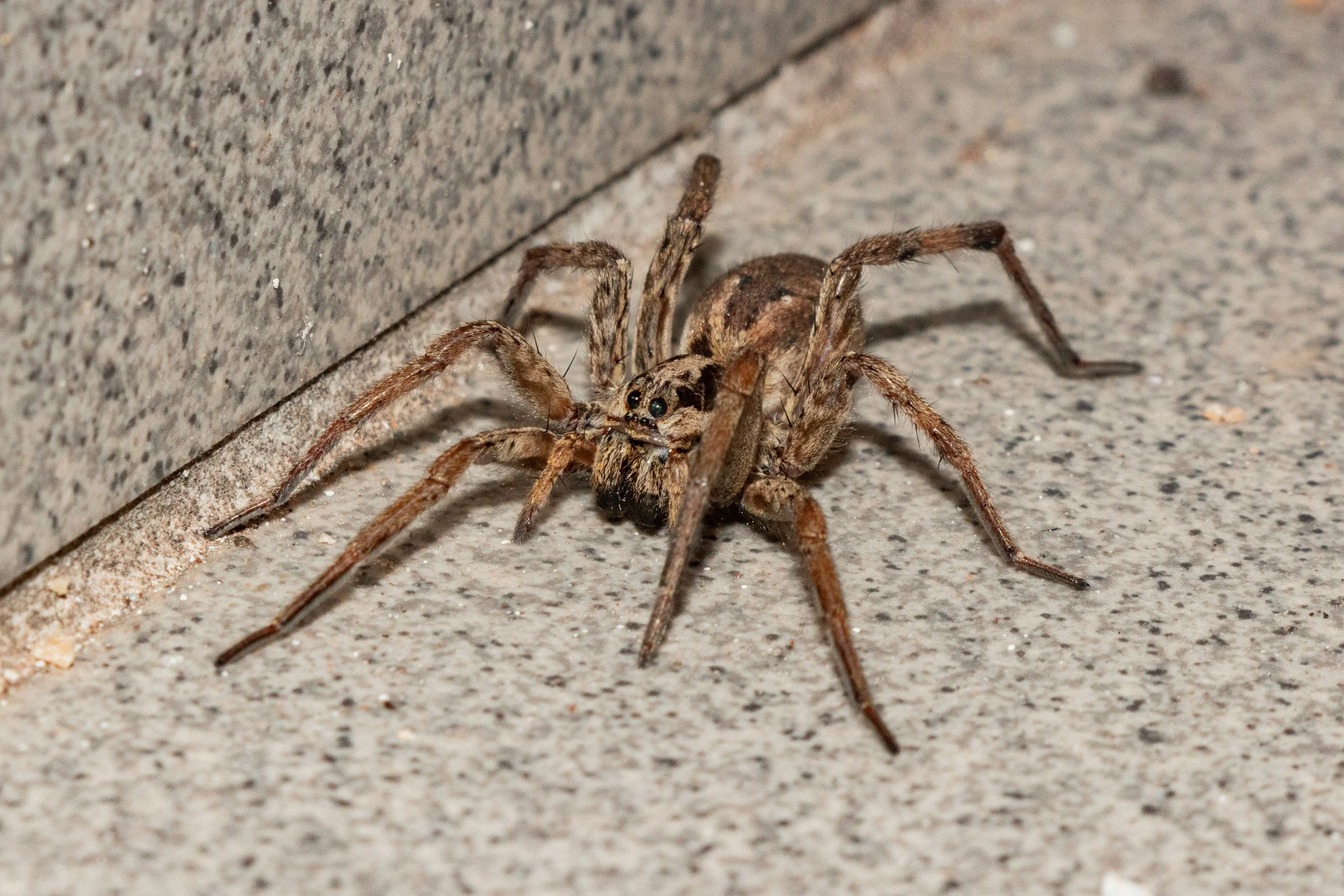
Wolf Spider (Carolina Wolf Spider example)
Family Lycosidae — Hogna carolinensis
Updated: September 2025
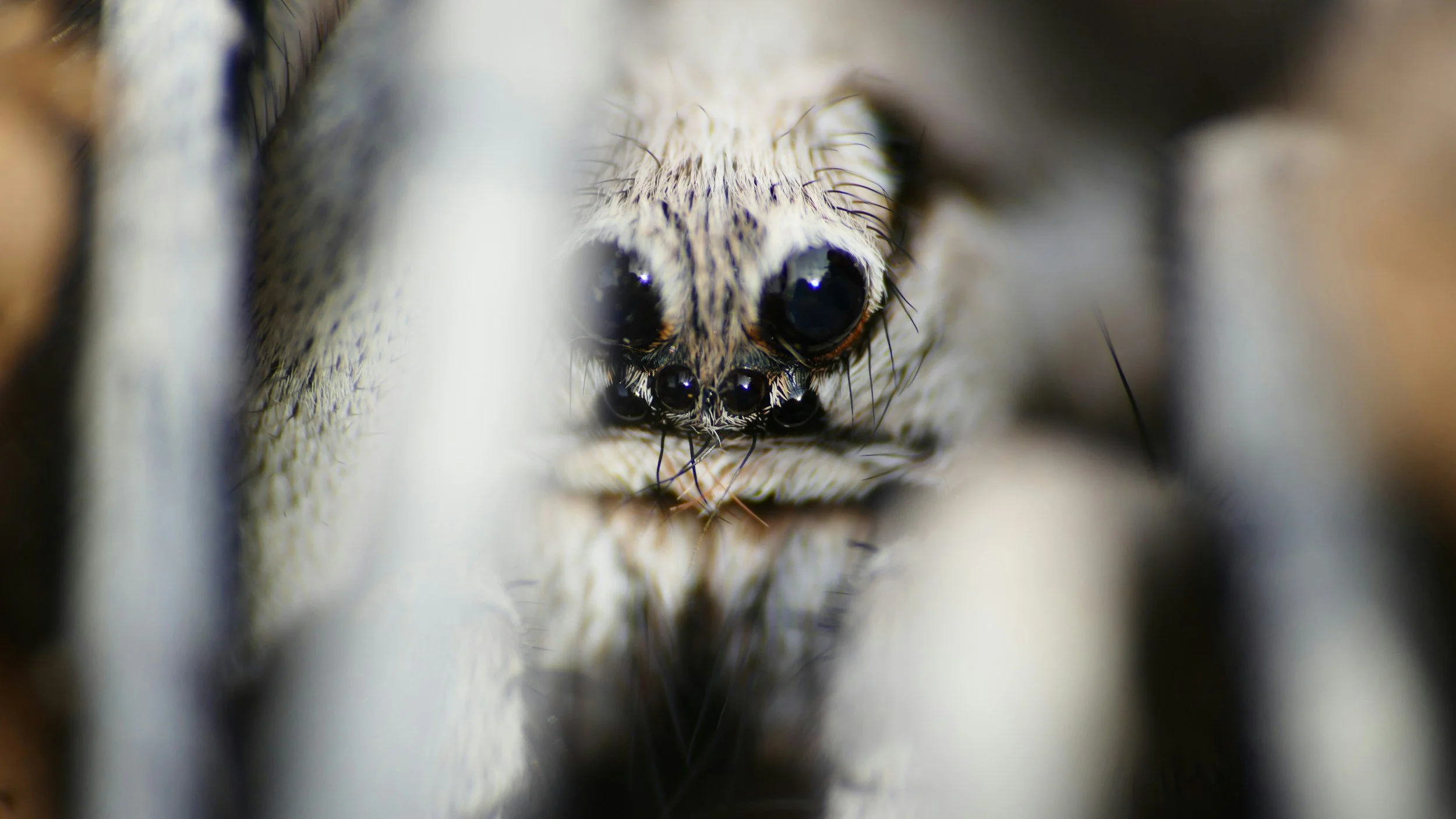
Quick Facts
COMMON NAME: Wolf Spider (example: Carolina Wolf Spider)
SCIENTIFIC: Lycosidae — e.g., Hogna carolinensis
TYPE: Terrestrial, cursorial hunter; many species burrow
ADULT SIZE: Females ~22–35 mm body length (leg span several inches; largest North American wolf spider)
LIFESPAN: ~1–2+ years typical; females often longer than males
TEMPERAMENT: Fast, shy; defensive bite possible if restrained
ADULT ENCLOSURE: Horizontal footprint; room to roam + burrow (see housing)
SUBSTRATE: Deep, compactable mix (soil/sand/coco); keep one corner slightly moist
TEMPERATURE: Room temps ~68–76 °F (20–24 °C); avoid extremes
HUMIDITY: Moderate with excellent cross-ventilation; never stagnant air
WATER: Shallow dish + occasional light mist for droplets
FEEDING: Adults 1–2×/week; juveniles every 3–5 days; live prey only
HOUSING: One per enclosure (cannibalism risk)
-
• Orientation: low and spacious (ground-dweller). A secure, front-opening box or tub with strong cross-ventilation.
• Space: give floor area ≥ 2–3× the spider’s diagonal legspan. Many keepers use 5–10 gal for large Hogna.
• Burrowing: provide depth so they can dig and feel secure; see Substrate.
• Security: tight-fitting lid/doors; tiny gaps = escape.
• No cohabitation (opportunistic cannibals).
-
• Temperature: room temps work — aim ~68–76 °F (20–24 °C); the manual notes ~24 °C is ideal.
• Night: a mild drop is fine; avoid heat mats/hotspots that can over-dry or overheat.
• Humidity: keep a moderate ambient with one slightly moist area and strong cross-ventilation; avoid stuffy, wet air.
• Water: always provide a shallow dish; add occasional light mist for droplets (do not soak the enclosure).
-
• Depth: 4–6"+ for large Hogna so they can dig (their natural burrows may extend several inches).
• Mix: compactable 3:1 soil: sand (or soil/coco with some sand); add leaf litter; keep one corner slightly moist.
• Drainage: never soggy; maintain airflow to prevent mold.
-
• Provide a snug hide (cork bark slab/tube) and natural clutter (leaf litter, twigs).
• Keep open “runways” so the spider can sprint/ambush.
• Plants (live or artificial) are optional; secure anything heavy.
-
• Live prey only (they’re active hunters). Offer size-appropriate crickets, roaches, flies, moths, etc.
• Schedule: adults 1–2×/week; juveniles every 3–5 days. Adjust by abdomen fullness and growth.
• Remove uneaten feeders after a few hours; do not power-feed.
-
• Best practice: observe, don’t handle. They’re fast and can jump/dash.
• If you must move the spider, coax into a catch cup — don’t grab.
• Bites are usually mild-to-moderate for healthy adults, but reactions vary; avoid provoking.
-
DAILY: remove leftovers; check water; verify temps/airflow.
WEEKLY: wipe panels; tidy leaves; lightly re-moisten a corner if bone-dry.
AS NEEDED: refresh sections of substrate; deep clean if moldy/soiled.
-
• Dehydration: shrunken abdomen, lethargy → ensure dish is full and micro-environment isn’t overly dry/stuffy.
• Stuck molt: often related to poor hydration/airflow — correct environment and allow recovery; don’t force peeling.
• Mites/mold: improve ventilation; spot-clean; replace affected substrate.
• Persistent refusal to eat outside premolt, repeated escape attempts, or daytime surface-sitting can indicate husbandry issues.
-
• Collection/possession can be regulated locally; check state/city rules before collecting natives.
• Never release captives outdoors.
• Medical: wolf spiders are considered of low medical concern, but bites can cause pain, swelling, itching; seek care if severe reaction.
-
□ Secure, front-opening terrestrial enclosure with cross-ventilation (escape-proof)
□ Deep substrate (≥4–6"): compactable soil/sand/coco + leaf litter
□ Cork bark hide(s), natural clutter, optional plants
□ Shallow water dish; fine-mist sprayer (for an occasional light mist)
□ Live feeders (appropriate size) + feeding tongs/catch cup
□ Basic cleaning kit (paper towels, reptile-safe disinfectant)
□ Thermometer/hygrometer (to confirm room-temp range and avoid stale air)