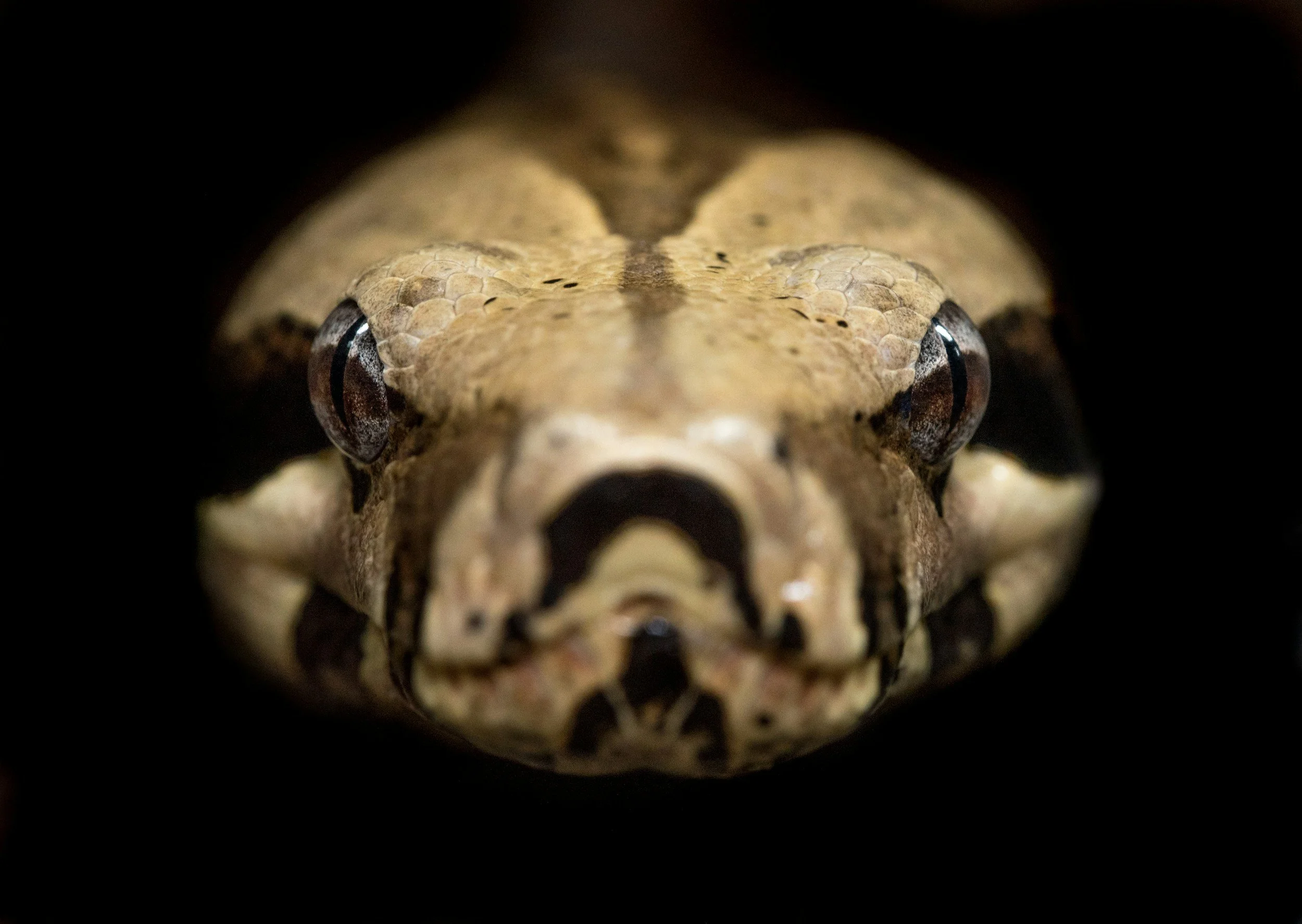
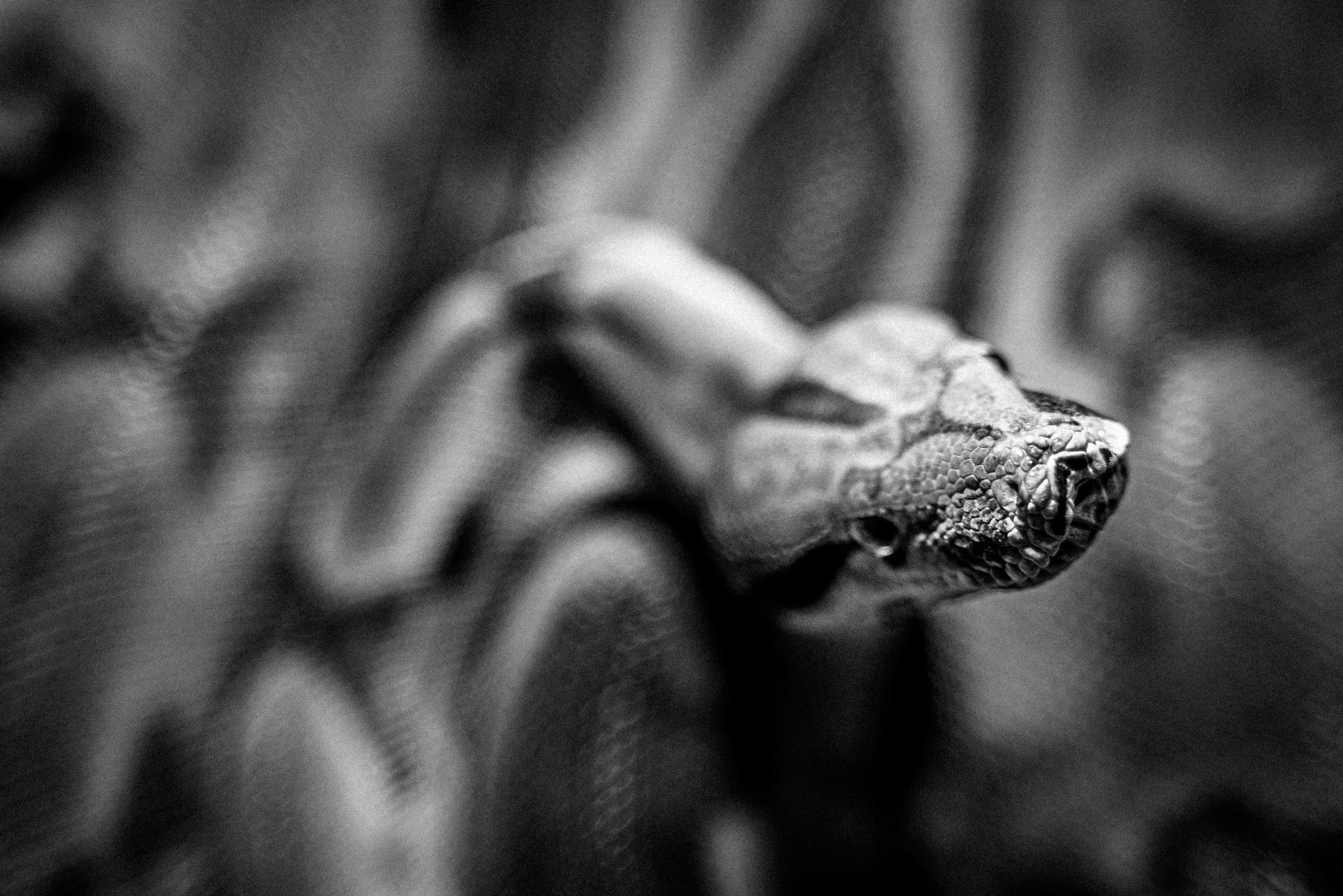
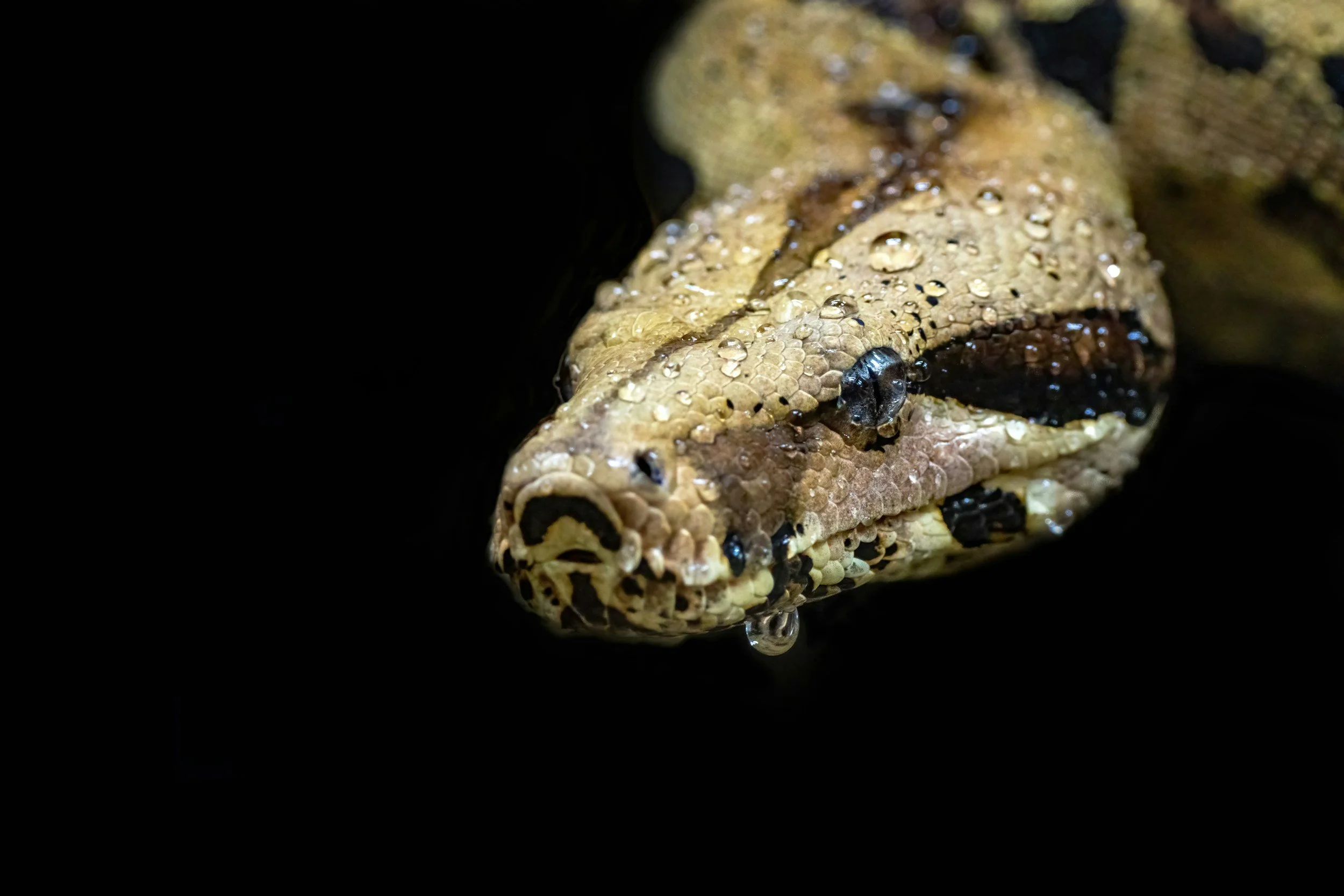
Suriname Red-Tailed Boa
Boa constrictor constrictor
Updated: September 2025
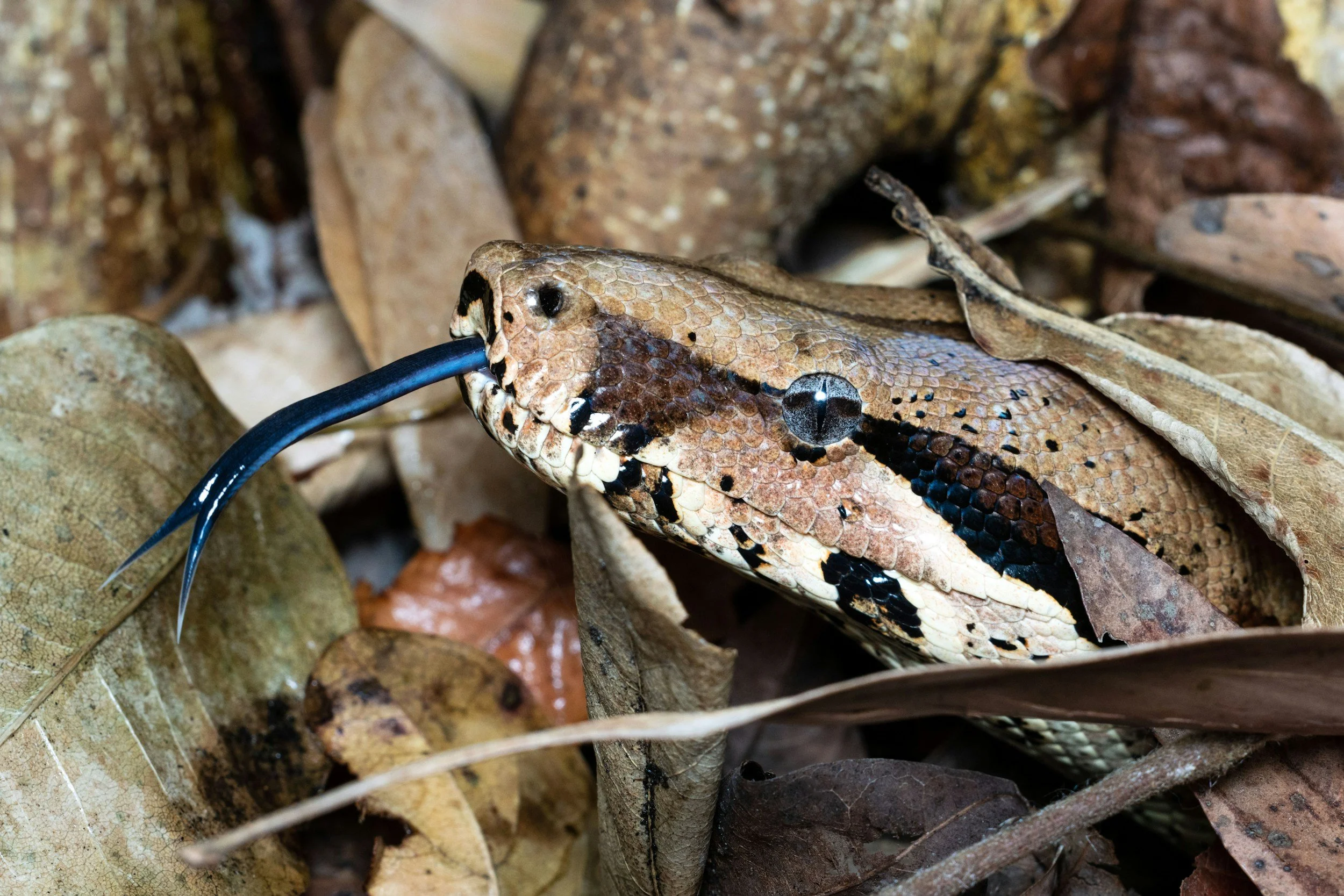
Quick Facts
COMMON NAME: Suriname Red-Tailed Boa (“true red tail”, B.c. constrictor)
SCIENTIFIC: Boa constrictor constrictor
TYPE: Powerful constrictor; mostly nocturnal/crepuscular; semi-arboreal
ADULT SIZE: Typically, 6–9 ft (large females can exceed this)
LIFESPAN: Commonly 30+ years with excellent care
TEMPERAMENT: Confident but shy; very strong—requires secure enclosure and calm handling
ADULT ENCLOSURE: ~6×3×3 ft minimum (big adults ~8×4×4 ft); height for climbing
SUBSTRATE: Deep, moisture-retentive (soil mixes, coco, cypress); avoid pine/cedar
TEMPERATURE: Basking air 86–90 °F; cool end 75–80 °F; gentle night drops OK
HUMIDITY: ~55–75% baseline; ~75–85% for shed; provide a humid hide
WATER: Heavy bowl large enough for full-body soak; refresh daily
FEEDING: Juveniles ~10–14 days; sub-adults 2–3 wks; adults 4–8 wks (adjust to condition)
HOUSING: Solitary only (no cohabitation)
-
Size — Use at least 6×3×3 ft for typical adults; very large adults do best in ~8×4×4 ft or larger. A good rule: L × ½L × ½L (length × width × height), with enclosure length ≥ snake length.
Layout — Front-opening, very secure doors/latches. Offer multiple tight hides (warm end + cool end), sturdy climbing branches/ledges, cork, and dense foliage/cover so the boa feels concealed.
Ventilation — Strong airflow prevents stale, wet air. Balance ventilation with humidity control (see below).
No cohabitation — Keep singly to avoid stress and injury.
-
Best options — Soil-based mixes (e.g., topsoil + ReptiSoil + play sand), commercial bioactive soils, coco fiber/coir, coco husk, cypress mulch; add leaf litter. Depth 2–4"+ for humidity and light burrowing.
Avoid — Pine/cedar (aromatic oils), straight sand, crushed walnut, gravel, reptile carpet for long-term setups.
-
Provide at least two snug hides (warm & cool), stout secured branches/perches, cork rounds/flats, foliage, and varied textures. Secure all heavy décor—adults are strong. Rotate clutter or add elevated ledges for enrichment.
-
Spot-clean feces/urates promptly; stir/freshen top layers weekly. Deep-clean hard surfaces every 3–6 months with a reptile-safe disinfectant (rinse thoroughly). Replace substrate every 3–6 months unless truly bioactive and maintained.
-
Temperatures — Basking air 86–90 °F (30–32 °C); cool end 75–80 °F (24–27 °C). A full gradient lets the boa self-regulate. Night drops are fine if days reliably return to range. Many keepers give true red tails a gentle winter cool-down (days ~75–78 °F with shorter photoperiod).
Humidity — Target ~55–75% normally; raise to ~75–85% during shed. Use deep, moisture-retentive substrate, a large water bowl, occasional misting, and leaf litter/sphagnum. Provide a humid hide so the snake can choose. Maintain good airflow to avoid mold.
-
Photoperiod — ~12–13 hours light spring/summer; ~11 hours in winter. No lights at night.
UVB — Recommended at low levels (UVI ~2–3 at the basking zone). Use a T5 HO 5–6% style lamp at the correct distance and always provide shaded retreats.
-
Diet — Frozen-thawed whole prey (primarily rats/mice; larger adults may take rabbits or birds). Thaw safely and warm to ~98–100 °F; offer with tongs.
Prey size — No wider than the snake’s widest point; roughly ≤10% of body weight.
Frequency (guide; adjust to body condition) —
• 0–12 months: every 10–12 days
• 12–24 months: every 12–21 days
• 2–3 years: every 2–4 weeks
• 3–4 years: every 4–6 weeks
• 4+ years (adults): every 4–8 weeks
Notes — True red tails grow slowly; feed conservatively to avoid regurge/obesity. Do not handle for ~48 hours after meals.
-
Let new arrivals settle before handling. Support the body fully with both hands/arms; avoid restraining the head. Use a hook to distinguish handling from feeding time. For large constrictors, have another capable adult present; never allow the snake to tighten around your neck.
-
Routine monitoring —
• Weigh weekly at first (adults at least monthly). Track weight, appetite, sheds, stool/urates, and behavior.
• Quarantine any new snake in a separate room/enclosure for 60–90 days.
Common red flags —
• Respiratory signs: wheeze/clicks, open-mouth breathing, bubbles/stringy saliva, head held elevated, lethargy, appetite loss.
• Stomatitis (“mouth rot”): reddened or swollen gums, caseous (cheesy) deposits, drool, face rubbing.
• Mites: tiny moving black/brown specks (esp. around eyes/chin/folds), excessive soaking, restlessness.
• Regurgitation: within 24–48 h after a meal (often oversize prey, temps off, handling too soon, dehydration/stress).
• Shed problems: retained eye caps or patchy sheds.
• Burns: from unguarded heat sources.
• Sudden weight loss, persistent anorexia outside normal seasonal cycling, or loss of muscle tone.
Immediate steps (not a substitute for a vet) —
• Respiratory/stomatitis signs → keep warm side in range, zero handling, improve ventilation, and book an exotics (ARAV) vet.
• After a regurge → no food ~2 weeks, correct temps, offer smaller prey next time, no handling for 48 h post-meal.
• Mites → treat snake and enclosure; discard porous décor; follow a proven mite protocol.
Vet care —
• Establish an ARAV-listed reptile vet now (wellness + fecal). Bring clear photos/videos of signs and a fresh fecal when you go.
Keeper toolkit —
• Digital scale, IR temp gun, extra thermostat/probes, saline for rinsing, reptile-safe disinfectant (e.g., F10/Rescue), paper towels, spare hides, quarantine tub.
-
Laws & transport —
• Check state/city rules for ownership, transport, and sales before travel or vending. Laws change; verify expo/vendor requirements.
• International trade: Boa constrictor is CITES Appendix II (permits/documentation required for cross-border movement).
Public health & hygiene —
• Reptiles can carry Salmonella even when healthy. Wash hands after any contact with the snake, enclosure, or feeders. Keep reptiles out of kitchens/food-prep areas; supervise children and high-risk people.
Handling safety —
• Support the body with two hands/arms; use a hook to “tap train” and separate handling from feeding cues.
• No handling for ~48 h after meals (regurge risk).
• Large constrictors: have another capable adult present; never allow the snake to wrap/tighten around your neck.
Heat & electrical safety —
• EVERY heat source on a thermostat; verify with digital probes and a temp gun. Guard all bulbs/emitters/panels to prevent burns.
• Use GFCI-protected outlets in humid rooms; keep power strips off the floor and use drip loops.
Enclosure security —
• Front-opening doors with reliable locks/latches; check vents/gaps. No cohabitation with other snakes. Use secure tubs/bags for transport.
-
• Front-opening enclosure (plan to 6×3×3 ft or 8×4×4 ft for adults)
• Primary heat (halogen/RHP/DHP) + thermostat(s) and bulb/element guards
• Digital thermometers with probes (warm & cool ends) + IR temp gun
• Digital hygrometers; mister/spray bottle; optional fogger on timer
• T5 HO UVB (5–6%) + timer; optional Solarmeter to verify UVI
• Two+ tight hides; secured branches/ledges; cork; foliage
• Deep, moisture-retentive substrate (2–4"+) + leaf litter/sphagnum
• Heavy soaking bowl; reptile-safe disinfectant; paper towels
• Feeding tongs; snake hook; scale for snake and prey
• Frozen-thawed feeders in appropriate sizes; travel tub/bag for transport