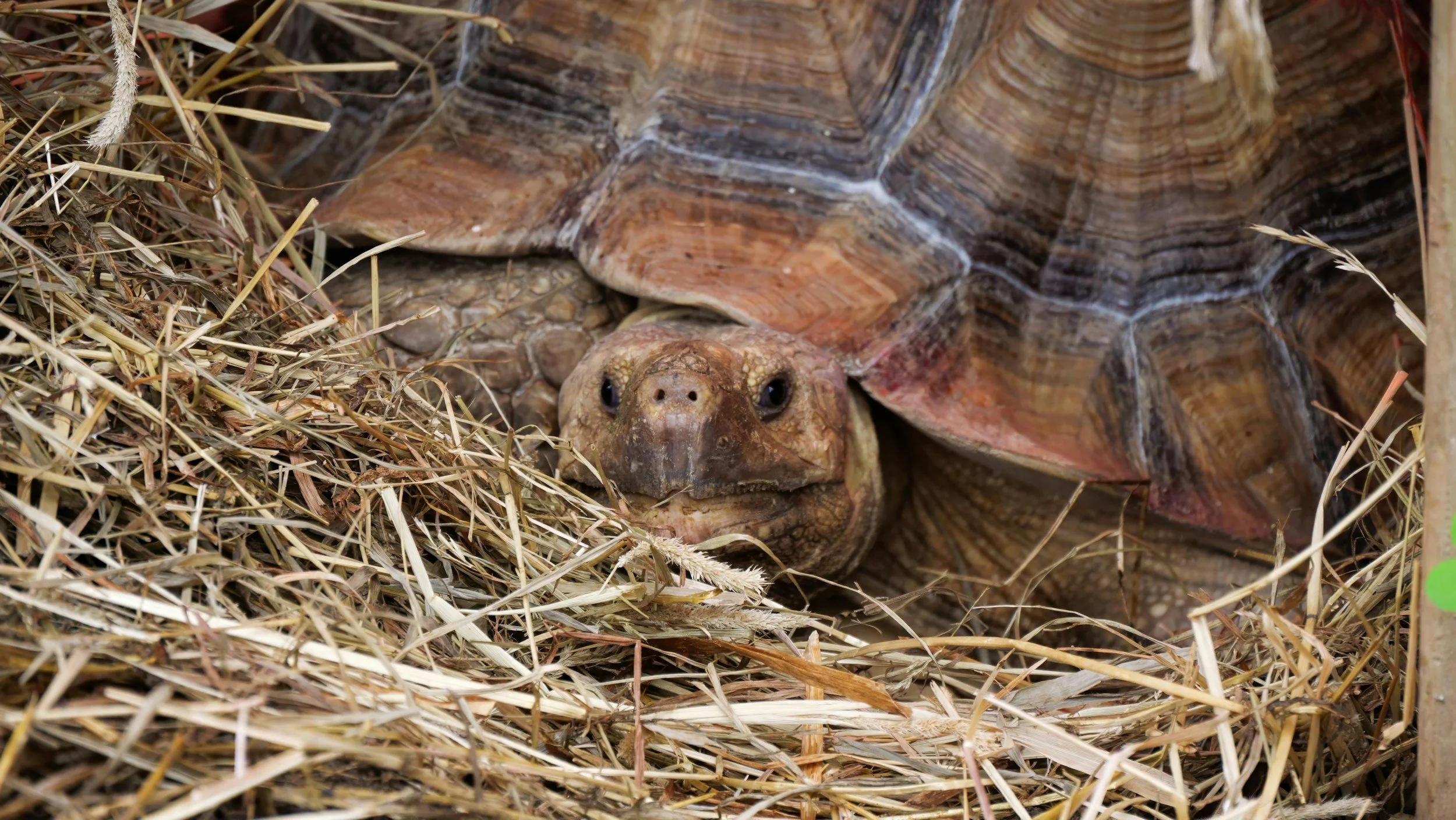
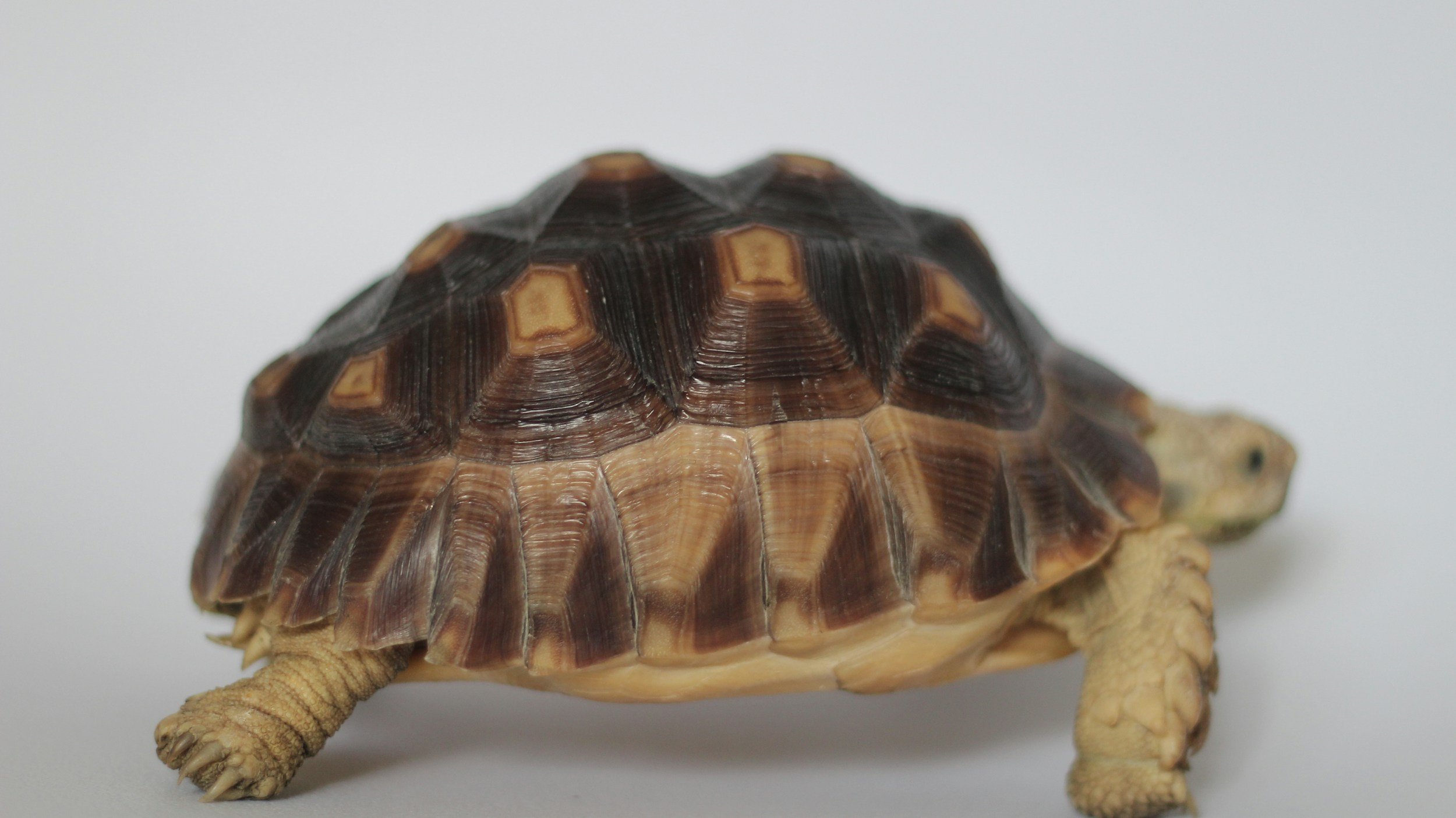
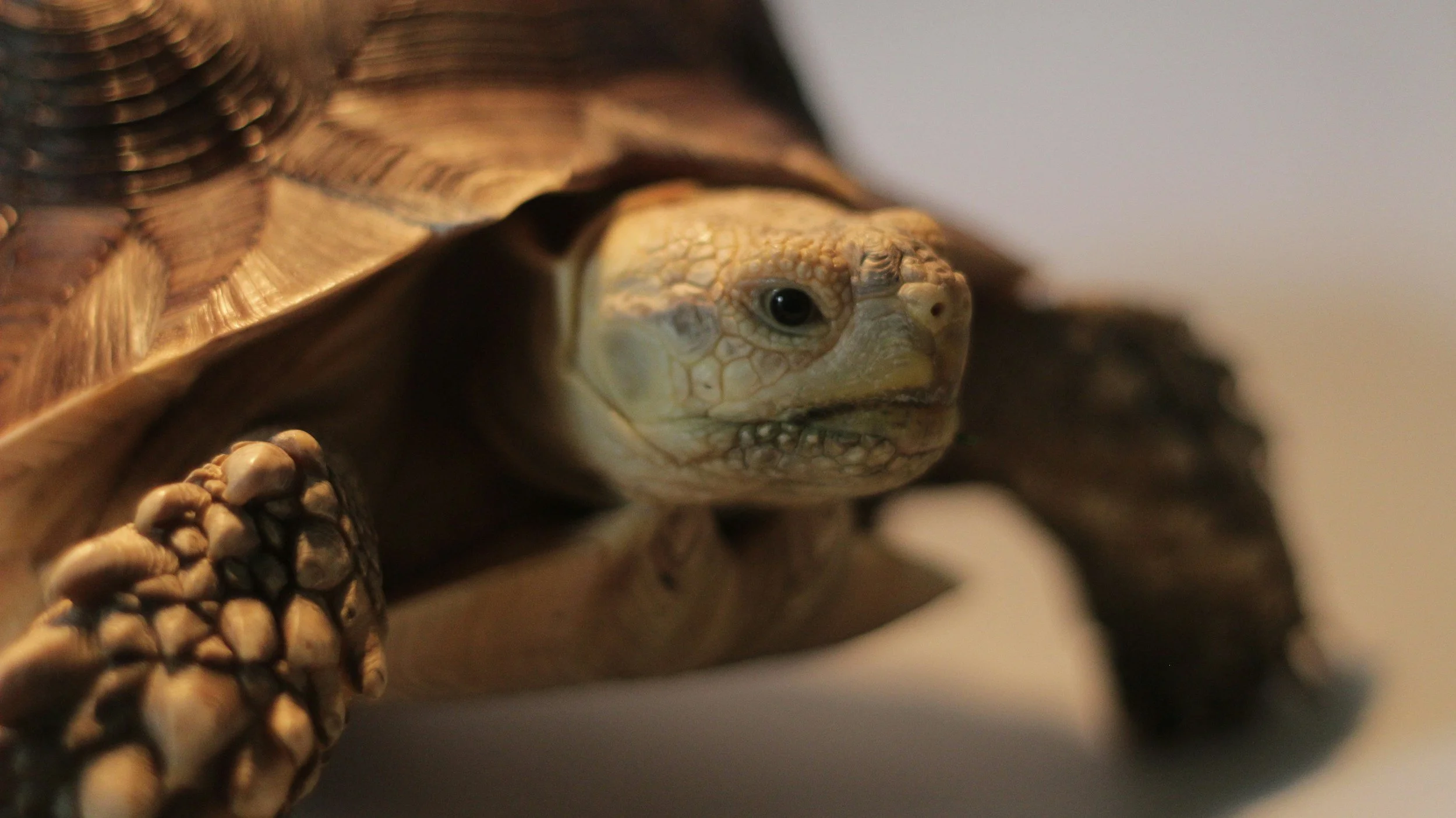
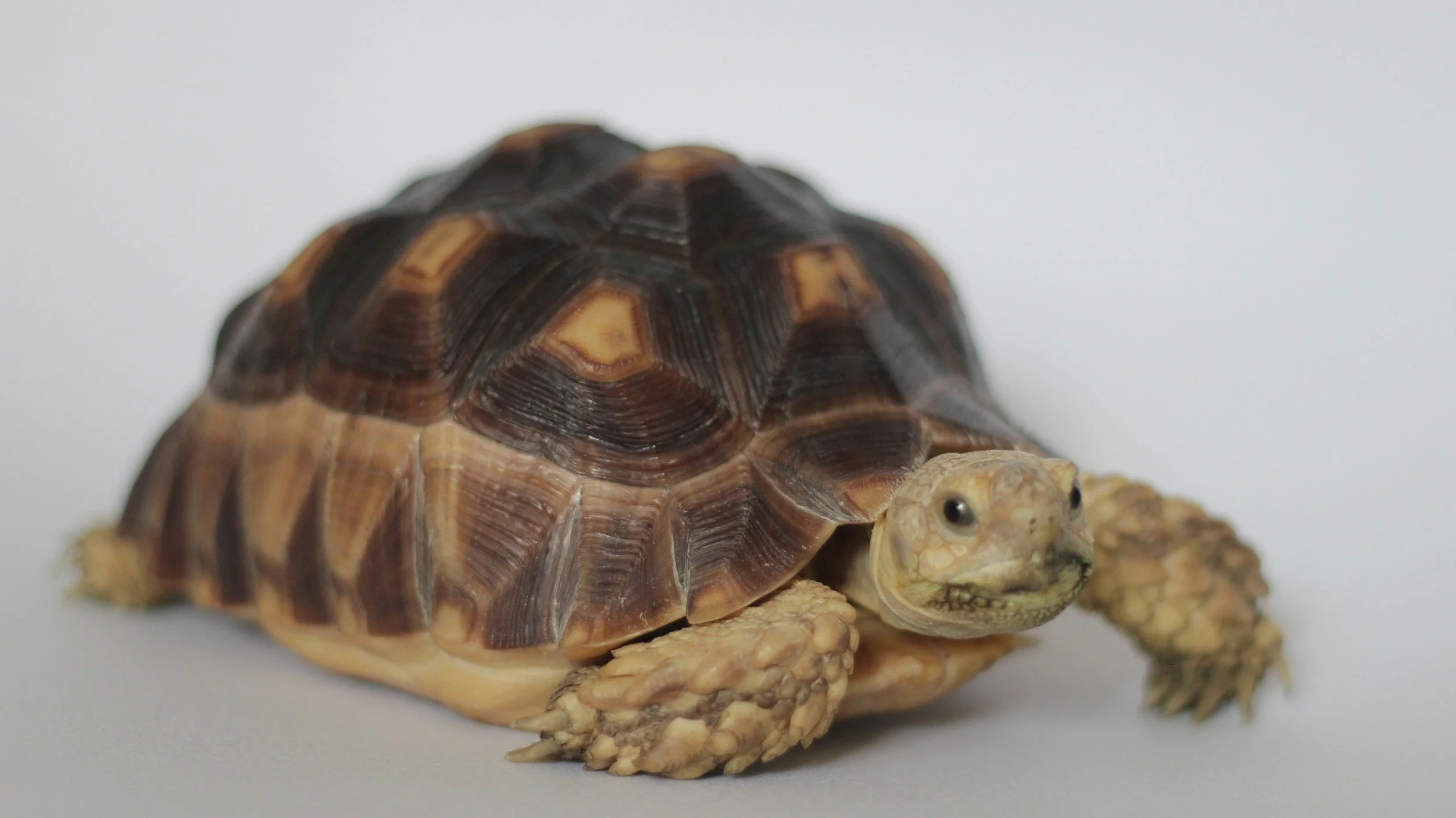
Sulcata Tortoise (African Spurred)
Centrochelys sulcata
Updated: September 2025
Quick Facts
Common name: Sulcata Tortoise (African Spurred)
Scientific: Centrochelys sulcata
Type: Giant terrestrial/burrowing, diurnal
Adult size: ~24–30" carapace; ~70–110 lb (males can exceed 40" / 200 lb)
Lifespan: Often 70+ years
Temperament: Powerful diggers/“bulldozers”; solitary is fine
Adult housing: Outdoor paddock required in suitable climates; indoor for juveniles only or short cold spells
UVB/UVI: Strong UVB; target UVI ~4–6 at basking zone
Temps (juveniles): Basking 100–105°F; ambient/cool 80–90°F; night 70–75°F
Humidity: Juveniles high humidity >80% (plus humid hide); adults drier but need access to a humid burrow
Diet: High-fiber grazer—grasses, weeds, cactus; no fruit
-
• Juveniles (<10" shell): ~8' L × 4' W × 2.5' H (≈32 sq ft). Enclosure front should have a 6–12" opaque barrier to prevent pacing.
• Adults: Indoors long-term is impractical; plan a large, secure outdoor pen (think hundreds of sq ft), with sun + shade and well-drained soil.
• Multiple tortoises: Avoid housing males together; solitary is fine.
-
• Build stout walls (cinder block works) and sink them ≥12" to deter burrowing escapes; cover the top with chain link to exclude predators.
• Provide open sun, multiple shaded retreats, windbreaks, and a weatherproof heated refuge for cold snaps.
• If winters stay <70°F daytime, plan a heated shed/garage for temporary indoor housing.
-
• Indoors: 13 h light in summer / 11 h in winter.
• UVB: Use a T5-HO desert-strength tube; aim ~UVI 4.0–6.0 at the basking area (verify with a Solarmeter 6.5).
• Outdoors: Natural sunlight supplies UVB; still ensure shaded retreats.
-
• Juveniles (indoors): Basking 100–105°F; ambient/cool 80–90°F; night 70–75°F.
• Adults: More tolerant of ranges but still need warm basking and a gradient; avoid cold/damp.
• Humidity: Keep juveniles >80% with a humid hide; adults can run drier overall but should have access to a humid microclimate/burrow.
-
• Depth: ~6"+ for juveniles; ~24" for adults (digging is natural).
• Mixes: 60% organic topsoil + 40% play sand; or coconut fiber, play sand, or cypress mulch (quarantine first for new arrivals).
• Remove waste daily; replace sections as soiled; full indoor refresh every 3–6 months.
• Avoid wood-chip/wood-shaving substrates (impaction risk).
-
• Foundation: Graze on grasses/hays (Bermuda, timothy) and broad-leaf weeds (dandelion, plantain, clover, sow thistle, mallow, etc.); add opuntia (nopales).
• Variety is key; offer on a tray to reduce ingestion of substrate.
• Absolutely no fruit; squash/pumpkin only as rare treats.
• Supplements: Keep a cuttlebone in the pen; light multivitamin/calcium dust per product guidance.
• Plant safety: Cross-check with The Tortoise Table database.
-
• Provide a large, shallow water dish (no deeper than knee height); refresh daily and scrub weekly.
• Hatchlings/young juveniles: Soak daily 20–30 min in 85–95°F water; ensure they can easily exit.
-
• Build terrain: dirt mounds, packed paths, edible drought-tolerant plants, cork/hollow logs, and flat flagstone.
• Include a humid hide on the cool side (moistened substrate).
• Ensure all features are stable and cannot trap or topple onto the tortoise.
-
• Minimal handling—support body and legs from below; never dangle.
• Expect strong pushing/digging; protect landscaping and fences.
-
DAILY: Spot-clean feces/urates; refresh water; quick temp/humidity checks (probe + IR gun).
WEEKLY: Rake/turn substrate areas; wipe surfaces; prune edible plants.
MONTHLY/QUARTERLY: Deep-clean indoor setups; replace substrate sections; service heating/UVB; for outdoor pens, inspect/repair fencing and dig barriers.
-
Watch for: Pyramiding (raised scute growth), lethargy, anorexia, nasal/ocular discharge, wheezing, shell soft spots/rot, limb weakness (MBD), diarrhea/parasites, burns/injuries.
Immediate checks: Verify basking/ambient temps, UVI, humidity (esp. juveniles), hydration, and diet variety/fiber.
Vet: Use an experienced reptile vet (ARAV/RVC-style exotics) for persistent/systemic signs.
-
• Conservation/Trade: CITES Appendix II (no commercial export of wild-taken specimens); IUCN: Vulnerable—never release pets.
• Public health: All reptiles can carry Salmonella—wash hands after contact; keep out of kitchens; supervise children and high-risk individuals.
-
□ Juvenile indoor enclosure (≈8'×4'×2.5') with 6–12" front barrier
□ Outdoor paddock materials (cinder blocks sunk ≥12", chain-link top, gates, shade structures)
□ T5-HO UVB fixture + desert-strength tube; timer; Solarmeter (if possible)
□ Halogen basking floods; thermostat-controlled radiant heat panel (large enclosures)
□ 2+ digital probe thermometers/hygrometers + IR temp gun
□ Substrate bulk: organic topsoil & play sand (60:40) / coco / cypress; pressure sprayer
□ Large shallow water dish; extra trays/feeding platters
□ Edible plants/seed mix (cross-checked on The Tortoise Table)
□ Cuttlebone; reptile multivitamin/calcium