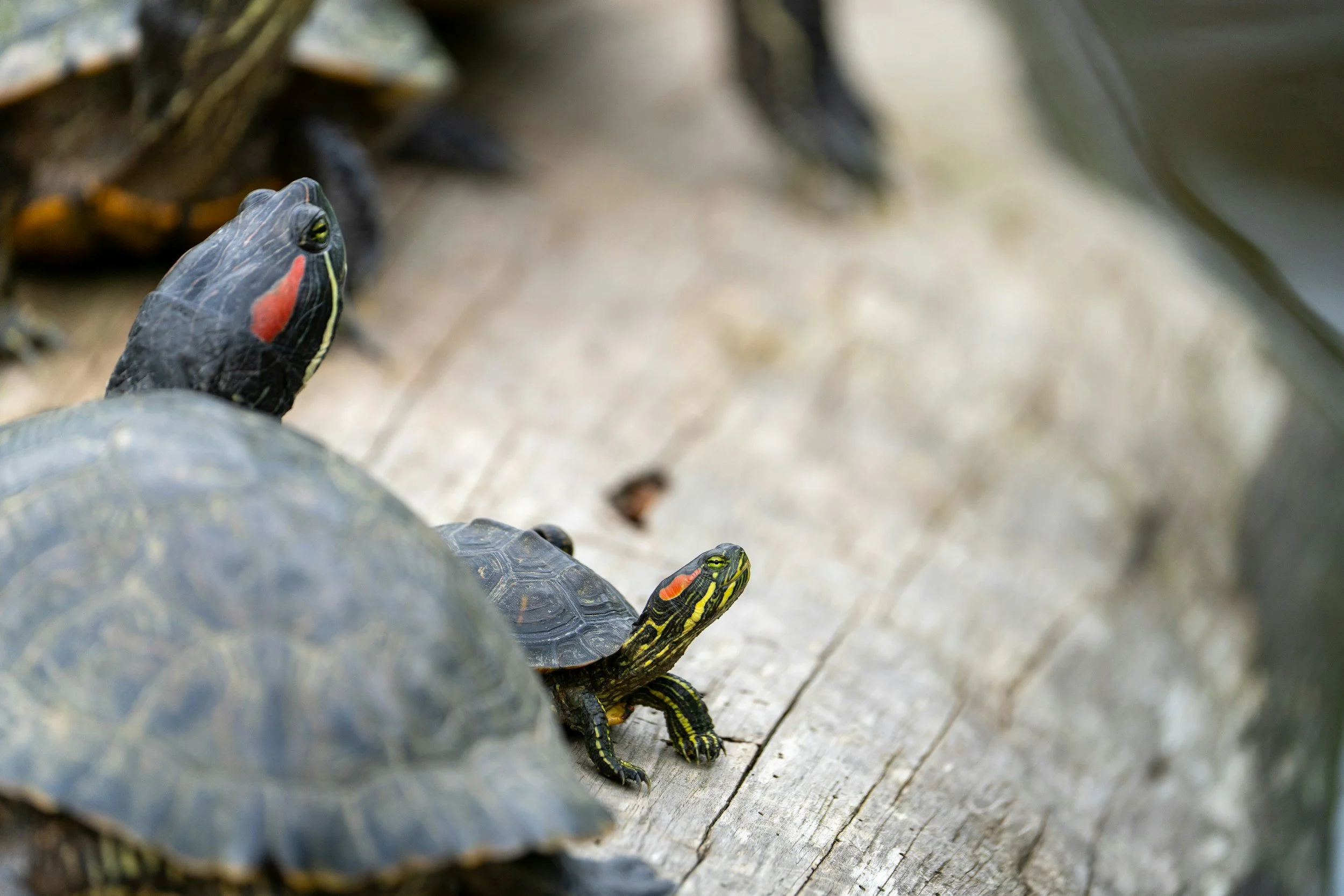
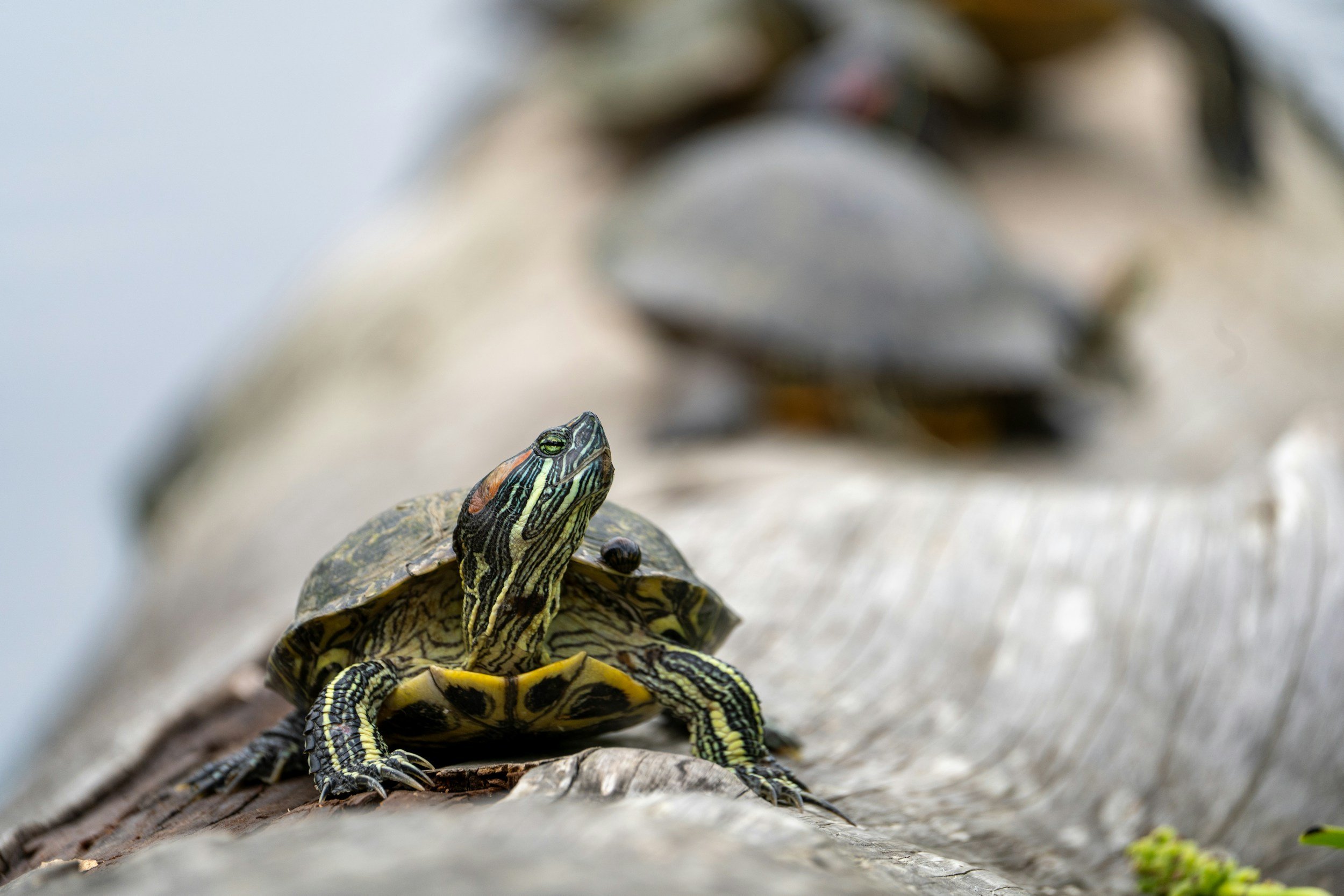
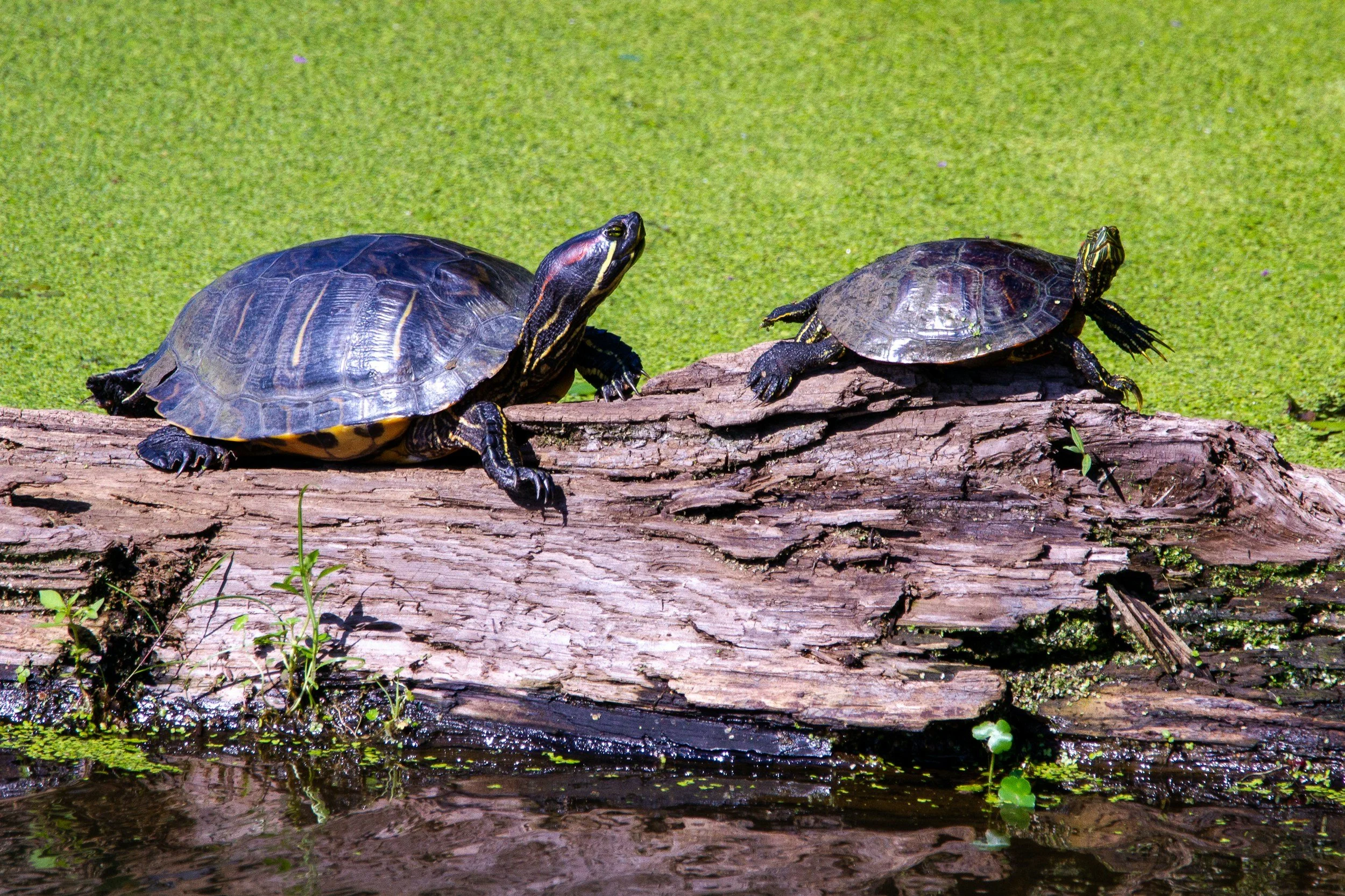
Red-Eared Slider
Trachemys scripta elegans
Updated: September 2025
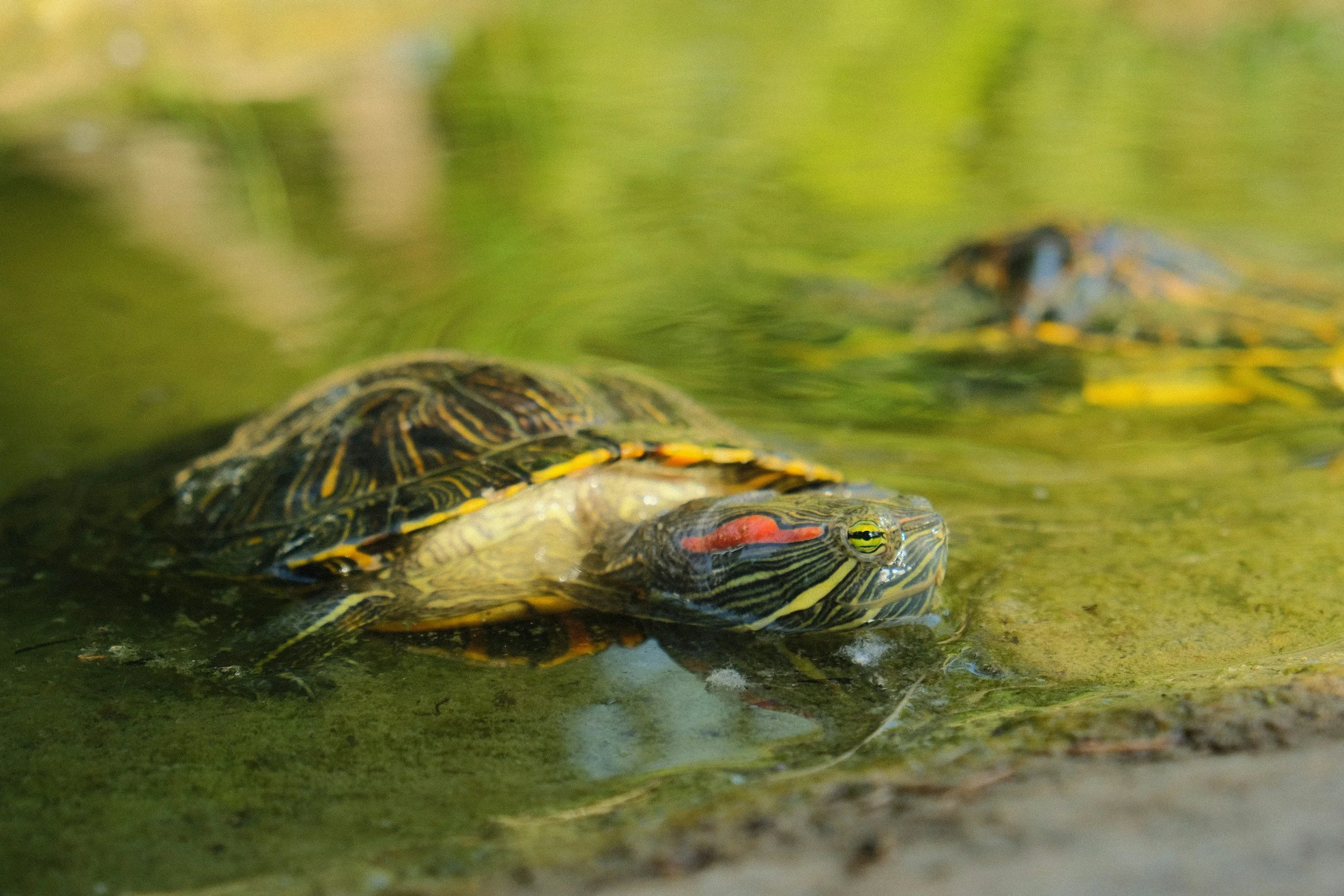
Quick Facts
Common name: Red-Eared Slider
Scientific: Trachemys scripta elegans
Type: Aquatic basking turtle
Adult size: ♀ ~10–12" carapace; ♂ ~6–9"
Lifespan: ~20–40+ years
Temperament: Can nip; limit handling
Adult enclosure: ~100+ gallons for one adult (rule: ~10 gal per inch shell)
Water temp: ~75–79°F (hatchlings toward warm end)
Basking surface: ~90–95°F (dry platform, full haul-out)
UVB/UVI: Strong UVB; aim ~UVI 3–5 at bask, shade elsewhere
Diet: Juveniles ~50% protein/50% greens; adults ~25% protein/75% greens
-
• Plan adult size from day one: ~100+ gallons for most adults.
• Deep, open water for strong swimming + a completely dry basking dock.
• Rule of thumb: ~10 gallons per inch of shell length.
-
• 12h light / 12h dark.
• High-output UVB spanning part of the tank; target ~UVI 3–5 at the bask.
• Bright visible light over water; replace UVB per schedule.
-
• Water: ~75–79°F (24–26°C); warmer end for hatchlings.
• Basking platform (dry): ~90–95°F (32–35°C).
• Measure with reliable thermometers/probes; lights off at night.
-
• External canister filter rated ~2–3× your actual water volume.
• Keep ammonia 0 ppm, nitrite 0 ppm, nitrate <~40 ppm.
• Partial water changes every 1–2 weeks (or as testing dictates).
-
• Bare bottom = easiest to clean. If substrate, use fine sand (avoid ingestible gravel).
• Stable basking dock/ramps, hides, driftwood, hardy aquatic plants.
• Secure all décor so it can’t trap the turtle.
-
• At least ~2× carapace length; deeper is great if basking is easy to access.
-
• <1 year: ~50% protein / 50% greens; offer daily (pellets every other day).
• >1 year: ~25% protein / 75% greens; veggies daily, protein 1–2×/week, pellets 2–3×/week.
• Staples: quality turtle pellets; dark leafy greens & aquatic plants; occasional earthworms/insects/whole prey.
• Provide cuttlebone for calcium.
-
• Limit handling; support with two hands; sliders can nip.
• Always wash hands after contact with animal, water, or equipment.
-
DAILY: Remove uneaten food/solid waste; top off with dechlorinated water.
WEEKLY/BIWEEKLY: Test ammonia/nitrite/nitrate/pH; partial water change; service filter per maker.
SAFETY: Clean equipment away from kitchens; disinfect sinks/tubs if used.
-
• Buoyancy issues (tilting), lethargy, appetite loss
• Swollen/closed eyes, nasal discharge
• Shell soft spots/erosion, foul odor, injuries/bites
→ See an experienced reptile vet promptly; husbandry check: heat/UVB, water quality, diet.
-
• US: Illegal to sell turtles <4" shell length; many states restrict sliders—check local laws.
• Never release pets outdoors (invasive). Rehome via rescues if needed.
• Public health: Salmonella risk—wash hands; keep out of kitchens; supervise children.
-
□ Large watertight tank (aim ~100+ gal adult)
□ External canister filter (rated ~2–3× water volume)
□ Test kit (ammonia/nitrite/nitrate, pH) + dechlorinator
□ Dry basking dock/platform with ramp
□ Heat lamp (halogen) for bask; IR temp gun/thermometer
□ High-output UVB fixture; timer; GFCI outlet
□ Stable décor (driftwood/rocks), hides, plants
□ Quality pellets; greens; occasional protein items; cuttlebone
□ Siphon/gravel-vac; dedicated buckets/towels