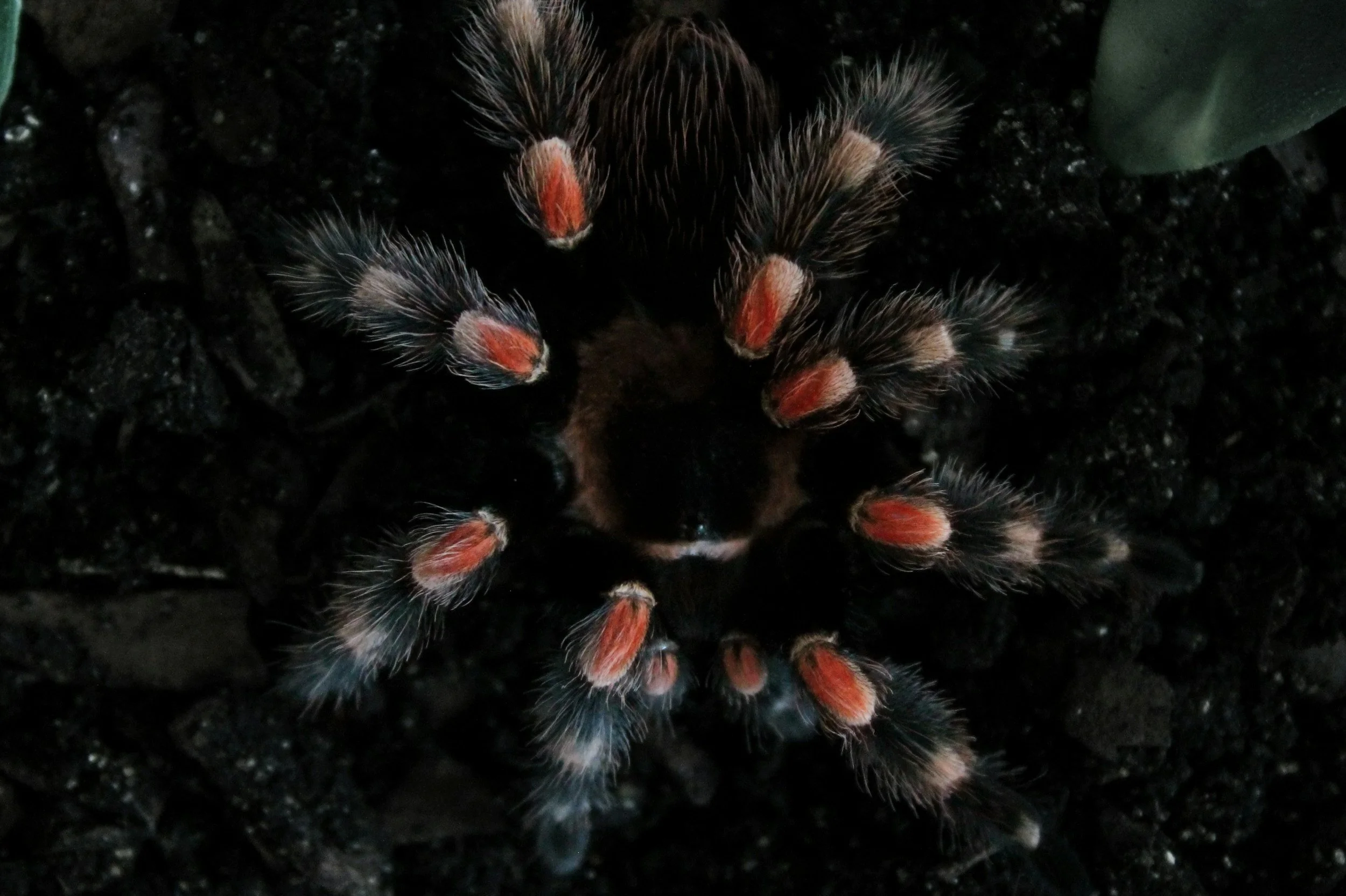
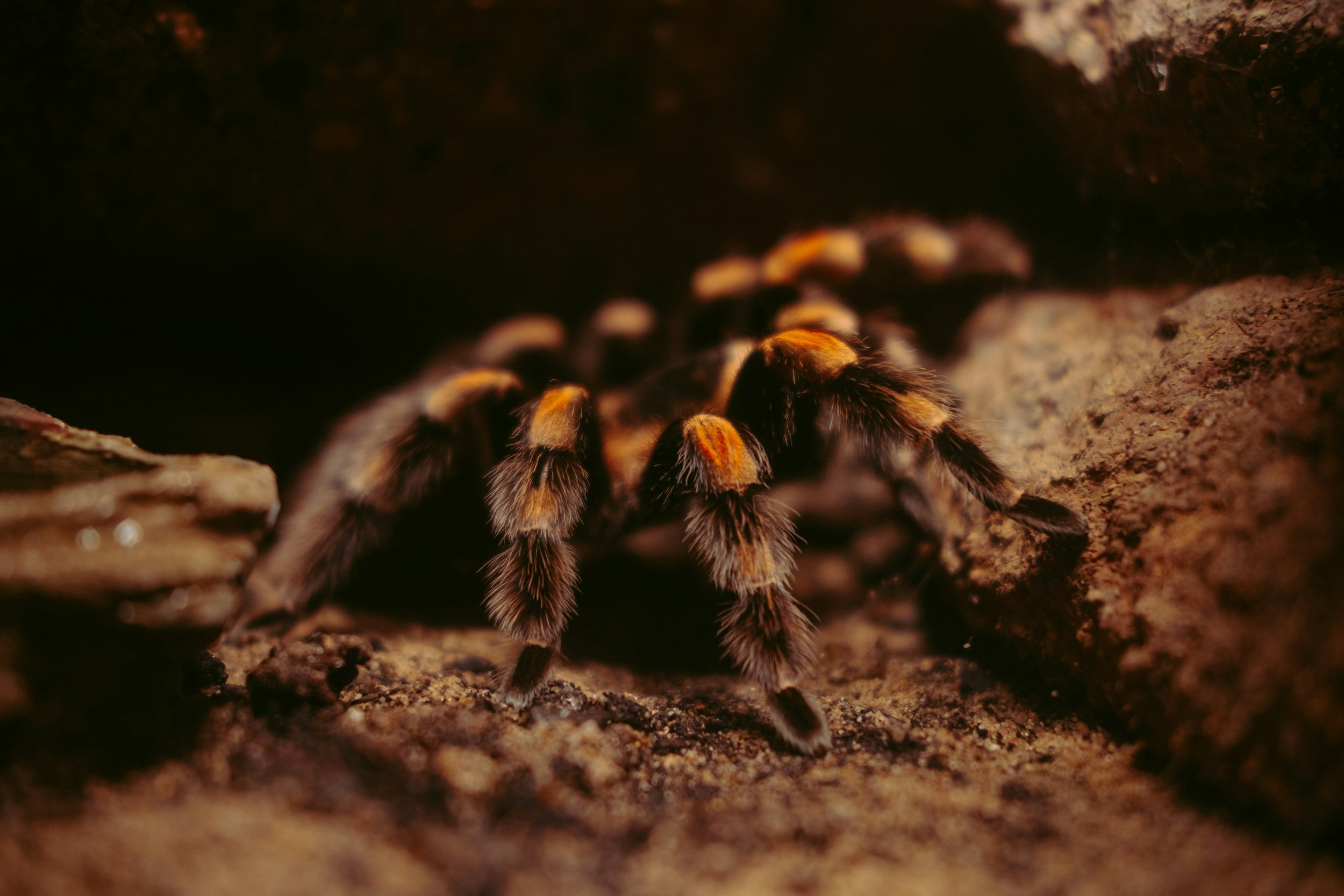
Mexican Red-Knee Tarantula
Brachypelma hamorii
Updated: September 2025
Quick Facts
COMMON NAME :
SCIENTIFIC NAME :
TYPE :
ADULT SIZE :
LIFESPAN :
TEMPERAMENT :
ENCLOSURE SIZE :
SUBSTRATE :
TEMPERATURE :
HUMIDITY :
WATER :
FEEDING:
Mexican Red Knee Tarantula
*Brachypelma hamorii*
New World — terrestrial (floor space > height)
♀ 5–6", ♂ 4–5"
♀ 15–30 years; ♂ ~5 years
Generally calm/docile; individuals vary
Adult ~12×12×12 in (or low 5–10 gal); juvenile 6–8" tub
3–4" mostly dry coco/soil; provide a hide
70–78 °F (21–26 °C)
Keep substrate **dry**; don’t chase a % number
Shallow dish available at all times
Juv ~1×/week; adult every 10–14 days; remove leftovers
-
• Adult footprint: ~12×12×12 in (or low 5–10 gal); floor space > height
• Juveniles: 6–8" deli cup/tub; upgrade as they outgrow
• Lid & ventilation: Escape-proof lid with cross-ventilation (side vents)
• Substrate: 3–4" mostly dry coco/topsoil mix; lightly compacted
• Hide & decor: One secure hide (cork/half-log); leaf litter or faux plants
• Climbing risk: Minimize tall drops; terrestrial species can be injured by falls
• Lighting: No special lighting; ambient room light is fine
-
• Target temps: ~70–78 °F (21–26 °C); avoid extremes
• Heat (only if room is cool): Thermostat-controlled mat on the SIDE, never underneath
• Humidity method: Do NOT chase %; keep substrate dry and provide a constant water dish
• Ventilation: Good airflow > misting; avoid stale, sealed setups
• Molting: Pre-molt fasting and low activity are normal; keep conditions stable and hands off
-
• Juveniles: Appropriate-size prey about once per week
• Adults: Every 10–14 days
• Prey types: Crickets, roaches; size ≲ abdomen width
• Clean-up: Remove uneaten prey within 24 hours
• Fasting: Weeks/months of fasting can be normal (esp. pre-molt) if abdomen isn’t shrinking
-
• Temperament: Generally calm, but individuals vary
• Handling: Best as a display animal; handling risks falls and stress
• Defenses: May flick urticating hairs—avoid eye/skin exposure
• Stress signs: Pacing, refusing hide, pressing against walls → review enclosure and vibrations
-
Dehydration: Shrunken abdomen, lethargy → refresh water, check temps/airflow
• Stuck molt: Don’t spike humidity; keep quiet and monitor post-molt recovery
• Injury: Falls can rupture abdomen; if bleeding, use cornstarch/styptic and seek help
• Pests: Prevent mites by removing leftovers and keeping enclosure clean/ventilated
-
• Pesticides/cleaners: No aerosols or scented cleaners near the enclosure
• Kids/pets: Keep enclosure secured and out of reach
• Sourcing: Prefer captive-bred; follow local regulations
-
• Escape-proof enclosure (adult) + juvenile tubs
• Coco/soil substrate (unscented, chemical-free)
• Cork hide + leaf litter
• Shallow water dish
• Feeding tongs, catch cup, soft brush
• Digital thermometer (and thermostat if using heat)