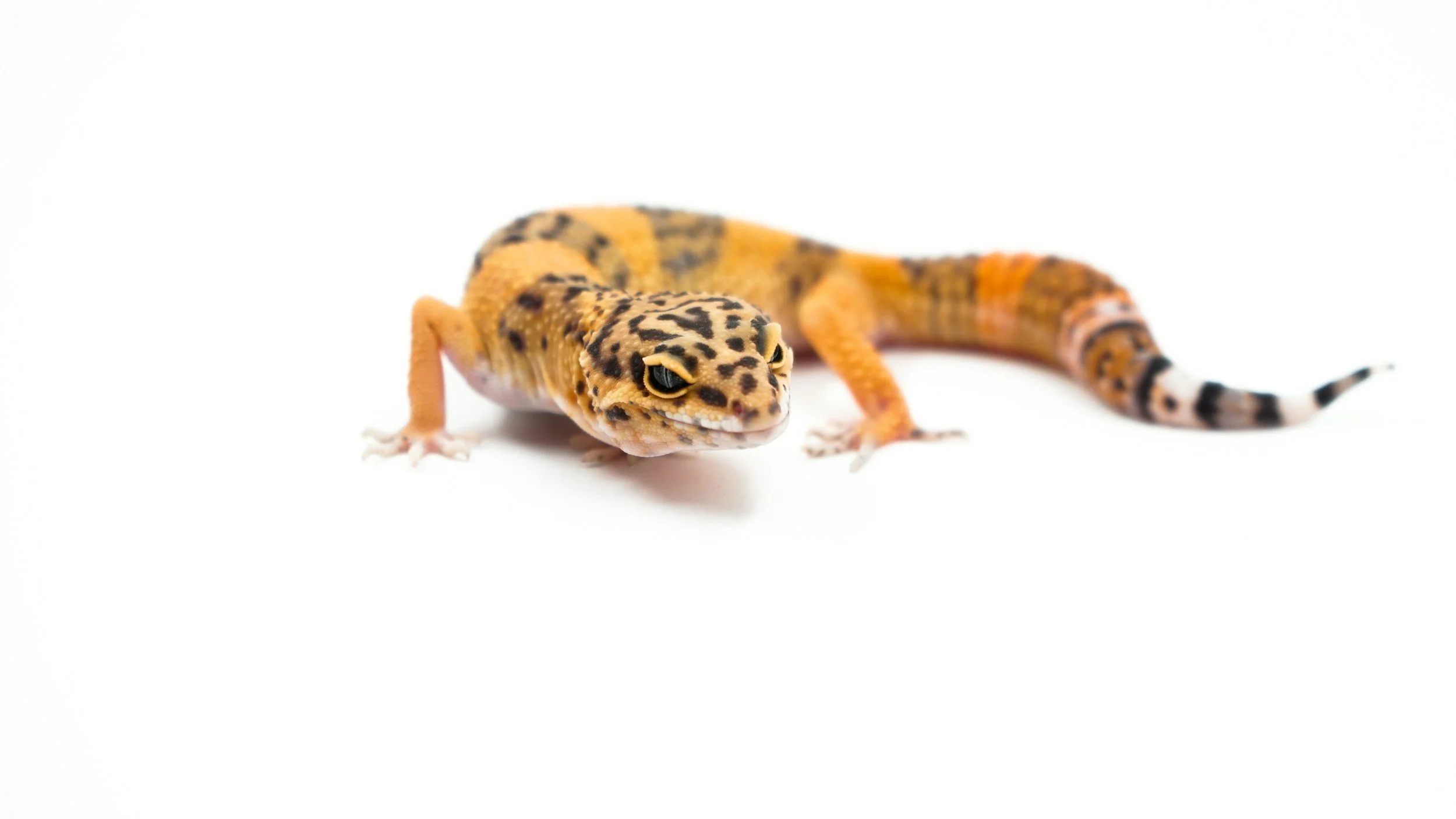
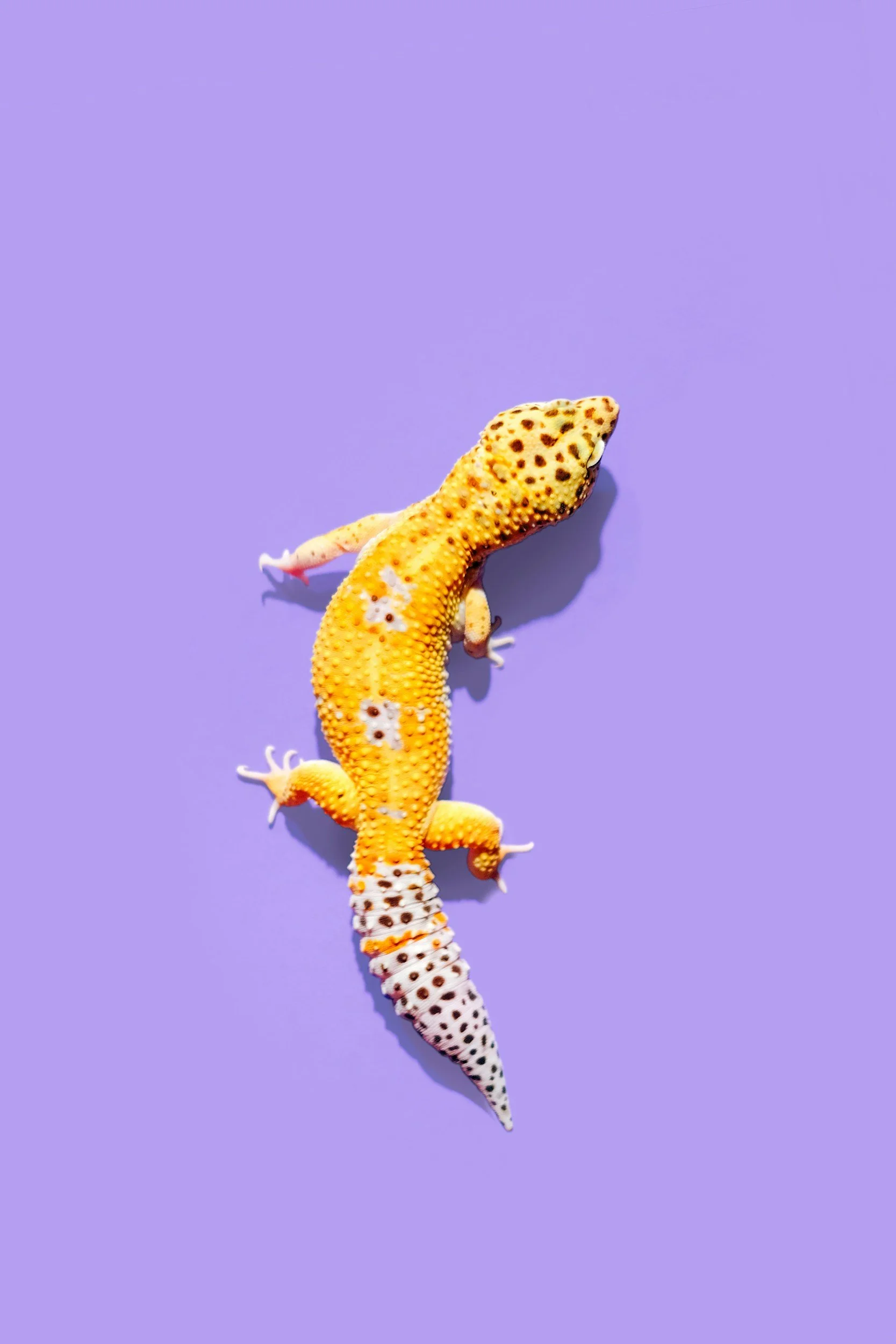
Leopard Gecko
Eublepharis macularius
Updated: September 2025
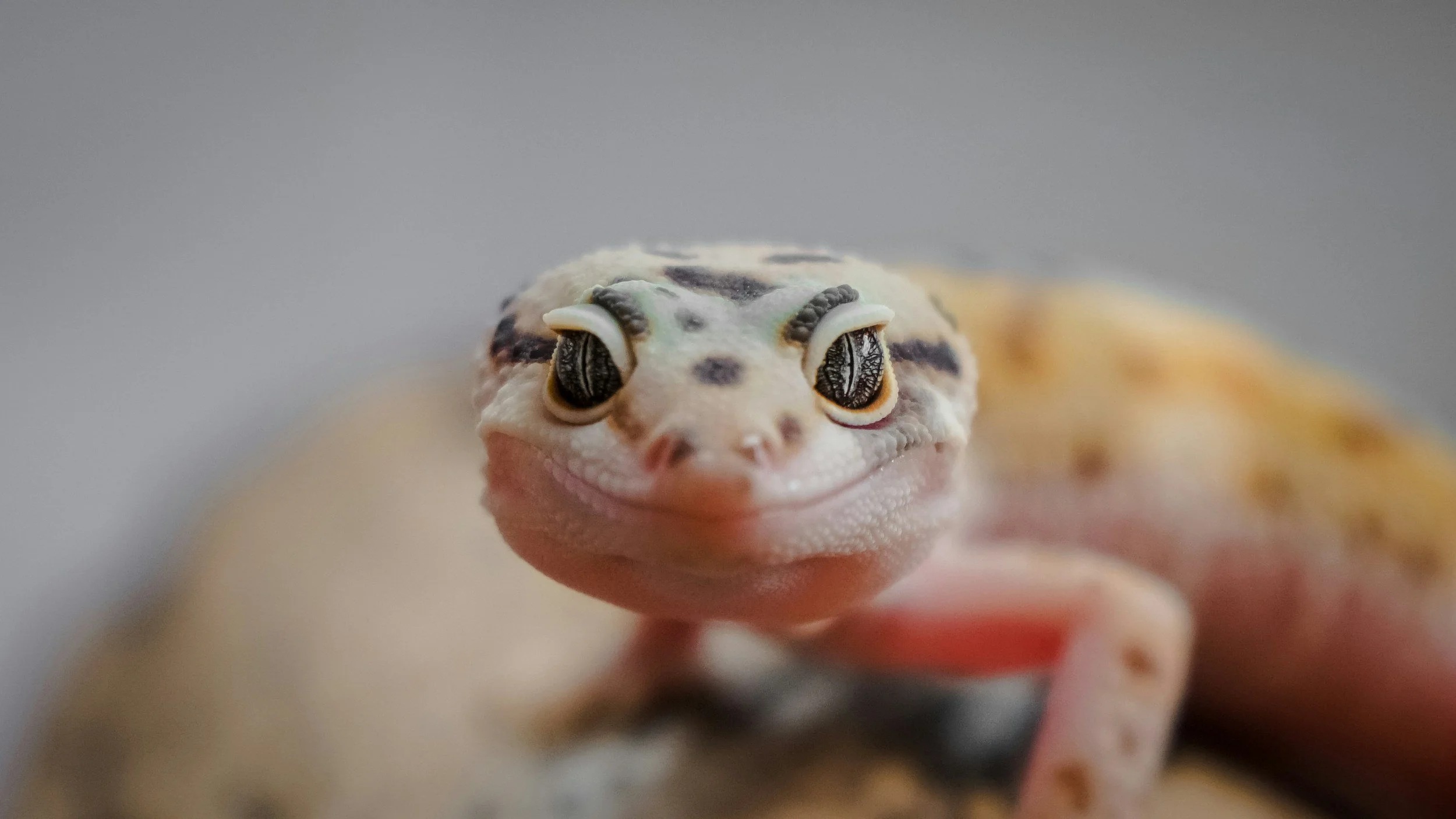
Quick Facts
Common name: Leopard Gecko
Scientific: Eublepharis macularius
Type: Terrestrial, crepuscular/nocturnal
Adult size: ~8–10" (20–25 cm), rare 11"+
Lifespan: ~15–20+ years
Temperament: Generally calm; never grab the tail (autotomy risk)
Adult enclosure: Minimum 36×18×18" (4.5 sq ft floor); larger is better
Substrate: Semi-arid loose mix packed 4"+ deep
Temperature: Basking surface 94–97°F; warm hide 90–92°F; cool end 70–77°F
Humidity: Ambient ~30–40%; humid hide ~70–80%
Water: Shallow dish available at all times
Feeding: Insectivorous; juveniles daily; young adults every 2–3 days; adults every 3–5 days
-
• Adult minimum: 36" L × 18" W × 18" H (≈4.5 sq ft floor). Bigger = better.
• Front-opening enclosure with strong ventilation; lock/latch securely (escape-proof).
• Provide at least 2–3 tight hides: warm hide near heat source, cool hide, and a humid hide.
• No cohabitation for beginners; males should never be housed together.
-
• Day/night: ~12–14 h light, 10–12 h dark (seasonal variation ok).
• UVB: Recommended. Target UVI ~0.5–1.5 at bask for normal-pigmented morphs; ~0.5–0.7 for albino/low-pigment morphs.
• Mount a low-output T5 UVB (ShadeDweller class) at the correct distance; verify with a Solarmeter 6.5 if possible.
• Avoid colored “night” bulbs (red/blue). For night warmth, use a thermostat-controlled CHE or DHP if needed.
-
• Basking surface: 94–97°F (34–36°C)
• Warm hide: 90–92°F (32–33°C)
• Cool end: 70–77°F (21–25°C)
• Night: safe drop; can tolerate down to ~60°F (16°C) if days are correct
• Ambient humidity: ~30–40% (dry, with good ventilation)
• Humid hide: 70–80% (middle to cool side) to prevent stuck sheds
• Heating: overhead halogen basking is preferred; thermostat any non-visible heat source.
-
• Best (packed 4"+): DIY semi-arid mix — 60% organic topsoil + 30% washed play sand + 10% excavator/bentonite clay; moisten to pack, let fully dry before use.
• Bioactive variants are fine once husbandry is dialed in; beginners can start simple and upgrade.
• Okay (quarantine/medical): paper towels, tile, quality terrarium mat.
• Avoid: reptile carpet, linoleum/shelf liner, mulch/wood chips as sole substrate, coconut fiber used alone, walnut shell, calcium/vitamin sands.
-
• Provide snug hides (warm/cool/humid), stacked rocks/ledges (secure), cork, branches, leaf litter.
• Use a flat stone under the heat source to store daytime warmth.
• Keep clutter for cover + open lanes for movement; ensure fixtures are guarded/secure.
-
What to feed
• Rotate 3+ feeder types: crickets, dubia/discoid roaches, black soldier fly larvae, silkworms, hornworms, mealworms/superworms (not as sole staple). No wild-caught bugs.
How much/how often
• Rule of thumb: ~2 appropriately-sized insects per inch of gecko, or what they’ll eat in ~15 minutes.
• Juveniles: daily
• Young adults: every 2–3 days
• Adults: every 3–5 days (adjust to tail/body condition)
Supplements (dust feeders)
• With UVB: calcium (no D3) most feedings + multivitamin w/ preformed vit A ~weekly (juv) / q2 weeks (adults).
• Without UVB: use a calcium+D3 all-in-one on the dusting schedule above (or follow product’s LoD schedule).
• Gut-load feeders 24h+ with quality insect diets; provide clean drinking water at all times.
-
DAILY: Spot-clean waste/shed; refresh water; quick temp/humidity checks (probe + IR gun).
WEEKLY: Wipe high-traffic surfaces; scrub/refresh humid-hide media.
MONTHLY/QUARTERLY: Replace sections or all substrate; disinfect décor/enclosure with reptile-safe products; test thermostats/probes.
-
• Let new arrivals settle ~2 weeks before first handling, and only after eating reliably.
• Approach from the side; support the whole body; never grab the tail (autotomy risk).
• Short, calm sessions 1–2×/week; watch for stress (chirps/squeaks, tail twitching, bolting).
-
Watch for
• MBD (soft jaw/limbs, tremors, lethargy) — often Ca/D3/UVB + heat management issues
• Respiratory signs (wheeze, bubbles, open-mouth breathing) — check temps/ventilation
• Stuck shed (esp. toes/tail tip) — ensure functional humid hide
• Anorexia/weight loss, bloating/impaction signs, mites, injuries/burns
Actions
• Verify basking/warm hide temps and humidity; optimize ventilation.
• Seek an ARAV-listed reptile vet for persistent or systemic signs.
-
• Public health: Reptiles can carry Salmonella; wash hands after contact; keep out of kitchens; supervise children/high-risk people.
• Transport: Use secure, ventilated containers; stabilize décor to prevent crush injuries.
• Sourcing: Prefer captive-bred; never release captives outdoors.
-
Enclosure & hardware
□ 36×18×18" (or larger) front-opening enclosure with good ventilation
□ Overhead halogen basking (on dimmer/thermostat as appropriate)
□ Low-output T5 UVB (UVI ~0.5–1.5 normal morphs; ~0.5–0.7 albino); timer
□ Digital probe thermometers/hygrometers (×2) + IR temp gun
□ Optional: CHE/DHP (night) on a thermostat if room runs cold
Habitat
□ Substrate: semi-arid mix (topsoil/sand/clay), packed 4"+ and fully dried before use
□ Hides: warm, cool, and humid (with moistened, non-ingestible medium)
□ Secure rock/branch décor; flat stone under heat; water dish
Feeding & care
□ Variety of live feeders + gut-loading diet
□ Calcium & multivitamin powders (per UVB use)
□ Reptile-safe disinfectant; paper towels; spare décor/hide