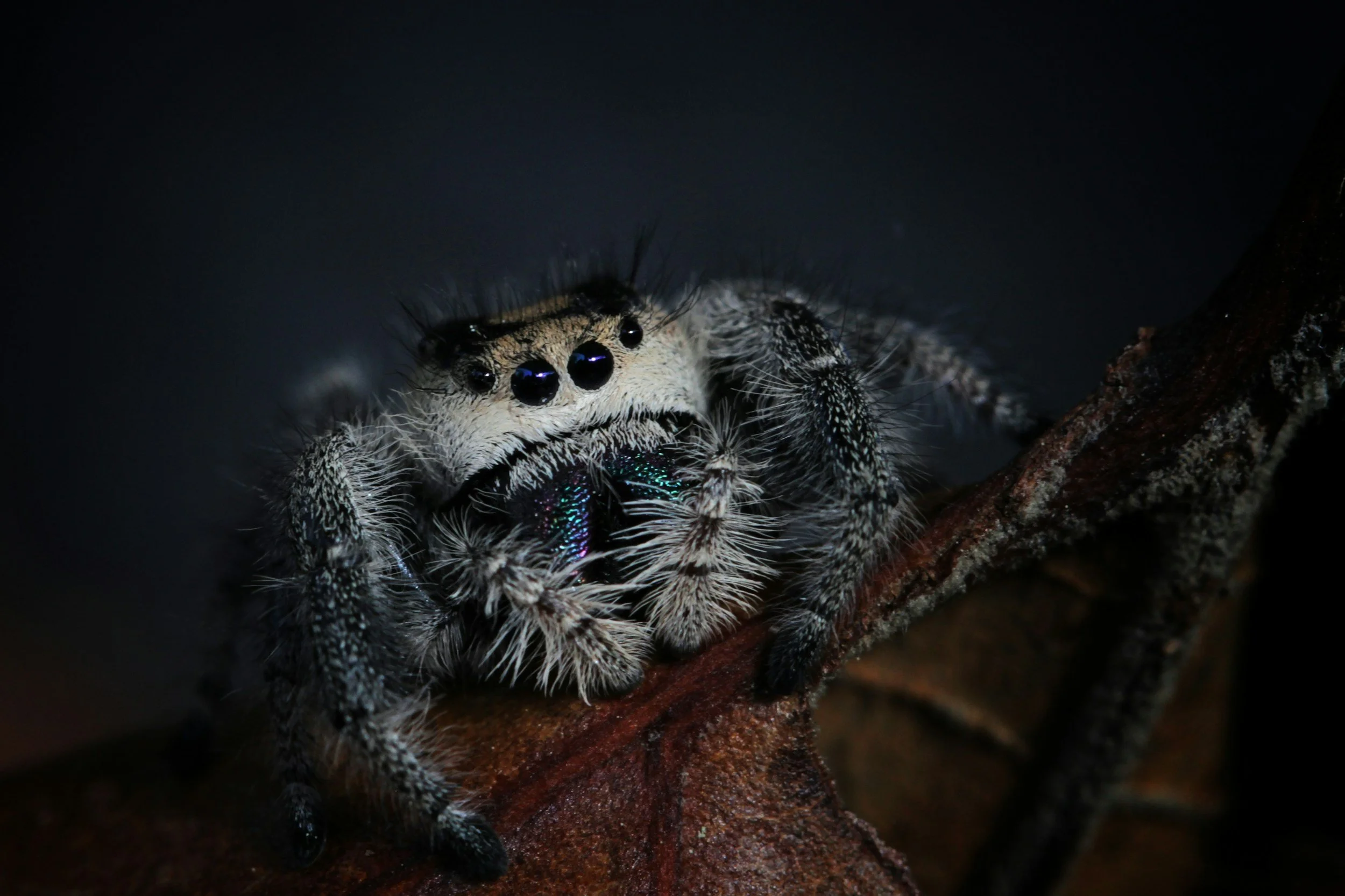
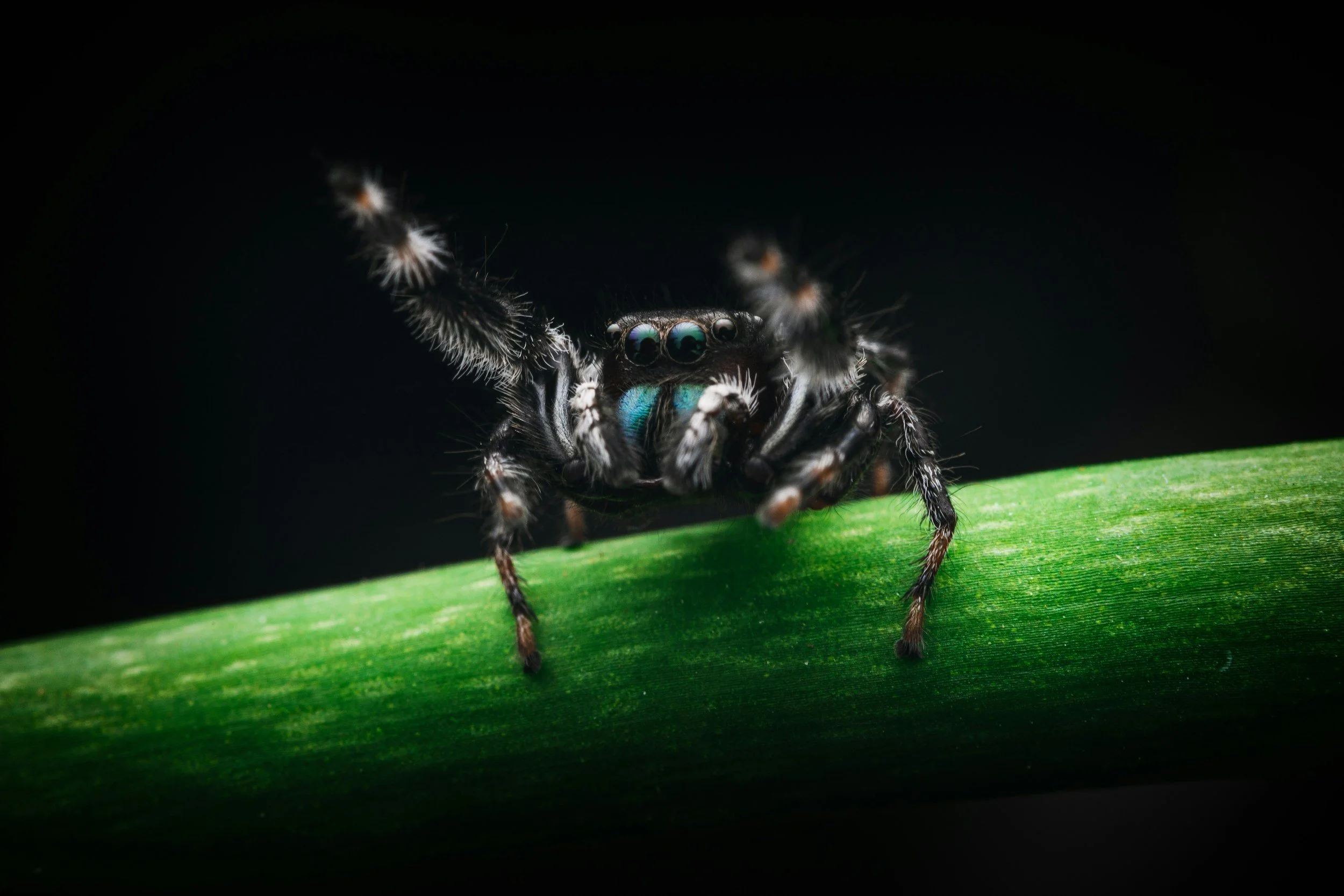
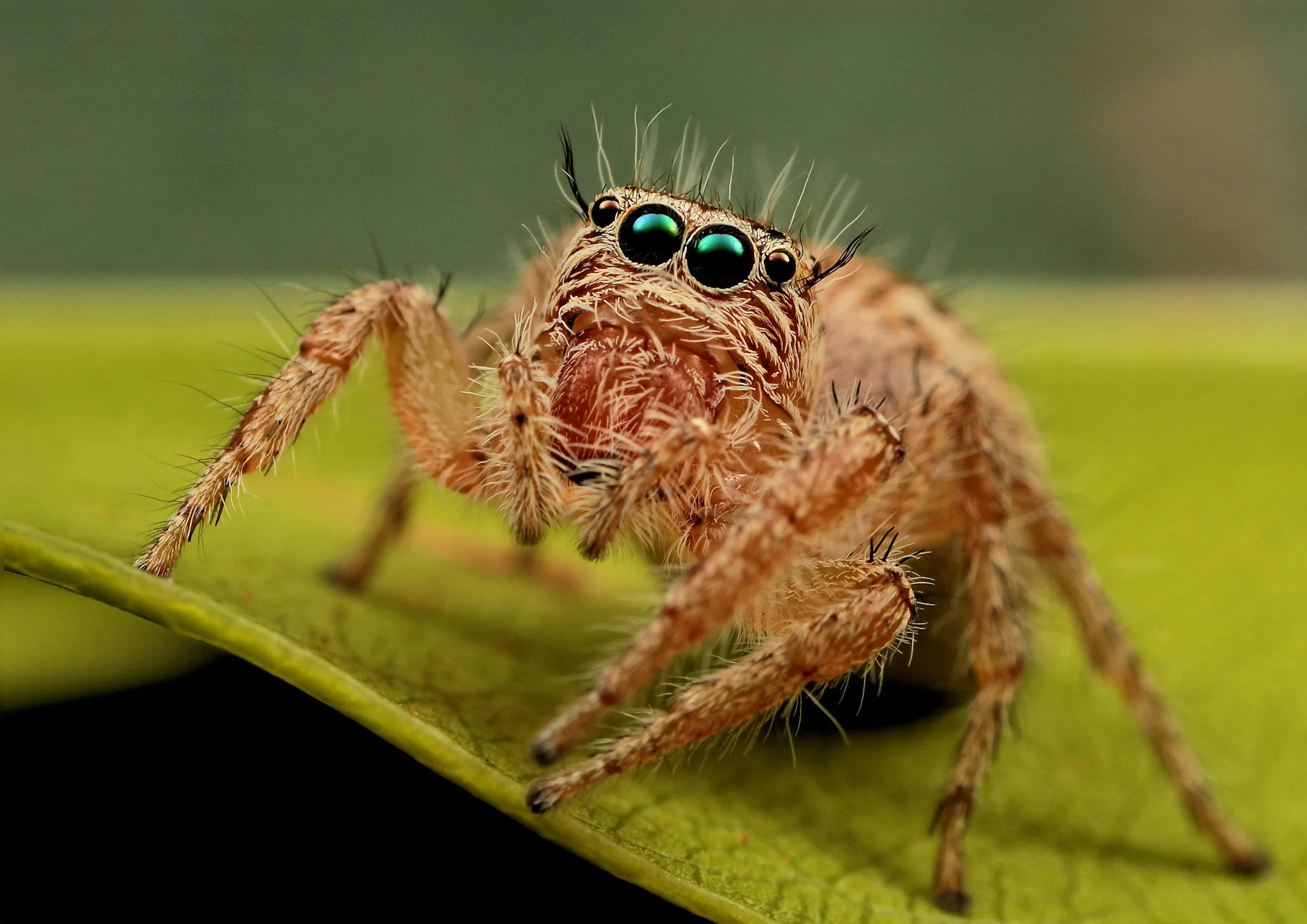
Jumping Spider (Regal / Bold)
Phidippus regius / Phidippus audax
Updated: September 2025
Quick Facts
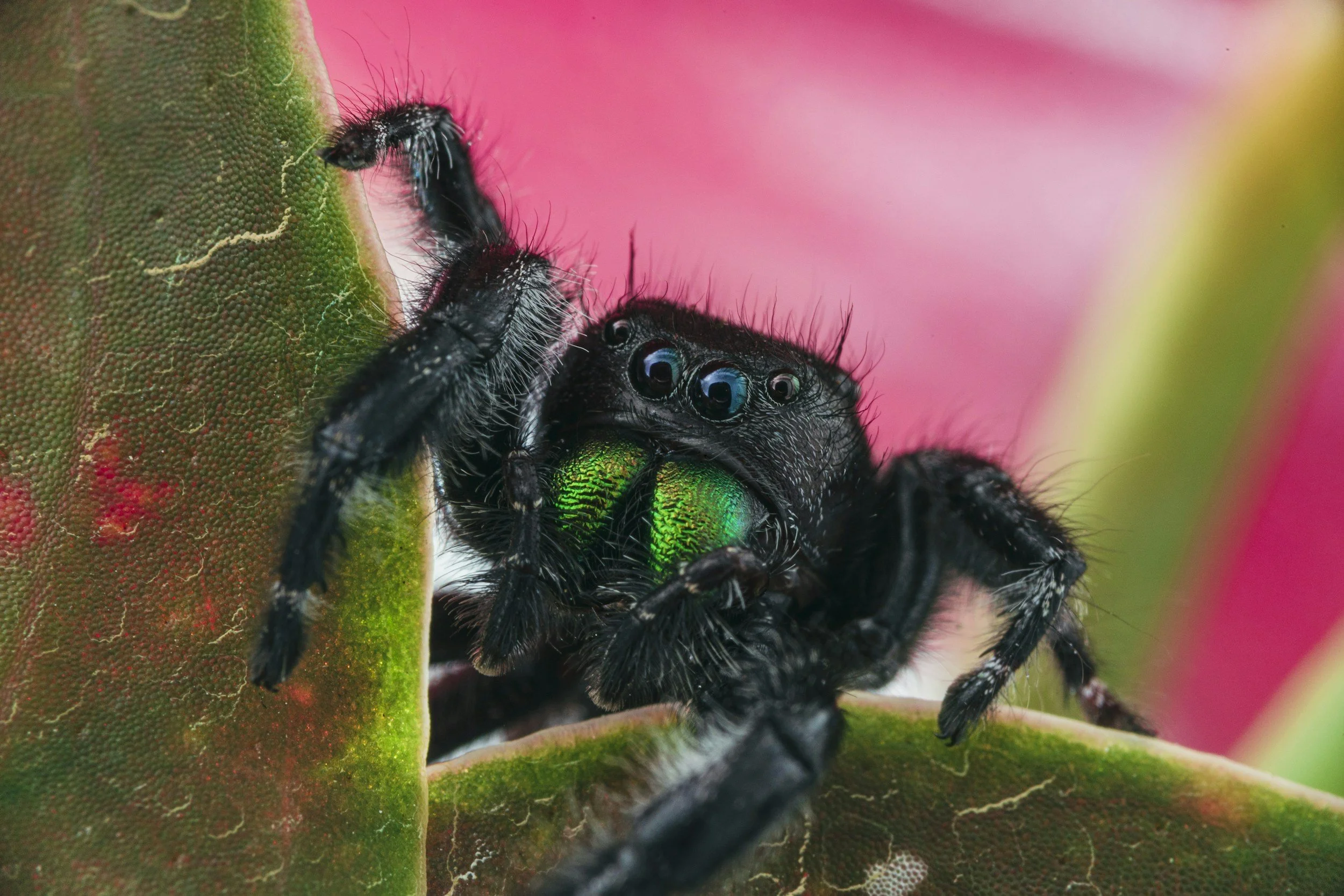
COMMON NAME: Regal / Bold Jumping Spider (example species)
SCIENTIFIC: Phidippus regius (Regal), Phidippus audax (Bold)
TYPE: Small diurnal arboreal hunter (not a tarantula)
ADULT SIZE: Females ~0.75–0.9" body; males ~0.5–0.7" body
LIFESPAN: ~1–3 years (♀ usually longer than ♂)
TEMPERAMENT: Curious and active; fast, capable jumper
ADULT ENCLOSURE: Small, vertical arboreal enclosure; many keepers use ~8–12" tall
SUBSTRATE: Bottom ~1/3 with lightly moist (not soggy) bioactive/soil mix
TEMPERATURE: ~68–76 °F (20–24 °C)
HUMIDITY: ~65–75% with strong cross-ventilation; avoid stagnant air
WATER: Water dish + light misting for droplets; never spray the spider
FEEDING: Slings 2–3×/week; juv every 3–4 days; adults 1–2×/week (see details)
HOUSING: One per enclosure (cannibalism risk)
-
• Orientation: vertical, secure, and well-ventilated (fine mesh/cross-vent).
• Size: adults do well in small arboreal enclosures; many keepers use ~8–12" tall. TTC keeps adults in “Medium/Large Treehouse” or even a 12" cube; smaller can work if enriched.
• Furnishing: bottom 1/3 lightly moist substrate; add cork bark/branches, plants, and a magnetic/side hide so they can anchor a hammock near the top.
• Water: small dish on the floor (add a pebble if you’re worried about drowning) and occasional light misting for droplets on walls/decor.
• NEVER cohabit—jumpers will prey on each other.
-
• Temperature: aim for ~68–76 °F (20–24 °C); typical room temps work.
• Humidity: ~65–75% baseline; use a water dish + slightly moist moss/substrate and, most importantly, excellent cross-ventilation so air never gets stale.
• Day/night: ambient daylight is fine; avoid direct sun heating the enclosure.
-
• Provide vertical cork bark or branches for perching and web anchor points.
• Use plants (live or artificial) and a magnet/side hide near the upper half.
• Leave open flight lanes so they can jump; don’t over-clutter.
-
• Bottom ~1/3 of the enclosure with a lightly moist, airy bioactive/soil mix (e.g., Terra Aranea/topsoil) — never soggy.
• Add sphagnum & leaf litter patches; keep the surface mostly dry with humidity rising from below.
-
DAILY: Check web/hammock, remove leftover feeders, refresh water; ensure good airflow.
WEEKLY: Wipe viewing panels, tidy plants/anchors, lightly moisten a corner of substrate or moss if the room is very dry.
AS NEEDED: Replace substrate sections if moldy; keep ventilation strong to prevent stagnant, wet conditions.
-
• Spiderlings: feed 2–3× per week (flightless fruit flies, tiny roach/cricket nymphs; pre-kill if >⅔ their size). Remove leftovers after 24h.
• Juveniles: every 3–4 days; offer 2–3 small/medium feeders or a small Dubia.
• Adults: 1–2× per week, e.g., 2–3 medium crickets or one Dubia. Adjust by abdomen size: slightly plump = good; overly swollen = slow down.
• After molts: wait until they’re back out exploring before offering food.
-
• Curious but fast—work over a soft surface and keep the enclosure nearby.
• Coax with a soft brush; don’t grab; expect sudden jumps.
• Short sessions; avoid drafts/blowing (they’ll leap).
-
• Dehydration: shriveled abdomen, lethargy → ensure droplets/water dish and correct humidity with airflow.
• Stuck molt: often hydration/airflow related; don’t disturb premolt spiders; correct environment and try again after next molt.
• Mites/mold: improve ventilation, spot-clean, and refresh affected substrate/decor.
• Cannibalism risk: never cohabit; separate spiderlings.
-
• Sourcing: Prefer captive-bred when available; never release captives outdoors.
• Local rules vary on collecting natives—check your state/city.
• Bites are rare/mild but avoid handling if you’re allergic; wash hands after working in the enclosure.
-
• Vertical jumper enclosure (adult): ~8–12" tall with cross-ventilation
• Substrate: bioactive/soil mix for lower third + sphagnum/leaf litter
• Decor: vertical cork/branches, plants, magnetic/side hide
• Water: small dish; fine-mist sprayer for droplets
• Feeding: flightless fruit fly culture; pinhead crickets/tiny roach nymphs; feeding tongs
• Maintenance: paper towels, soft brush, cotton swabs, reptile-safe disinfectant