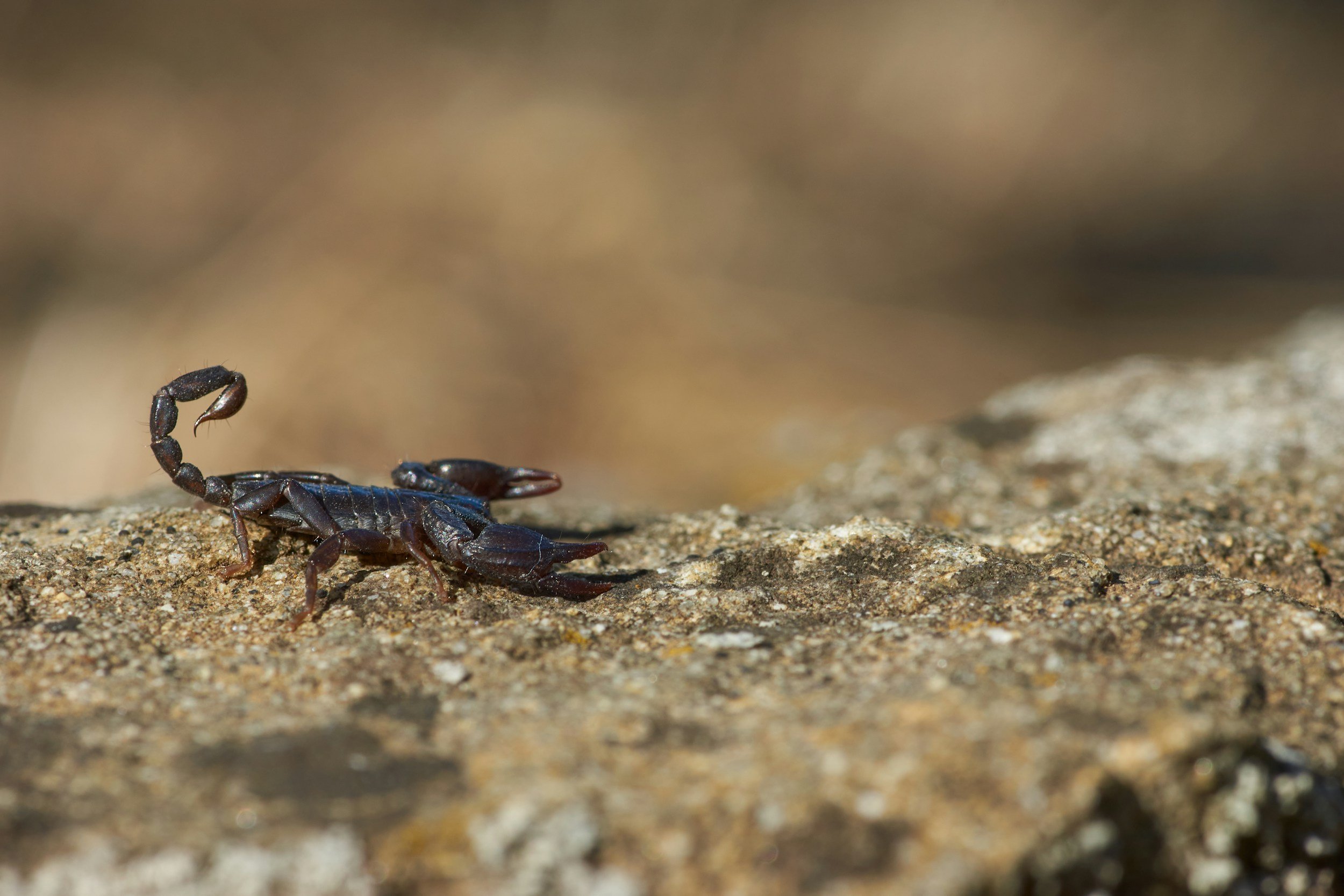
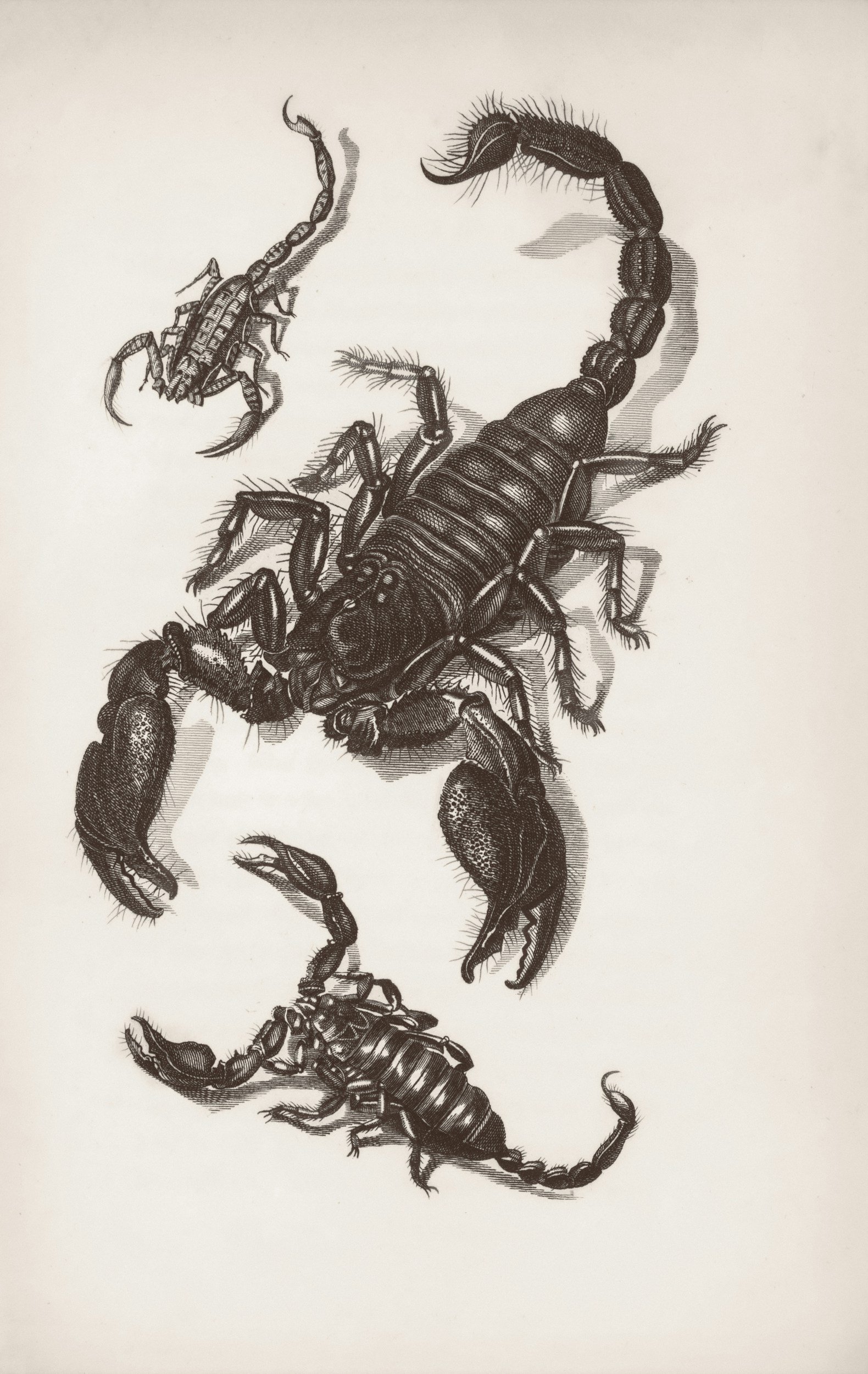
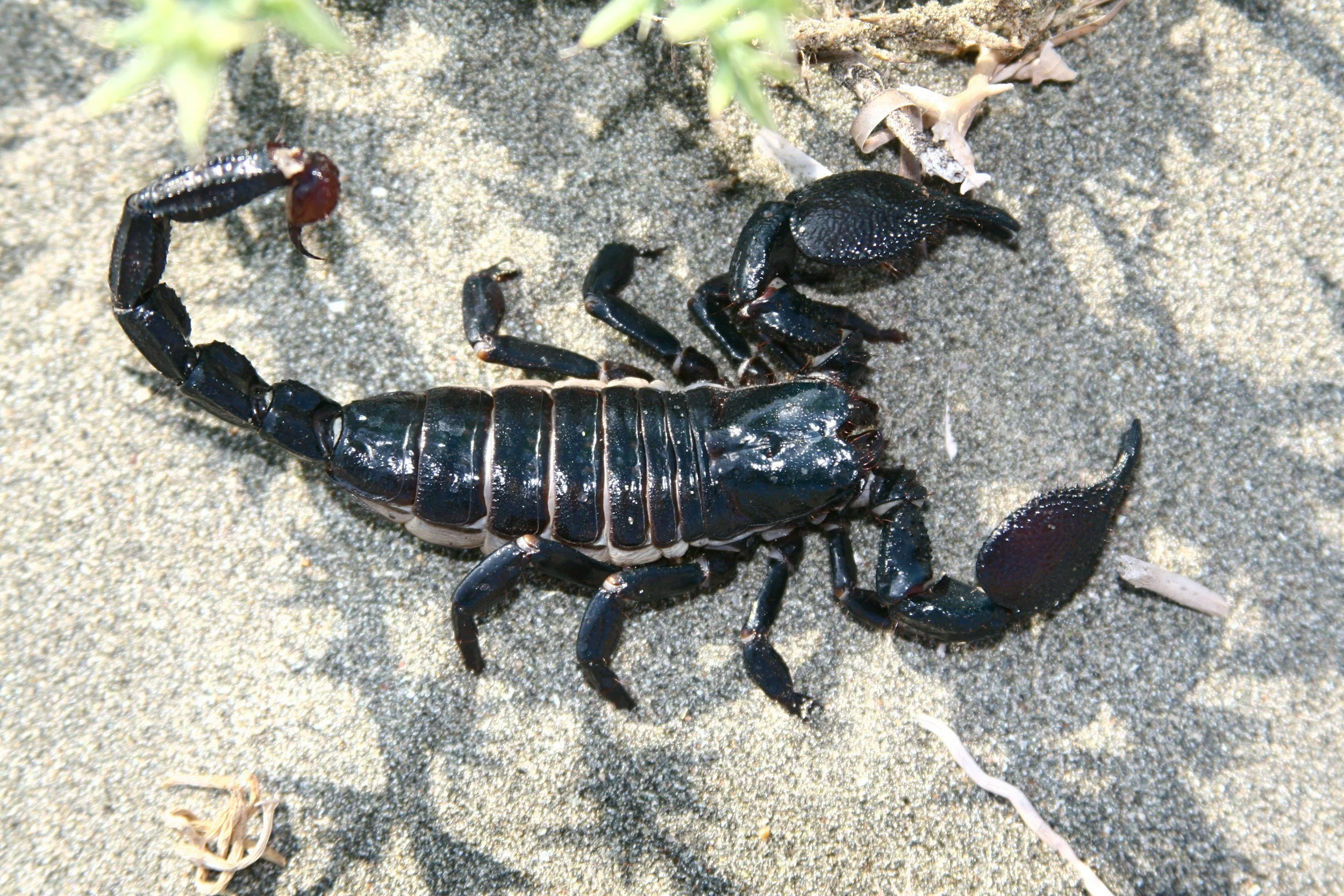
Emperor Scorpion
Pandinus imperator
Updated: September 2025
Quick Facts
COMMON NAME: Emperor Scorpion
SCIENTIFIC: Pandinus imperator
TYPE: Terrestrial burrower; nocturnal
ADULT SIZE: ~6–7" (up to ~8")
LIFESPAN: ~6–8 years (♀ often longer)
TEMPERAMENT: Generally docile; strong pinch, mild venom (allergy possible)
ADULT ENCLOSURE: Roomy terrestrial setup; many keepers use 12–18" cubes or similar footprint
SUBSTRATE: Fill 1/2–3/4 of enclosure depth with moist, compactable substrate for burrowing
TEMPERATURE: ~72–82 °F (22–28 °C) with a gentle warm side (side-mounted heat pad on thermostat if needed)
HUMIDITY: ~75–80% (maintain by moist substrate + overflowing a large shallow water dish)
WATER: Large shallow dish; keep clean; do not rely on misting alone
FEEDING: Scorplings 1–2×/wk; juveniles weekly; adults every 7–14 days; remove leftovers
HOUSING: Best kept singly; cautious communal only for experienced keepers with ample space/hides
-
• Orientation — Terrestrial with real digging room. Front-opening enclosure with strong cross-ventilation and secure latches.
• Size — Adults do well in roomy 12–18" cubes or similar terrestrial vivs; bigger footprint = better behavior and easier gradients.
• Depth — Fill 1/2–3/4 of the enclosure height with moist, compactable substrate so they can build stable burrows.
• Hides — Provide multiple snug hides and leaf-litter/cork clutter.
• Cohab — Possible but not recommended unless you’re experienced; only similar-sized animals, many hides, and generous feeding.
-
• Temperature — Aim for ~72–82 °F overall. If your room stays cooler, use a SIDE-mounted heat pad controlled by a thermostat (never under the tank).
• Humidity — Maintain ~75–80%. Keep substrate evenly moist (not swampy) and regularly overflow a large shallow water dish; add patches of sphagnum.
• Ventilation — Keep air fresh; avoid stagnant, wet conditions (moist substrate + airflow beats “sealed & steamy”).
-
• Day/night — Provide a 12-hour day/night cycle; low light is fine.
• UV/Blacklight — They fluoresce under UV; enjoy it briefly, but don’t keep UV on them long-term.
• UVB — Not required for scorpions.
-
• Mix — Compactable, moisture-holding blends like coco fiber/coir, ReptiSoil/topsoil + some sand. Pack it firmly so burrows don’t collapse.
• Depth — 4–6"+ for adults (or just fill 1/2–3/4 of the enclosure height).
• Moisture — Evenly moist, never waterlogged; top can dry slightly while lower layers stay damp.
-
• Provide multiple tight hides (cork flats, half-logs), leaf litter, and bark to tunnel under.
• A large shallow water dish is essential; refresh often.
• Keep heavy items stable so tunnels aren’t crushed.
-
• Diet — Live inverts (appropriately sized crickets, roaches, locusts, etc.). Variety is good.
• Schedule — Scorplings 1–2×/week; juveniles weekly; adults every 7–14 days (adjust to body condition).
• Rules — Offer prey ≲ scorpion’s carapace width; remove uneaten feeders within 24 h.
-
• Handling — Not recommended; risk of falls and injury to the scorpion.
• Defense — Usually pinch first; venom is mild for most healthy adults, but allergic reactions can occur.
• Activity — Mostly hidden by day; more active at night. Provide hides so it feels secure.
-
DAILY: Check water; remove leftovers; quick look at burrow/hides.
WEEKLY: Lightly remix/settle the top inch if it dries; wipe panels; trim mold if seen.
AS NEEDED: Refresh sections of substrate; deep clean décor and dish with reptile-safe disinfectant.
-
• Dehydration — Lethargy, thin/deflated metasoma (“tail”); ensure dish is full and substrate is properly moist with good airflow.
• Bad molts — Often linked to dry/stale conditions; correct moisture & ventilation and avoid disturbance around molt.
• Mites/mold — Improve ventilation; remove affected patches; clean dish/substrate.
• Injury — Guard heat sources; stabilize heavy décor; avoid handling.
• Persistent refusal to eat (not in premolt), surface pacing, or collapsed burrows can signal husbandry issues.
-
• CITES — Pandinus imperator is listed in Appendix II (trade regulated; check paperwork for imports/exports).
• Local laws — State/city rules vary on venomous invertebrates; verify before purchase/transport/sale.
• Public safety — Wash hands after enclosure work/feeding; supervise kids; never release captives outdoors.
-
Enclosure & hardware
□ Secure, front-opening terrestrial enclosure (adult ~12–18" cube or similar)
□ SIDE-mounted heat pad + thermostat (only if room <72 °F)
□ Digital thermometer/hygrometer; optional second probe
□ Large, shallow water dish (easy to overflow)
Habitat
□ 4–6"+ of compactable, moist substrate (coco/topsoil/sand mix)
□ Cork hides (2+), leaf litter, sphagnum patches, bark
□ Stable décor; fine-mesh/cross-ventilation
Feeding & care
□ Live feeders (varied sizes); feeding tongs; catch cup
□ Reptile-safe disinfectant; paper towels; spare cork/hide