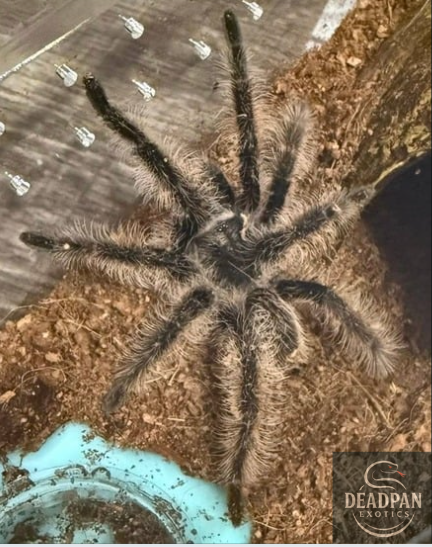
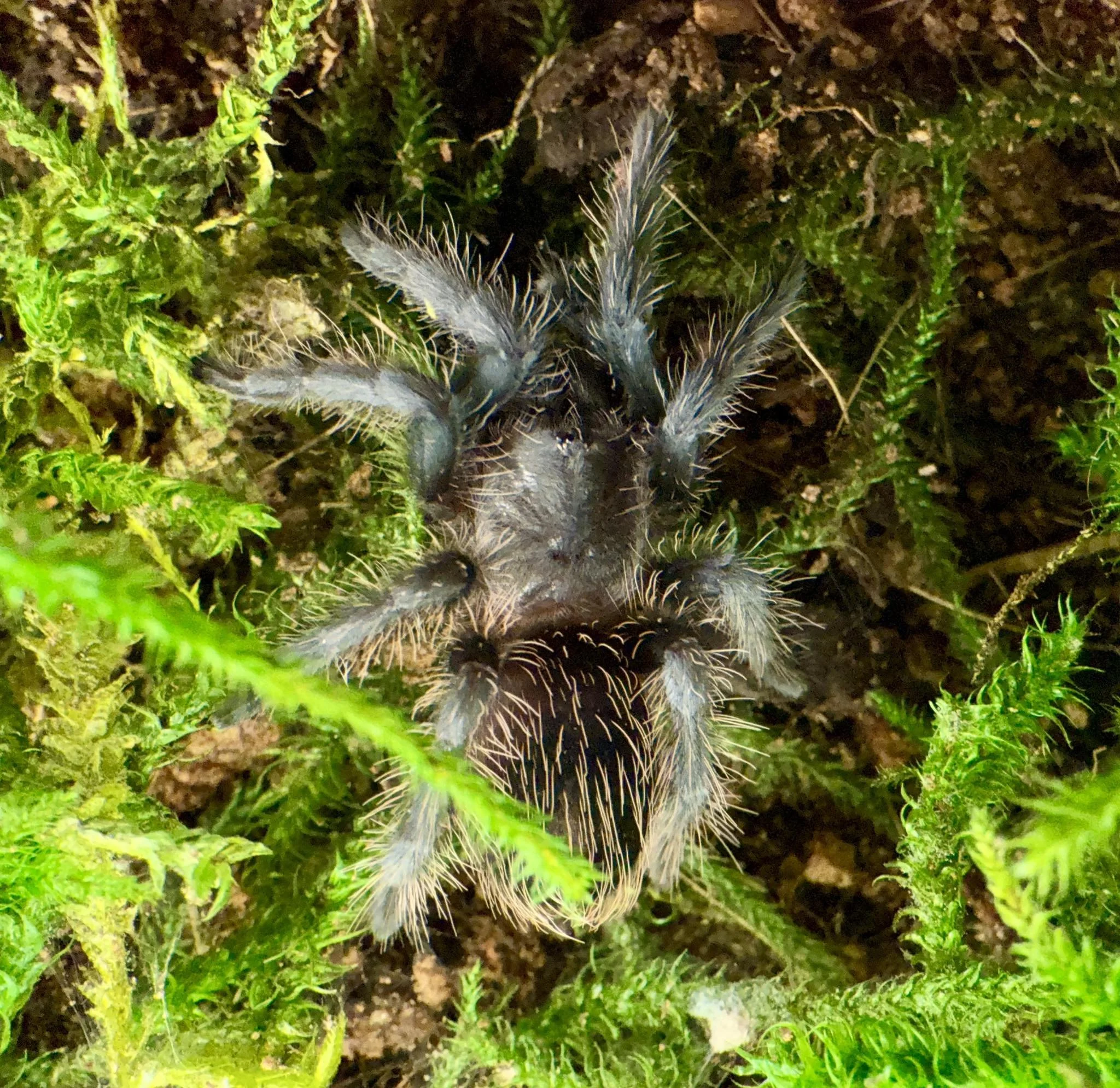
Curly Hair Tarantula
Tliltocatl albopilosus
Updated: September 2025

Quick Facts
| COMMON NAME : | Curly Hair Tarantula |
| SCIENTIFIC NAME : | Tliltocatl albopilosus |
| TYPE : | New World — terrestrial (semi-burrowing; floor space > height) |
| ADULT SIZE : | ♀ ~5–6" diagonal leg span; ♂ slightly smaller |
| LIFESPAN : | ♀ ~15–25 years; ♂ ~4–5 years |
| TEMPERAMENT : | Generally calm/docile; may flick urticating hairs if stressed |
| ENCLOSURE SIZE : | Adult low, wide enclosure ~12×12×12" (or ~10-gal equivalent); secure lid |
| SUBSTRATE : | ~4–6" compacted coco/soil mix; provide a cork-bark hide; good ventilation |
| TEMPERATURE : | ~70–78 °F (21–26 °C) room temps OK; avoid sustained >85 °F |
| HUMIDITY : | Don’t chase a %—keep a full water dish and a slightly damp corner; otherwise mostly dry |
| WATER : | Shallow dish available at all times; clean/refill regularly |
| FEEDING : | Juv ~1×/week; adult every 10–14 days; slings 2–3×/week (tiny prey); remove leftovers |
-
Layout — Low, horizontally oriented enclosure with secure ventilation and a tight lid. Target ~12×12×12" (or a 10-gal equivalent) for adults; prioritize floor space over height to reduce fall risk.
Substrate — 4–6" of compacted coco fiber/topsoil mix so the spider can burrow or dig a starter tunnel. Add a half-round cork bark hide and some leaf litter; keep décor stable.
Moisture gradient — Keep most substrate dry, but allow one slightly damp corner (gently overflow the water dish). Good cross-ventilation helps prevent mold.
-
Temperature — Room temps in the low–mid 70s °F (21–24 °C) are fine; avoid sustained extremes (<68 °F or >85 °F). Supplemental heat isn’t needed if your room is stable.
Humidity — Do not chase a percentage. Provide a full water dish and that lightly moistened corner so the spider can choose; keep the rest of the enclosure dry with good airflow.
-
Adults — 1 appropriately sized prey item every 10–14 days (large cricket or dubia). If the abdomen is getting chubby (wider than the carapace), slow down.
Juveniles — About once per week.
Spiderlings — 2–3× per week with tiny prey (pinhead crickets/flightless fruit flies). Pre-kill if the feeder is large.
General — Remove uneaten feeders within 24 hours. Never feed during/just after a molt; wait until fangs turn black and hardened.
-
Generally calm and slow-moving as adults, but individuals vary. Minimize handling—falls can be dangerous, and stress can provoke hair-kicking or a defensive posture. Use catch cups and long tongs for maintenance.
-
Dehydration — Lethargy, shriveled abdomen → check/clean the water dish and ensure a slightly damp corner.
Stuck molts — Often stress, obesity, or poor conditions. Keep water available and avoid disturbing premolt spiders.
Mold/mites — Improve ventilation, spot-clean, and let the top layer dry out between overflows.
-
CITES Appendix II — International trade is regulated; buy captive-bred when possible.
Urticating hairs can irritate skin/eyes.
Bites are uncommon; treat like a bee sting and seek care if you have a reaction.
-
• Low, secure enclosure (~12×12×12" or 10-gal equivalent)
• Compressed coco fiber/topsoil mix (no fertilizers), leaf litter, cork bark hide
• Shallow, heavy water dish
• Feeder insects (crickets/roaches) + long feeding tongs
• Catch cup, paper towels, soft paintbrush for rehousing
• Optional: digital thermometer (you don’t need a hygrometer if you maintain the dish + moist corner)