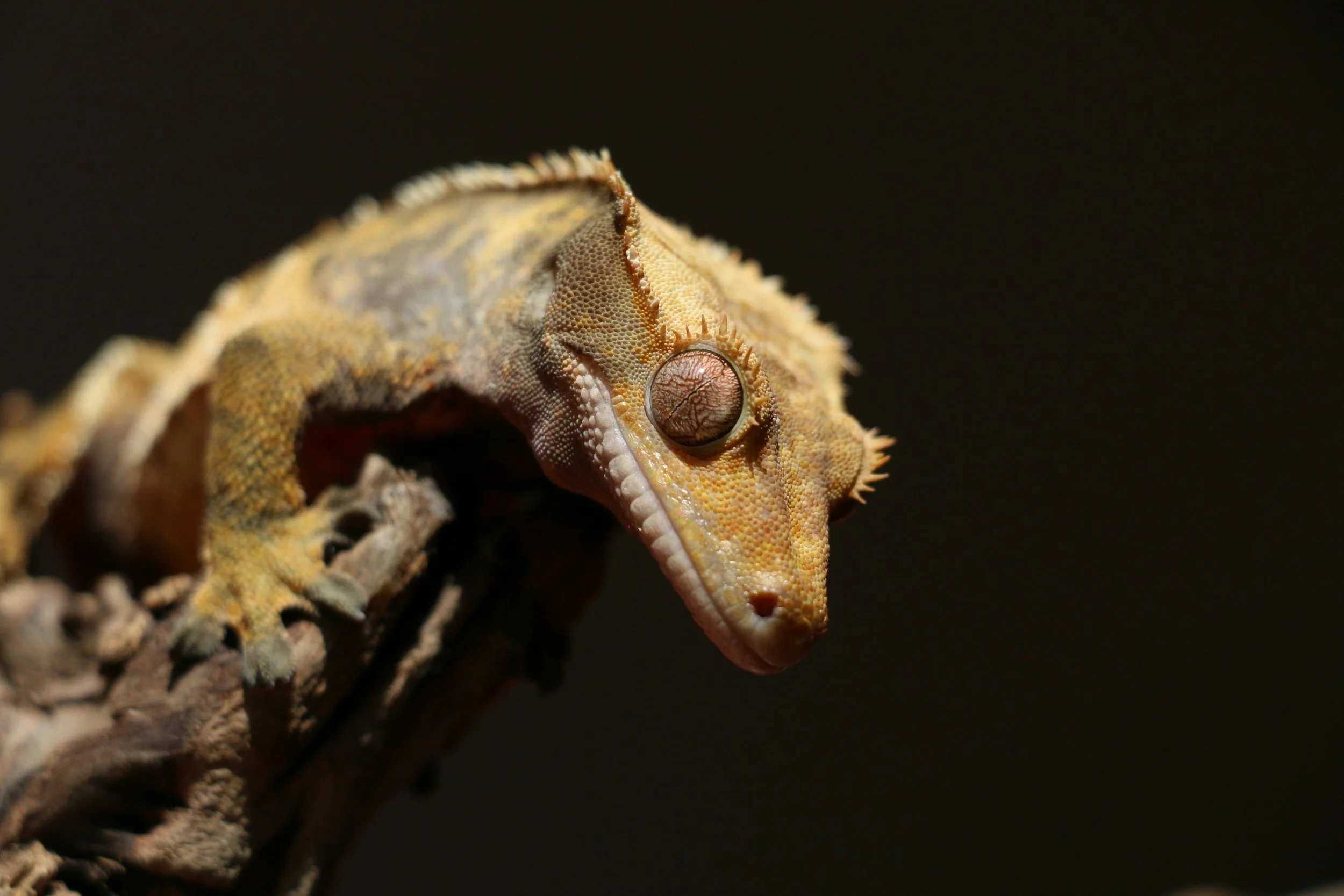
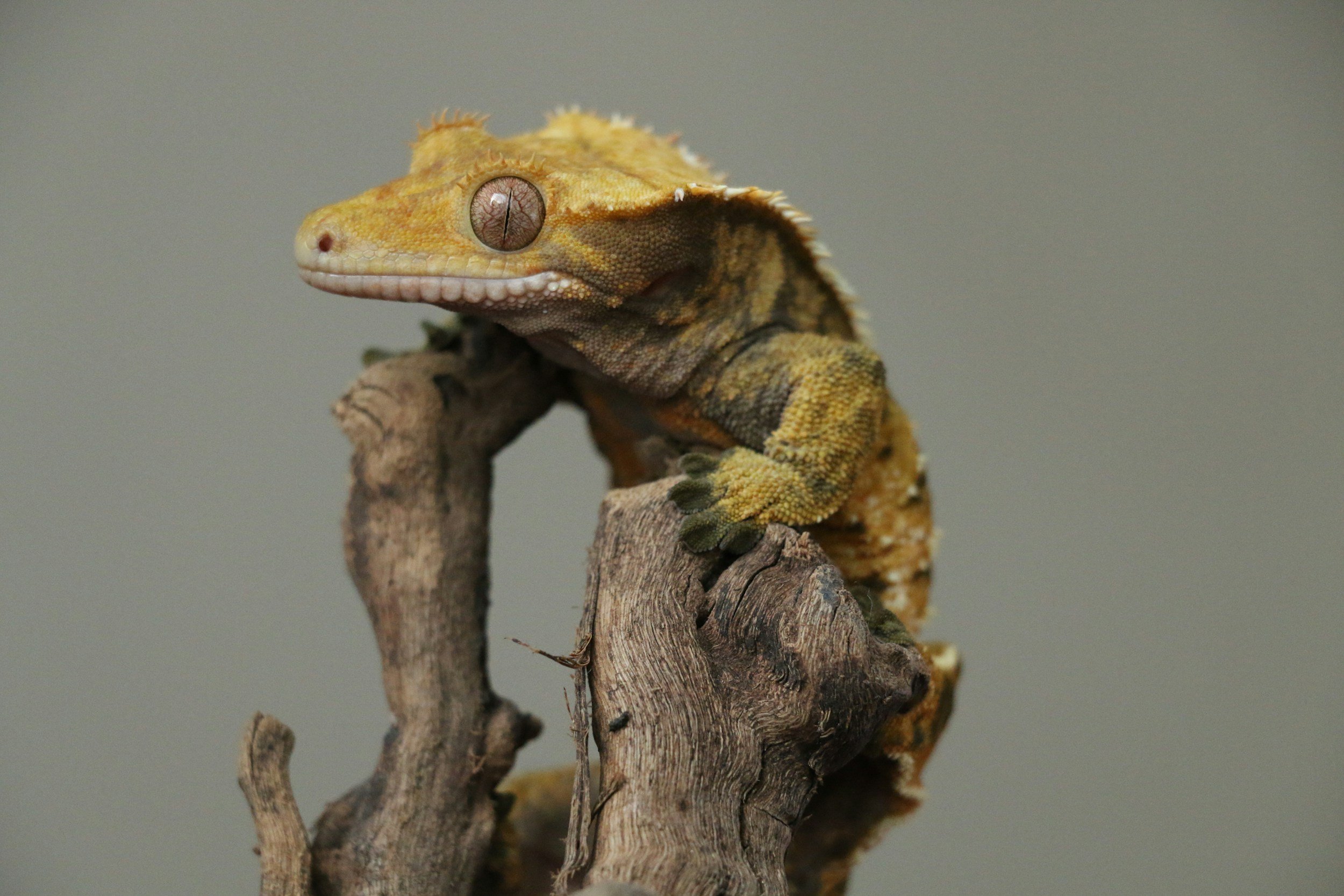
Crested Gecko
Correlophus ciliatus
Updated: September 2025
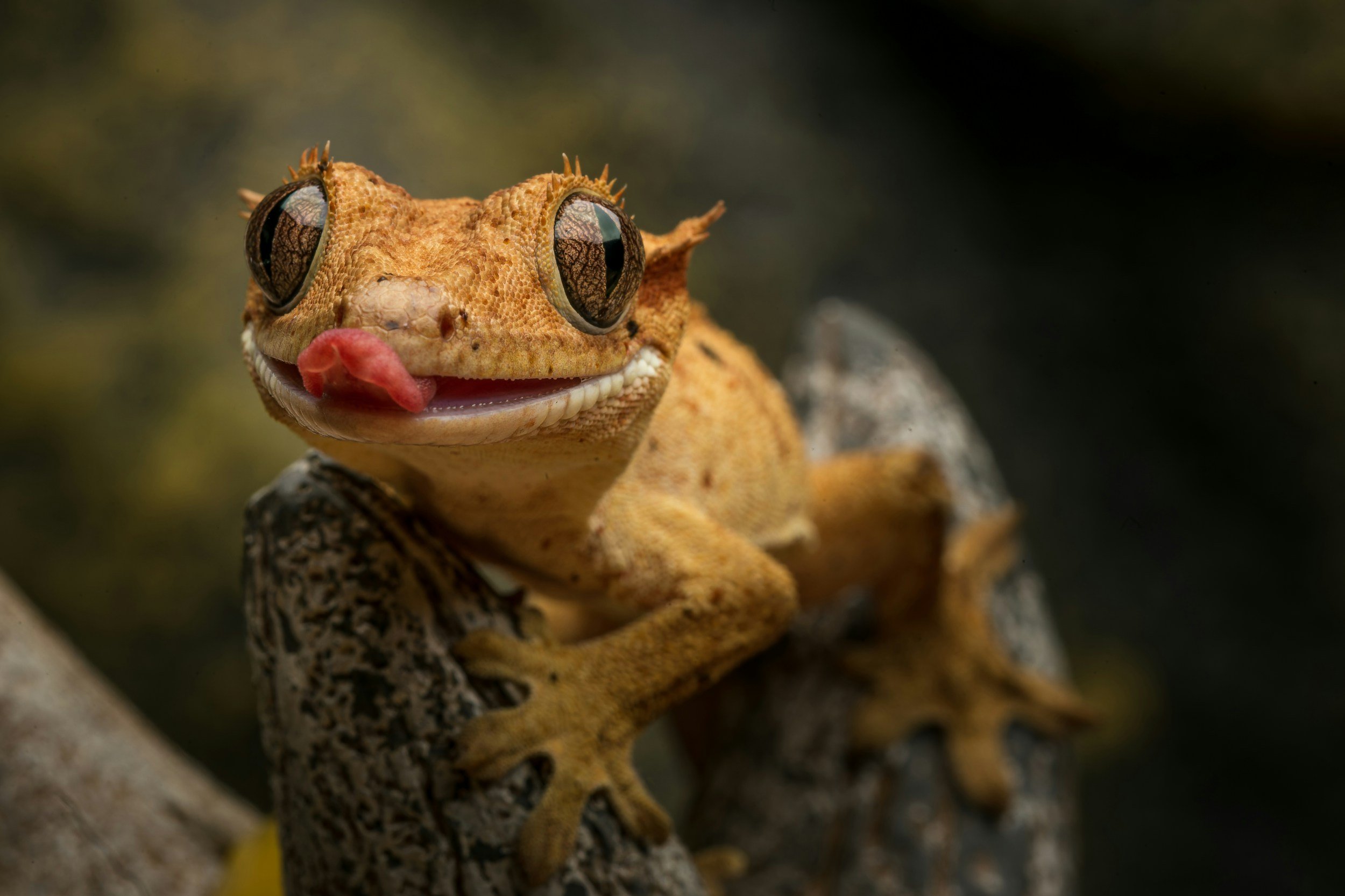
Quick Facts
Common name: Crested Gecko
Scientific: Correlophus ciliatus
Type: Arboreal, crepuscular/nocturnal
Adult size: ~7–9" total; ~35–45 g
Lifespan: ~15–20+ years
Temperament: Skittish; tail autotomy (does not regrow) — avoid tail grabs
Adult enclosure: Tall, front-opening; minimum ~45×45×60 cm (18×18×24"); larger preferred (e.g., 45×45×90 cm / 18×18×36")
Substrate: Moisture-retentive, bioactive-friendly (soil/coco/leaf litter)
Temperature: Top/bask ~82–85°F; cool area 70–75°F; night 65–72°F
Humidity: 60–80% average; allow daytime dry-out to ~40–50%
Water: Offer a water dish and light mist for droplets
Feeding: CGD staple — juveniles daily + insects 1–2×/wk; adults every 2–3 days + insects 0–1×/wk (dust & gut-load)
-
• Orientation — Vertical, front-opening with strong cross-ventilation and secure latches.
• Size — Minimum ~45×45×60 cm (18×18×24"); larger like 45×45×90 cm (18×18×36") is better for climbing and gradients.
• Hides/Cover — Dense foliage (live or artificial), cork tubes/flats, vines, and canopy perches at multiple heights.
• Cohab — Not recommended for beginners; males should not be housed together.
-
• Day/night: ~12–14 h light, 10–12 h dark (seasonal variation OK).
• UVB: Recommended. Aim for Ferguson Zone 1 with UVI ~1.0–2.0 at the top perch; provide full shade retreats.
• Hardware: Low-output T5 UVB at correct distance; confirm with a Solarmeter 6.5 if possible.
• Avoid colored "night" bulbs. If night heat is required, use a thermostat-controlled CHE/DHP (no visible light).
-
• Basking/top: ~82–85°F (28–29°C)
• Cool/bottom: ~70–75°F (21–24°C)
• Night: ~65–72°F (18–22°C) drop is normal
• Humidity: Maintain ~60–80% with good airflow; allow daytime dry-out to ~40–50% and nightly rise via light misting.
• Water: Keep a shallow dish; mist walls/leaves lightly so droplets are available.
• Heating: If room is cool, use a low-wattage halogen/heat source (thermostat-controlled) and measure with probes/IR gun.
-
• Best: Bioactive-friendly mixes (topsoil/coco/leaf litter) that hold moisture without getting swampy; plantable depth.
• Quarantine/medical: Paper towels or similar for easy monitoring.
• Avoid: Aromatic woods (cedar/pine) and dusty/oily substrates; ensure excellent ventilation to prevent mold.
-
• Provide vertical/horizontal climbing routes: cork tubes, branches, sturdy vines, and dense foliage for cover.
• Add a wall-mounted feeding ledge (cresteds prefer eating off the ground).
• Secure heavy décor so nothing can shift and crush the gecko.
-
Staple
• Commercial CGD (crested-gecko diet), mixed to smoothie/ketchup consistency in a feeding ledge cup.
Insects
• Appropriate-size crickets/roaches/BSFL as enrichment & protein:
– Juveniles: 1–2×/week
– Adults: 0–1×/week
• Remove uneaten feeders within 24 h; always gut-load insects 24 h+.
Schedule
• Juveniles (0–12 mo): CGD daily + insects 1–2×/wk
• Adults (>12 mo): CGD every 2–3 days + insects 0–1×/wk
Supplements
• Dust ALL insects with calcium.
• If using UVB: calcium without D3.
• If not using UVB: calcium with D3 (follow product label).
-
DAILY: Spot-clean waste; refresh water; quick check on temps/humidity (probe + IR).
WEEKLY: Wipe doors/panels; prune plants; refresh humid spots if needed.
MONTHLY: Deep clean surfaces with reptile-safe disinfectant; replace sections of substrate (or service bioactive).
-
• Let new arrivals settle and eat reliably before handling.
• Support the whole body and allow short, calm sessions; never grab the tail (autotomy, no regrowth).
• Expect “jumping” when startled; guide between hands over a soft surface.
-
Watch for:
• MBD signs (soft jaw/limbs, tremors), poor sheds, wheeze/bubbles, open-mouth breathing, anorexia/weight loss, injuries/burns, parasites/mites.
Immediate checks:
• Verify bask/cool temps, humidity and ventilation; confirm UVB and supplement use; ensure hydration.
Vet help:
• Seek an ARAV-listed reptile vet for persistent/systemic signs or trauma.
-
• Public health: Reptiles/amphibians can carry Salmonella — wash hands after any contact; keep out of kitchens; supervise children/high-risk people.
• Sourcing: Prefer captive-bred; never release captives outdoors.
• Transport: Use secure, ventilated containers; stabilize décor to prevent crush injuries.
-
Enclosure & hardware
□ Tall, front-opening enclosure (≥ 45×45×60 cm; bigger like 45×45×90 cm preferred)
□ Low-output T5 UVB + timer (aim UVI ~1–2 at top perch)
□ Low-watt halogen/heat source as needed, on thermostat
□ 2+ digital probe thermometers/hygrometers + IR temp gun
□ Fine-mist sprayer; shallow water dish
Habitat
□ Bioactive-friendly substrate (soil/coco/leaf litter), plantable depth
□ Dense foliage, cork tubes/flats, branches/vines
□ Wall-mounted feeding ledge; secure all heavy décor
Feeding & care
□ Quality CGD; live insects by size (gut-loaded)
□ Calcium powder (No-D3 with UVB / With-D3 if no UVB)
□ Reptile-safe disinfectant; paper towels