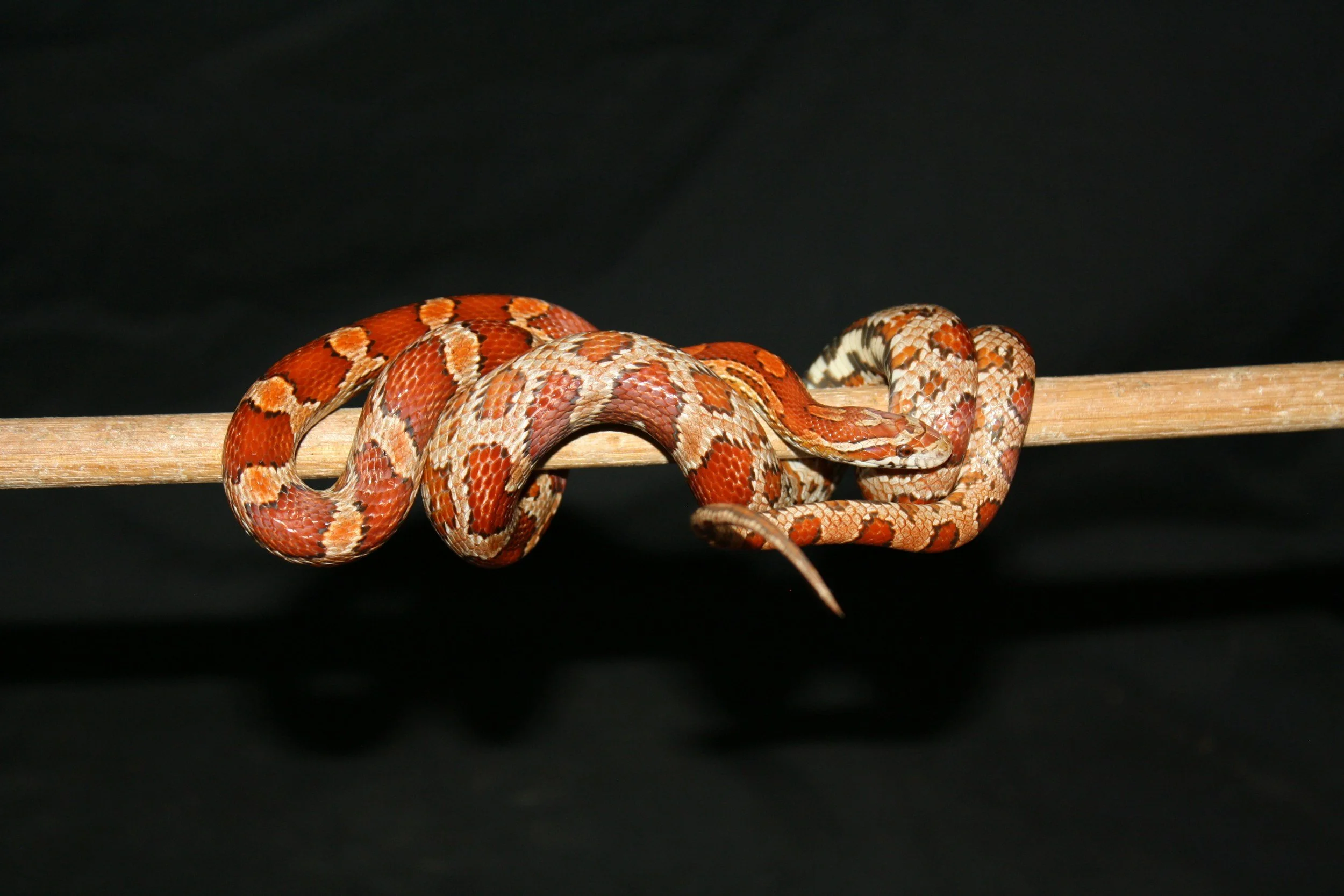
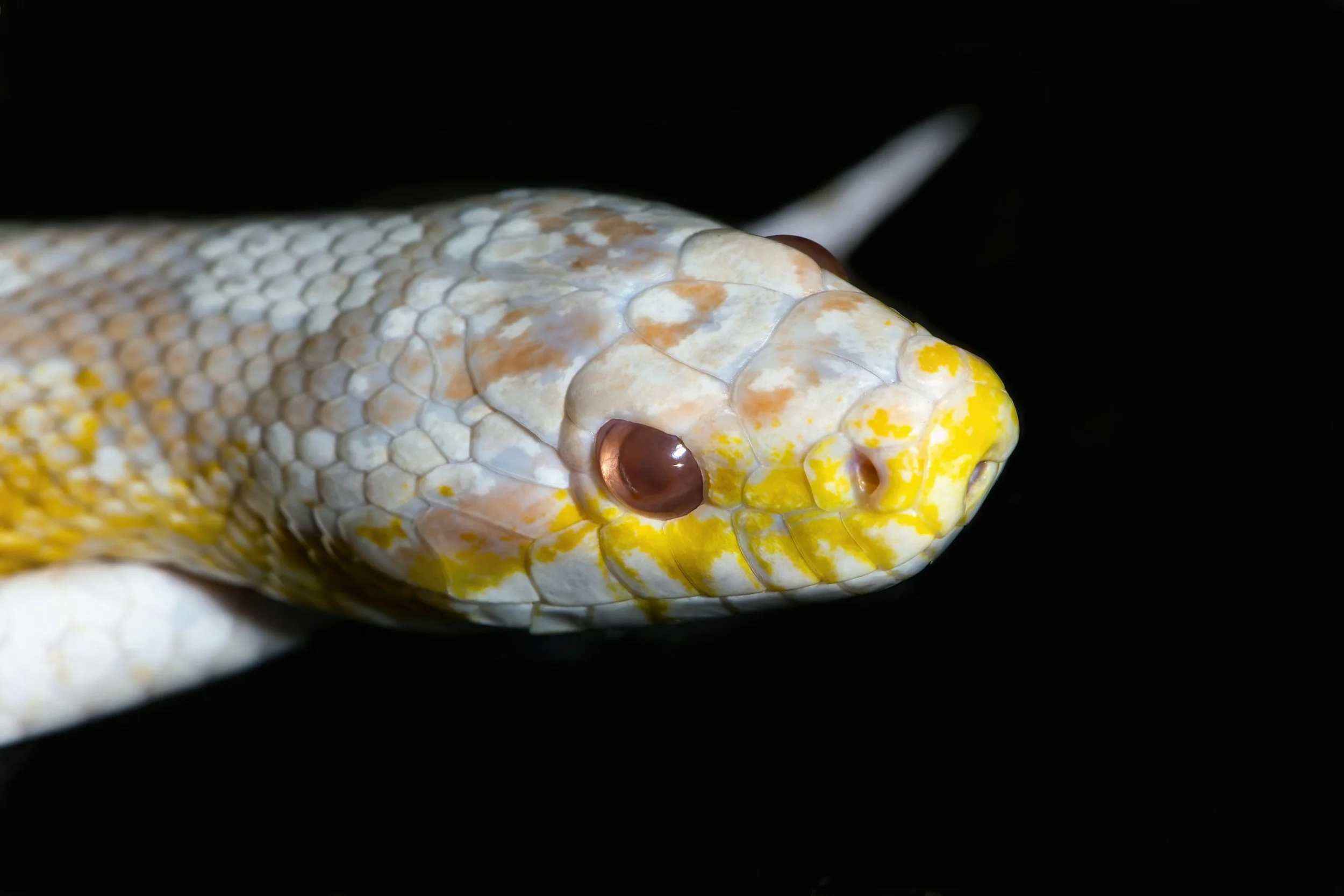
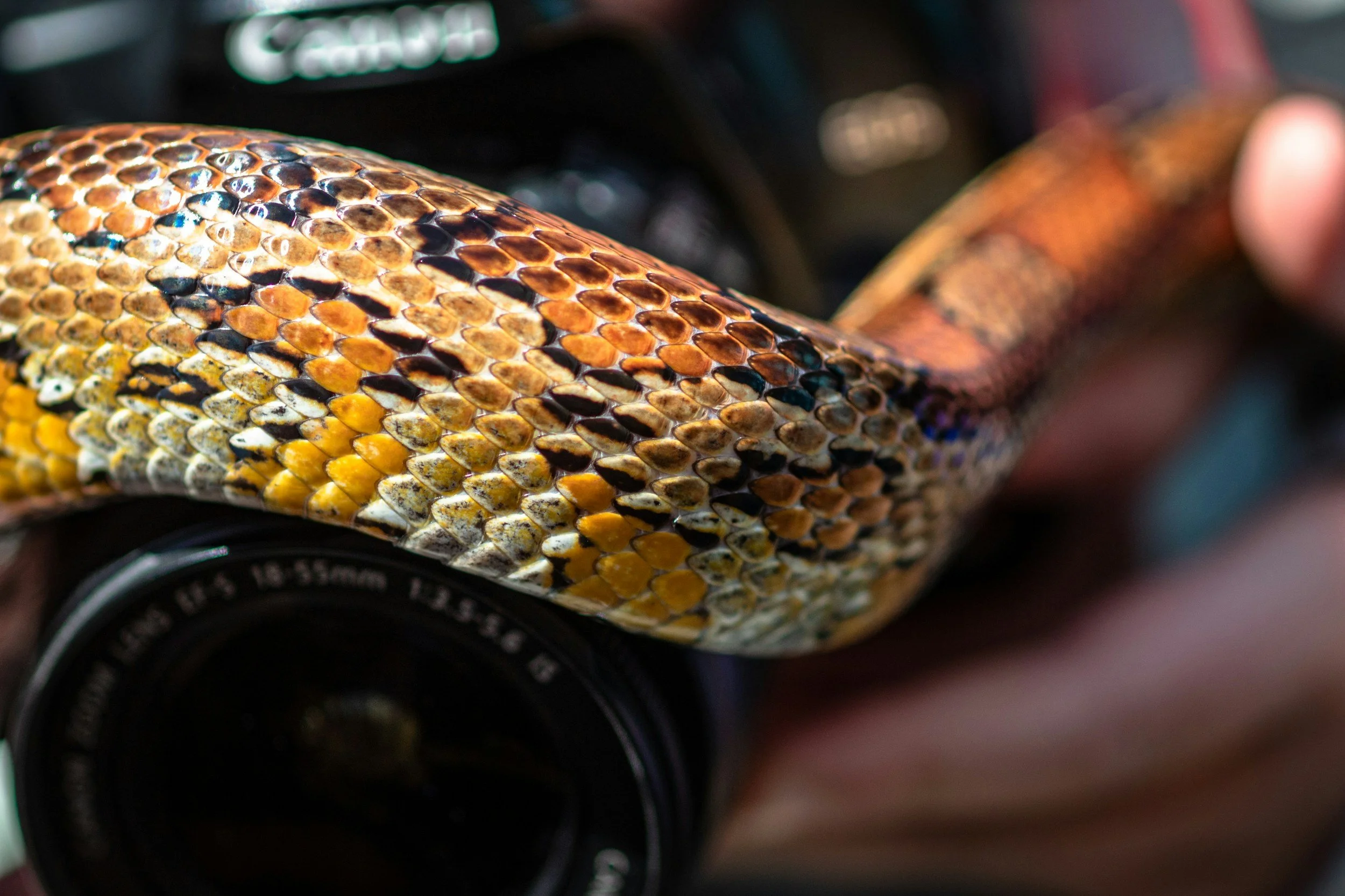
Corn Snake
Pantherophis guttatus
Updated: September 2025
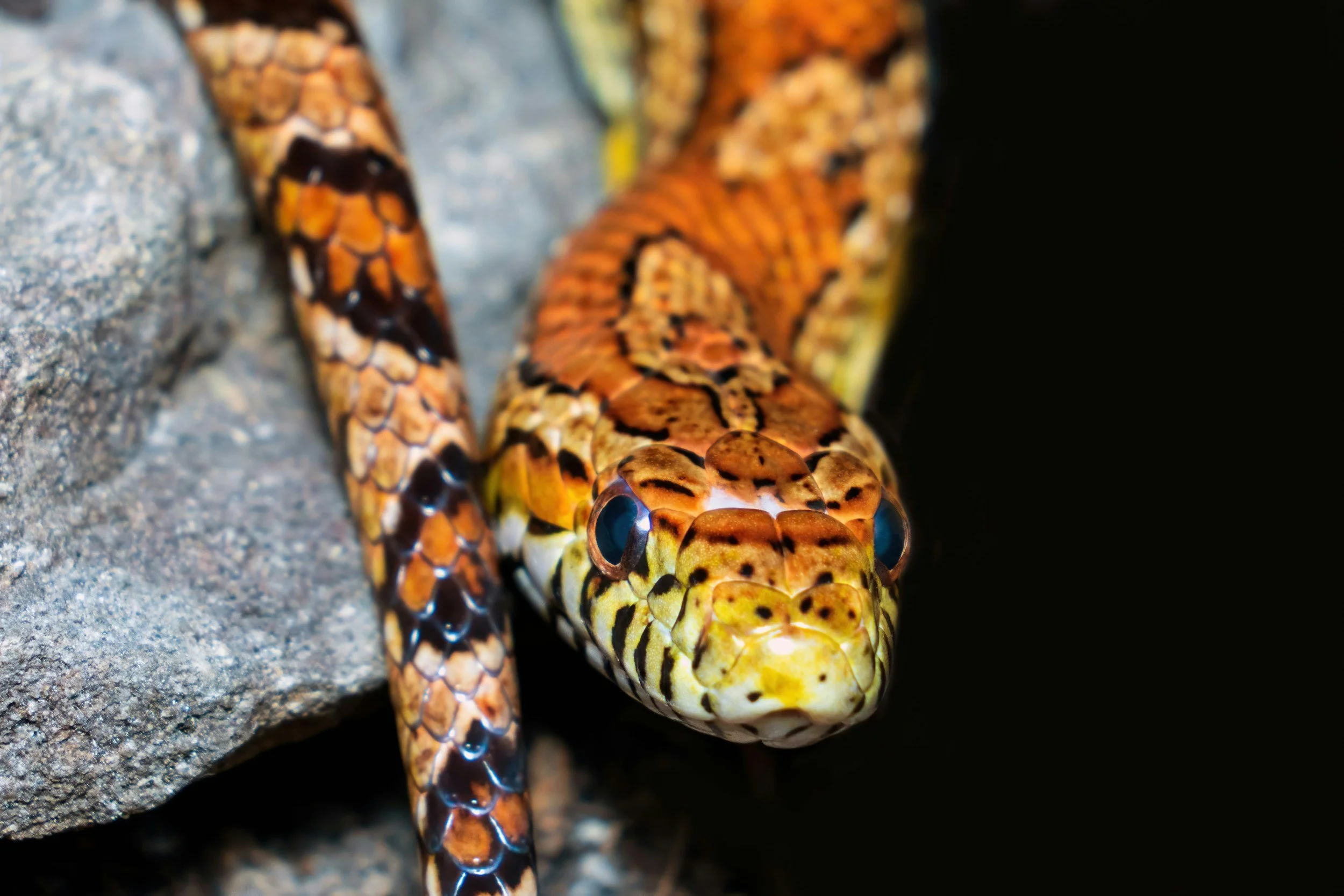
Quick Facts
COMMON NAME : Corn Snake
SCIENTIFIC : Pantherophis guttatus
TYPE : Terrestrial/crepuscular; semi-arboreal climber
ADULT SIZE : ~3–5 ft typical (2–6 ft possible)
LIFESPAN : 15–25 years (30 max reported)
TEMPERAMENT : Generally docile; good for beginners
ADULT ENCLOSURE : Minimum 48×24×24" (4×2×2 ft); taller appreciated
SUBSTRATE : Loose, burrow-friendly (soil/coco/cypress/aspen); avoid cedar/pine
TEMPERATURE : Basking surface ~90 °F; cool end 75–82 °F; night ~75 °F or room if warm enough
HUMIDITY : Average ~65–75%; provide a humid hide; allow higher at night
WATER : Heavy bowl large enough to soak; refresh daily
FEEDING : Hatchlings every 5–7 days; juveniles 7–10 days; subadults 10–12 days; adults 14–21 days; prey ≈1–1.5× widest body width (~≤10% body mass)
-
• Adult minimum: 48" L × 24" W × 24" H (120×60×60 cm) — bigger is better.
• Height matters: they climb; provide vertical structure and a secure, front-opening vivarium.
• Young snakes can start in adult-sized enclosures if escape-proof and stuffed with hides/cover.
• Ventilation + security: tight-fitting doors/lid, no gaps, reliable latches (they’re escape artists).
• No cohabitation
-
Best options (naturalistic & humidity-friendly)
• DIY mix (e.g., topsoil + ReptiSoil + play sand), or other loose, clean, particulate substrates that allow burrowing (≥3" depth).
• Add leaf litter; spot-clean routinely; full refresh every ~3–4 months.
Avoid
• Cedar/pine (aromatic oils → respiratory/neurologic issues).
-
• At least 2+ tight hides (warm & cool), plus a damp hide.
• Thick climbing branches, ledges, cork tubes, cluttered cover; safe plants (live or artificial).
• Large, heavy water bowl (big enough to soak).
• Ensure all fixtures outside the enclosure or fully guarded.
-
Daily: spot-clean waste; refresh water; quick temp/humidity check (with probes).
Weekly: wipe high-traffic surfaces; rinse/replace humid-hide moss.
Monthly/Quarterly: remove and replace substrate (or deep-clean sections), disinfect decor/enclosure with reptile-safe disinfectant (e.g., F10/Rescue); inspect and test thermostats/probes.
-
Daylight cycle
• 12 hrs light / 12 hrs dark (seasonal 13/11 summer/winter is fine).
UVB (recommended)
• Target UVI ~2.0–3.0 at the basking zone using a T5 HO 5–6% tube; confirm with a Solarmeter 6.5 if possible.
Heat
• Basking surface: ~90°F (32°C).
• Cool zone: ~75–82°F (24–27°C).
• Night: room temp or ~75°F (24°C). Turn off lighted heat at night; use non-light heat only if room is too cool (hatchlings benefit from warmer nights).
Humidity
• Average: 65–75% (allow natural day/night fluctuation). Provide a humid hide.
-
What to feed
• Whole-prey rodents (F/T preferred). Offer prey ≈ 1–1.5× the snake’s widest body width; total prey mass around ~10% of body weight for lean animals.
How often (typical)
• Hatchlings: every 7–10 days
• Juveniles: every 7–14 days
• Adults: every 14–21 days
Basics
• Thaw/warm feeders safely; use tongs; no handling for ~48 hrs after meals; always verify temps are in range before feeding.
-
• Start after the snake is eating reliably; begin with short sessions.
• Frequency: 1–2×/week (not more than daily).
• Technique: approach from the side, support the body with two hands; avoid head restraint; use a hook tap to distinguish handling from feeding.
• Do NOT handle within ~48 hrs post-feeding or during blue (pre-shed).
-
Watch for
• Respiratory signs: wheeze/clicks, open-mouth breathing, bubbles/stringy saliva, head held elevated, lethargy, appetite loss.
• Stomatitis (mouth rot): reddened/swollen gums, caseous (cheesy) deposits, drool, face rubbing; appetite drop.
• Mites: tiny moving black/brown specks (esp. around eyes/chin/folds), excessive soaking, restlessness.
• Regurgitation (esp. <48h post-meal), stuck sheds, burns, sudden weight loss.
Actions
• If RI or stomatitis signs → minimize handling, verify warm side/basking temps, optimize humidity/ventilation, contact an ARAV-listed reptile vet.
• For mites → treat animal AND environment; follow a proven protocol; discard porous items if infested; quarantine.
• After a regurge → no food ~2 weeks; correct temps; smaller prey next time; strict no-handling after future meals.
-
Laws & transport
• U.S. regulations vary by state/city (native wildlife, possession limits, sales). Check local/state rules before acquiring, transporting, or selling. The federal Lacey Act prohibits trade in wildlife taken/possessed in violation of any state/federal/tribal law.
• Use secure, ventilated containers for transport; label if required.
Public health
• Assume all reptiles can carry Salmonella; wash hands after contact with the animal, enclosure, or feeders; keep out of kitchens/food-prep areas; supervise children/high-risk people.
Electrical & heat safety
• EVERY heat source on a thermostat; verify with digital probes and an IR temp gun. Guard bulbs/panels; use GFCI-protected outlets in humid rooms; drip loops on cords.
Enclosure security
• Reliable latches/locks; no tape inside; inspect vents/gaps. No cohab for novices.
-
Enclosure & hardware
□ 48×24×24" (or larger) front-opening enclosure with mesh top
□ T5 HO UVB (5–6%) linear fixture; timer (12h on/12h off)
□ Halogen flood(s) for basking + ceramic-socket dome(s) + dimming/proportional thermostat
□ Digital probe thermometers/hygrometers (x2) + IR temp gun
□ Optional: Solarmeter 6.5 to verify UVI at bask
Habitat
□ Loose, clean substrate (≥3") + leaf litter
□ 2–3 tight hides (warm/cool/humid) + cork tubes
□ Climbing branches/ledges + sturdy background
□ Heavy water bowl (soakable)
Feeding & care
□ Feeding tongs; F/T rodents sized appropriately
□ Digital kitchen scale (track weight and feeders)
□ Disinfectant (F10/Rescue), paper towels, spare décor
□ Quarantine tub and extra thermostat/probe (for new arrivals)