Budgett’s Frog
Lepidobatrachus laevis
Updated: September 2025
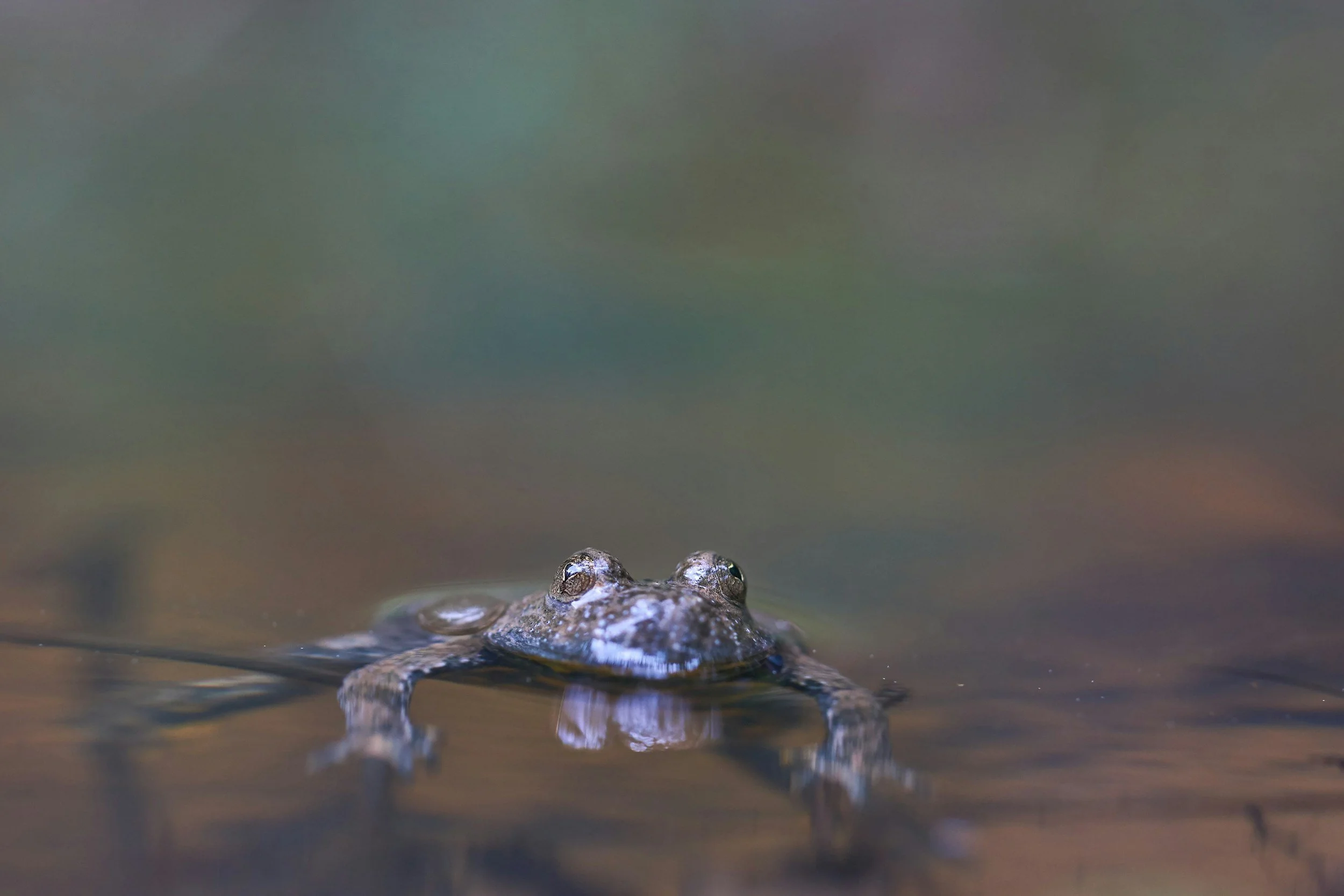
Quick Facts
Common name: Budgett’s Frog (Hippo Frog)
Scientific: Lepidobatrachus laevis
Type: Semi-aquatic/ambush anuran (nocturnal/crepuscular)
Adult size: ~4–5" SVL (♀ usually larger)
Lifespan: ~15–20+ years reported in captivity
Temperament: Defensive; powerful bite; solitary (no cohab)
Adult enclosure: Footprint ≥ 24×12×15" minimum; larger (e.g., 36×18) strongly preferred
Water depth: ~6–9" with easy haul-out; gentle current
Water temp: ~77–82°F (25–28°C)
Lighting: 12h day/night; low-level UVB optional/beneficial
Diet: Carnivorous—earthworms & varied inverts; high-quality amphibian pellets; avoid mammal prey
-
• Minimum adult tank: ~24×12×15" (≈20 gal long); bigger is better (e.g., 36×18 footprint/“40 breeder”) for dilution, stability, and enrichment.
• Layout: Mostly water with a sloped beach/large rock or dock for full haul-out; strong lid (they jump).
• Filtration: External/internal filter with GENTLE flow (baffle if needed). Dechlorinate water (handles chlorine & chloramine).
• Plants & cover: Floating plants (real or artificial) and submersible hides (PVC, clay pots) to reduce stress.
• Absolutely NO tankmates (they bite and will eat smaller animals).
-
• Photoperiod: ~12 h light / 12 h dark.
• UVB: Not strictly required but low-level UVB is beneficial in amphibians when provided safely; create shade and cover so the frog can avoid light.
• Target: a very low UVI gradient (~0.5–1.0 at the water surface) if you provide UVB; verify with a Solarmeter 6.5.
• Use cool-running LED for general light; avoid hot basking lamps over the water.
-
• Water temperature: ~77–82°F (25–28°C); cooler water suppresses feeding/health.
• Air over the tank can run room temp if water is in range; avoid high heat sources.
• Chemistry: Amphibians are VERY sensitive — keep NH3/NH4+ = 0 ppm, NO2− = 0 ppm, and keep NO3− as low as practical (<~20–40 ppm; lower is better).
• pH: neutral to slightly alkaline is fine (≈7.0–8.0); stability > “chasing numbers”.
• Testing: In new or newly cycled setups, test frequently; partial changes weekly/biweekly to maintain parameters.
-
• Substrate: Bare-bottom is easiest/safest. If used, very fine sand only; avoid gravel/pebbles (impaction risk).
• Hides: Weighted PVC elbows, clay pots, stacked flat stones (stable), and dense floating cover.
• Access: Provide broad, stable haul-out (they’re poor climbers) and ensure no entrapment points.
-
Staples
• Earthworms/nightcrawlers (top staple), roaches, appropriately-sized crickets, the occasional BSFL/silkworms; high-quality amphibian pellets can be part of the rotation.
• Avoid mammalian prey (pinkies) and fatty fish; do not feed wild-caught prey.
Schedule (general)
• Juveniles: feed small meals ~5–6×/week.
• Adults: feed moderate meals ~2–3×/week; watch body condition—obesity is common.
Supplementation
• Gut-load insects 24–48 h and dust with Ca + vitamins (vit A & D3 per product) at a conservative cadence; earthworms are naturally Ca-balanced.
• Tong-feed to control portions; remove leftovers promptly.
-
• Minimize handling; they will inflate, screech, and bite defensively.
• If necessary: use wet, powder-free vinyl/nitrile gloves and support the body; brief, low-stress handling only.
• Solitary species—do not cohab (aggression/cannibalism risk).
-
DAILY: Spot-remove waste/uneaten food; confirm temp; top-off with dechlorinated water.
WEEKLY: Test NH3/NH4+, NO2−, NO3−, pH; perform partial water change (10–20% or as testing dictates); rinse mechanical media in tank water.
MONTHLY/QUARTERLY: Service filter thoroughly (preserve bio-media); deep-clean décor; verify heater/thermostat operation.
-
Watch for: Lethargy, refusal to feed, buoyancy issues, reddened skin/“red-leg” signs, skin sloughing abnormalities, bloat/dropsy, ocular swelling, mouth lesions.
Immediate checks: Verify water temp, NH3/NH4+, NO2−, NO3− and pH; correct diet/supplement routine; reduce stress/handling.
Vet help: Seek an experienced amphibian vet (ARAV-type exotics) for systemic signs or trauma; amphibians decline rapidly with poor water quality.
-
• Public health: Amphibians can carry Salmonella — wash hands after contact with the frog or water; keep out of kitchens; supervise children/high-risk people.
• Wildlife ethics: Never release pets; confirm local/state rules for non-native amphibians.
-
□ Long, low aquarium (≥ 24×12×15"; bigger preferred) with tight-fitting lid
□ Submersible heater (guarded) + reliable thermometer(s)
□ Gentle filter (baffled outlet) sized for your water volume
□ Water conditioner that treats chlorine & chloramine
□ Liquid test kit (ammonia, nitrite, nitrate, pH)
□ Large, stable haul-out (dock/rock) + floating cover plants
□ PVC/clay hides (weighted), smooth décor (no pinch points)
□ Quality amphibian pellets; earthworms; feeder insect supplies
□ Calcium + multivitamin powders; insect gut-load diet
□ Dedicated buckets/siphon; towels; reptile/amphib-safe disinfectant