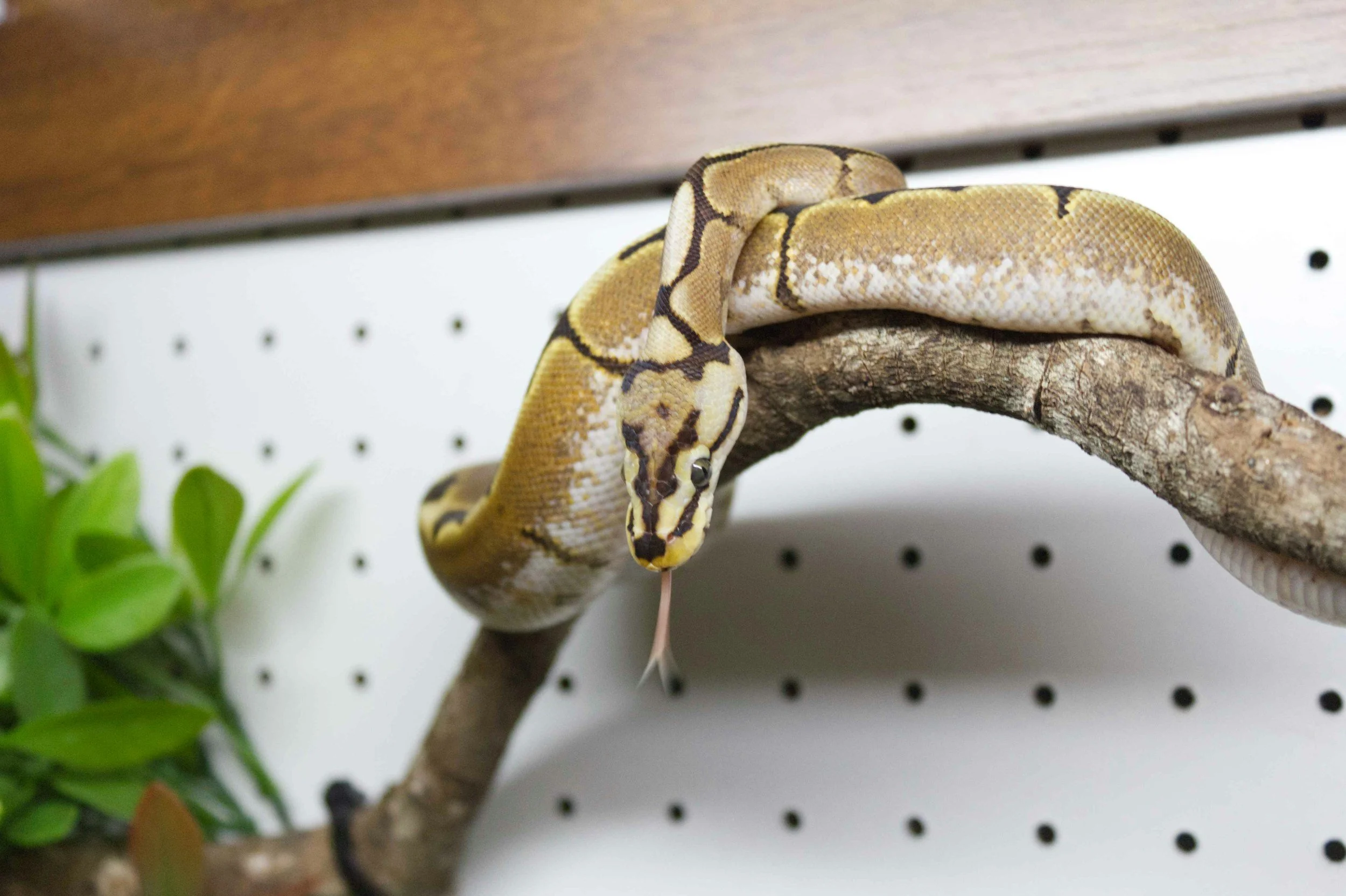
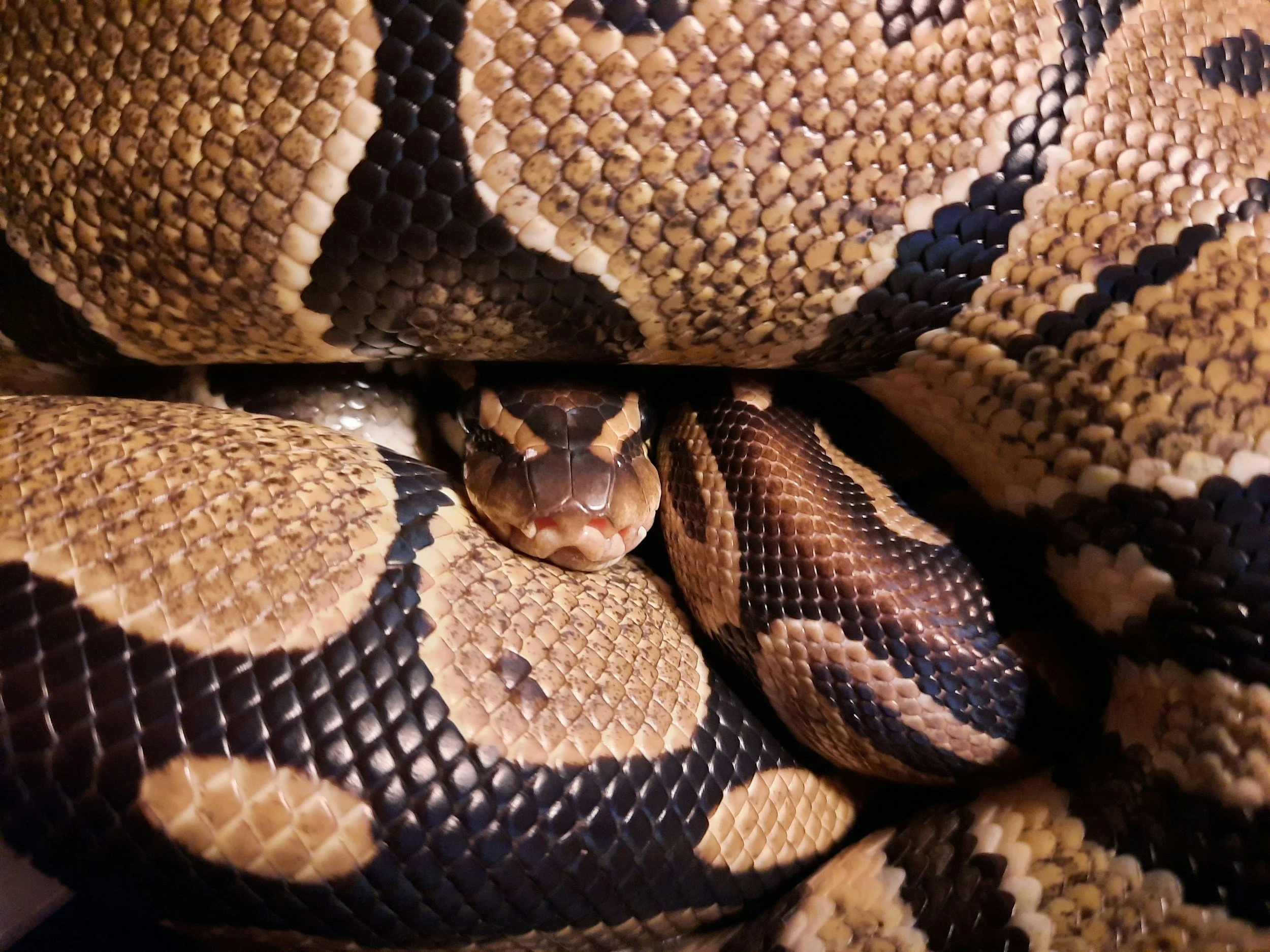
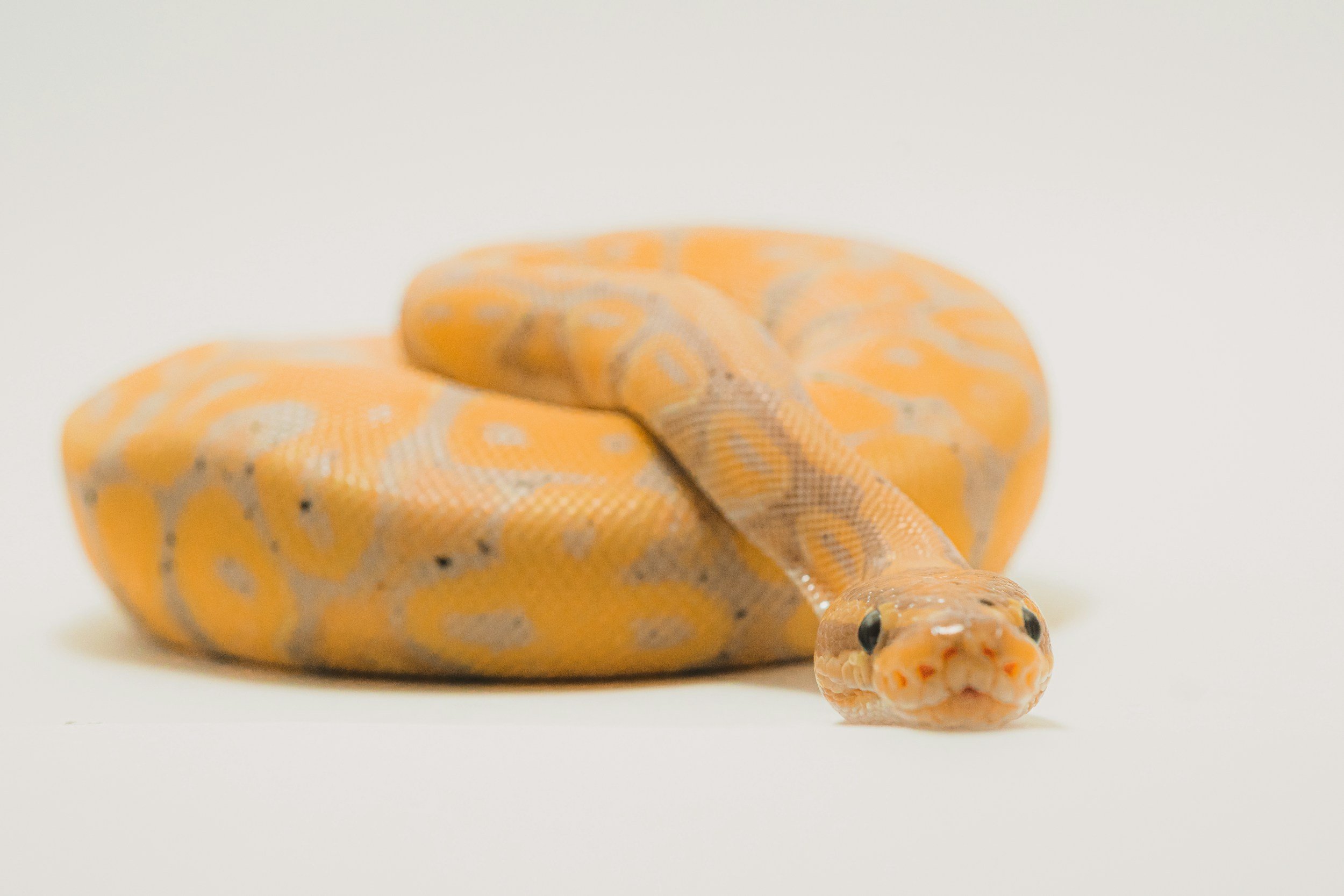
Ball Python (Royal Python)
Python regius
Quick Facts
COMMON NAME: Ball Python (Royal Python)
SCIENTIFIC: Python regius
TYPE: Terrestrial/crepuscular; benefits from climbing opportunities
ADULT SIZE: ~3–5 ft typical (up to ~150 cm)
LIFESPAN: 20+ years in captivity
TEMPERAMENT: Shy; prefers multiple secure hides
ADULT ENCLOSURE: 48×24×24" (4×2×2 ft) or larger; ideally at least the snake’s full length
SUBSTRATE: Moisture-retentive options like cypress mulch or coco husk/chips. Avoid cedar/pine/aspen.
TEMPERATURE: Basking surface 95–104 °F; warm hide 86–90 °F; cool hide 72–80 °F; night 70–78 °F (air temp should not exceed 95 °F)
HUMIDITY: ~50–60% and ~80% for shed
WATER: Heavy bowl large enough for full soak; change daily
FEEDING: Juveniles ~weekly; adults every 10–14 days (adjust to body condition)
HOUSING: Keep singly (no cohabitation)
-
Size — Adults over ~3 ft do best in 48×24×24" (4×2×2) or larger. As a rule, house them in an enclosure at least as long as the snake so it can fully stretch. Provide some vertical space for climbing.
Layout — Secure ventilation and a tight front-opening door/lid. Add multiple hides (warm end + cool end) and sturdy cover/branches so the snake feels secure.
Substrate — Cypress mulch, coco chips/husk, or similar hold humidity well. Do not use cedar, aspen or pine.
Cleaning — Spot clean as needed; periodic full cleans with reptile-safe disinfectant.
-
Temperatures:
• Basking surface: 95–104 °F
• Warm hide (ambient): 86–90 °F
• Cool hide (ambient): 72–80 °F
• Night: 70–78 °F
• Keep general air temps under 95 °F. Use thermostats and measure with digital probes + an IR temp gun for the basking surface.
Humidity:
•~50–60% with temporary boosts to ~80% for shedding
-
Day/night cycle ~12 hrs. Low-level UVB is recommended (e.g., T5 HO 5%/Arcadia 6%) with shaded retreats; follow lamp distance guidance and replace bulbs per instructions.
-
Prey — Thawed/warmed rodents (about the snake’s widest-girth size).
Frequency — Hatchlings every 5-7 days. Juveniles roughly weekly; adults about every 10–14 days. Adjust to body condition, not just the calendar. Minimize handling around meals; avoid handling for ~48 hrs after feeding to prevent regurgitation.
-
Provide a heavy bowl large enough for full submersion at the cool end; change daily and whenever soiled.
-
Generally shy; move slowly and support the body with two hands. Provide multiple hides so the snake can choose both temperature and security. Avoid handling during shed and for ~48 hrs post-meal.
-
Respiratory signs — Wheezing/clicks, open-mouth breathing, bubbles, lethargy, appetite loss.
Shed issues — Retained eye caps or patchy sheds (check humidity & hydration).
Mites — Black specks that move; prolonged soaking.
Burns — Guard all heat sources and run thermostats.
Seek an exotics vet promptly for any of the above.
-
• Hygiene — All reptiles can carry Salmonella. Wash hands after handling the snake, enclosure items, or feeders. Keep reptiles out of kitchens/food-prep areas; supervise children and high-risk people.
• Heating safety — Put every heat source on a thermostat and use guards around bulbs/emitters to prevent burns. Use digital thermometers to verify the warm and cool ends.
• Housing — Keep singly (no cohabitation). Provide secure lids/locks to prevent escapes.
• Substrate cautions — Do NOT use cedar or pine shavings (aromatic oils can harm reptiles).
• UV & lights — Provide a 12-hr day/night cycle. If you use UVB, keep intensity low and always offer shaded retreats; follow lamp distance guidelines.
• Local laws — Ownership/sales rules vary by city/county/state.
-
Enclosure
• Adult minimum 48×24×24" (4×2×2 ft) with good ventilation and secure doors/lid.
Temperature & Humidity Control
• Primary heat: ceramic heat emitter or radiant heat panel (with bulb/element guard).
• Thermostats: one per heat source (on/off or proportional), probe secured.
• 2 digital thermometers (warm end + cool end) and an IR temp gun for surface checks.
• Digital hygrometer; humid hide or moss box if needed.
Lighting
• 12-hr light cycle. Optional low-output UVB strip (e.g., 5–6% T5) mounted to achieve a low UVI with shaded retreats available; timer.
Furnishings
• 2+ snug hides (warm end and cool end).
• Sturdy branches/plants and cover (“clutter”) for security and exercise.
• Heavy water bowl large enough for full submersion.
Substrate
• Cypress mulch or coco chips/husk, (avoid cedar/pine).
Feeding & Care
• Feeding tongs; frozen/thawed rodents; paper towels for spot cleaning.
• Reptile-safe disinfectant; spare bulbs/fuses; enclosure locks/clips.